China's E-cigarette Export to New Zealand in December 2023

Industry Insight by 2FIRSTS Mincy
Feb.26.2024
China's E-cigarette Export to New Zealand in December 2023
China's e-cigarette exports to New Zealand in December 2023 show a decrease in value, quantity, and unit price.

According to updated trade data from the General Administration of Customs of the People's Republic of China, 2FIRSTS has compiled the e-cigarette export data from China to New Zealand for December 2023. The specific figures are as follows:
 

12月中国出口新西兰电子烟约760万美元 环比下降4.73%


The export volume is approximately 7.6 million US dollars, representing a decrease of 4.73% compared to the previous month and a 23.83% decrease compared to the same period last year.
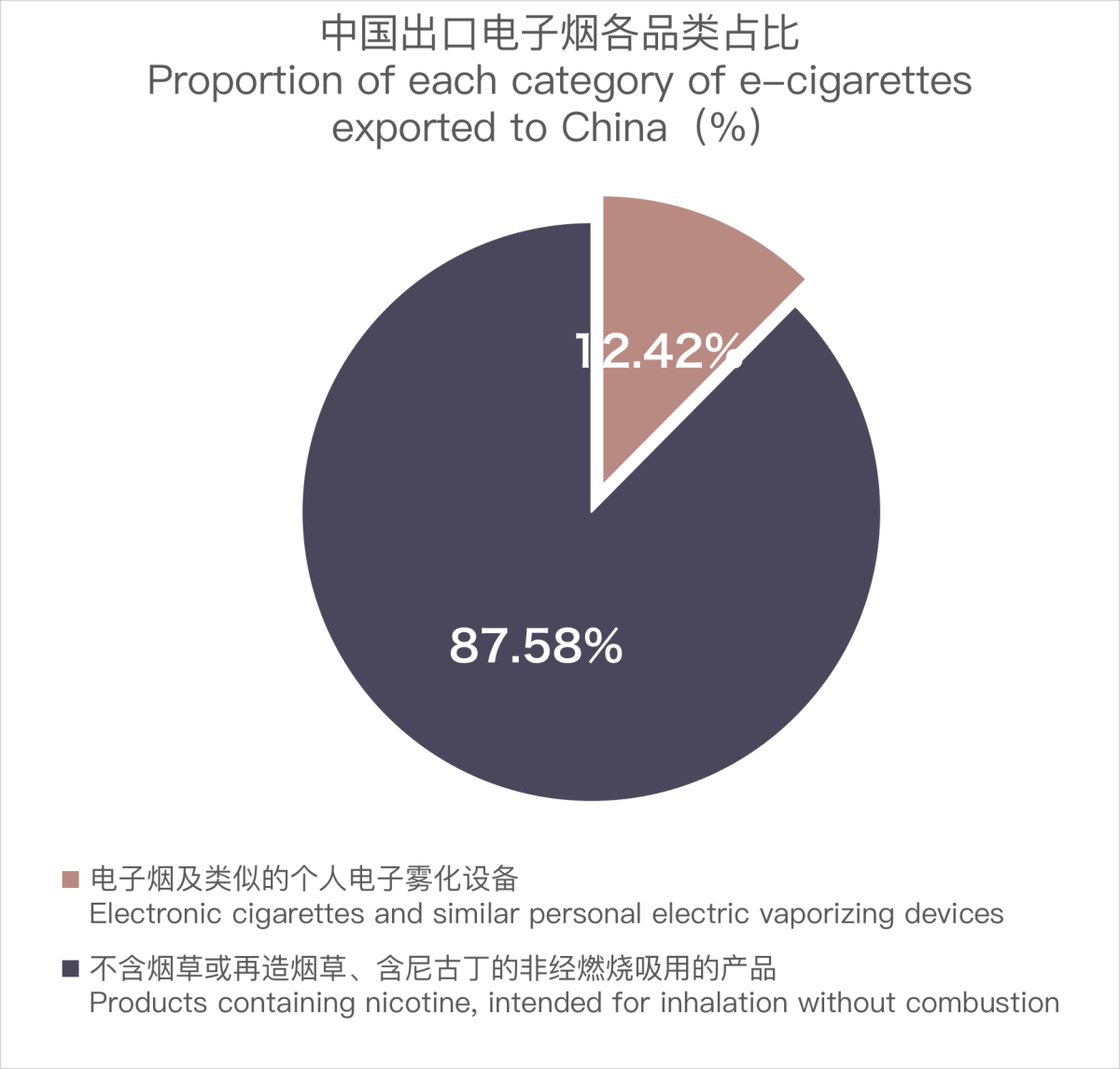
 

China's E-cigarette Export to New Zealand in December 2023
Image source: 2FIRSTS (created by Mincy)


The export volume is approximately 145 tons, a decrease of 2.48% month-on-month and 7.19% year-on-year.
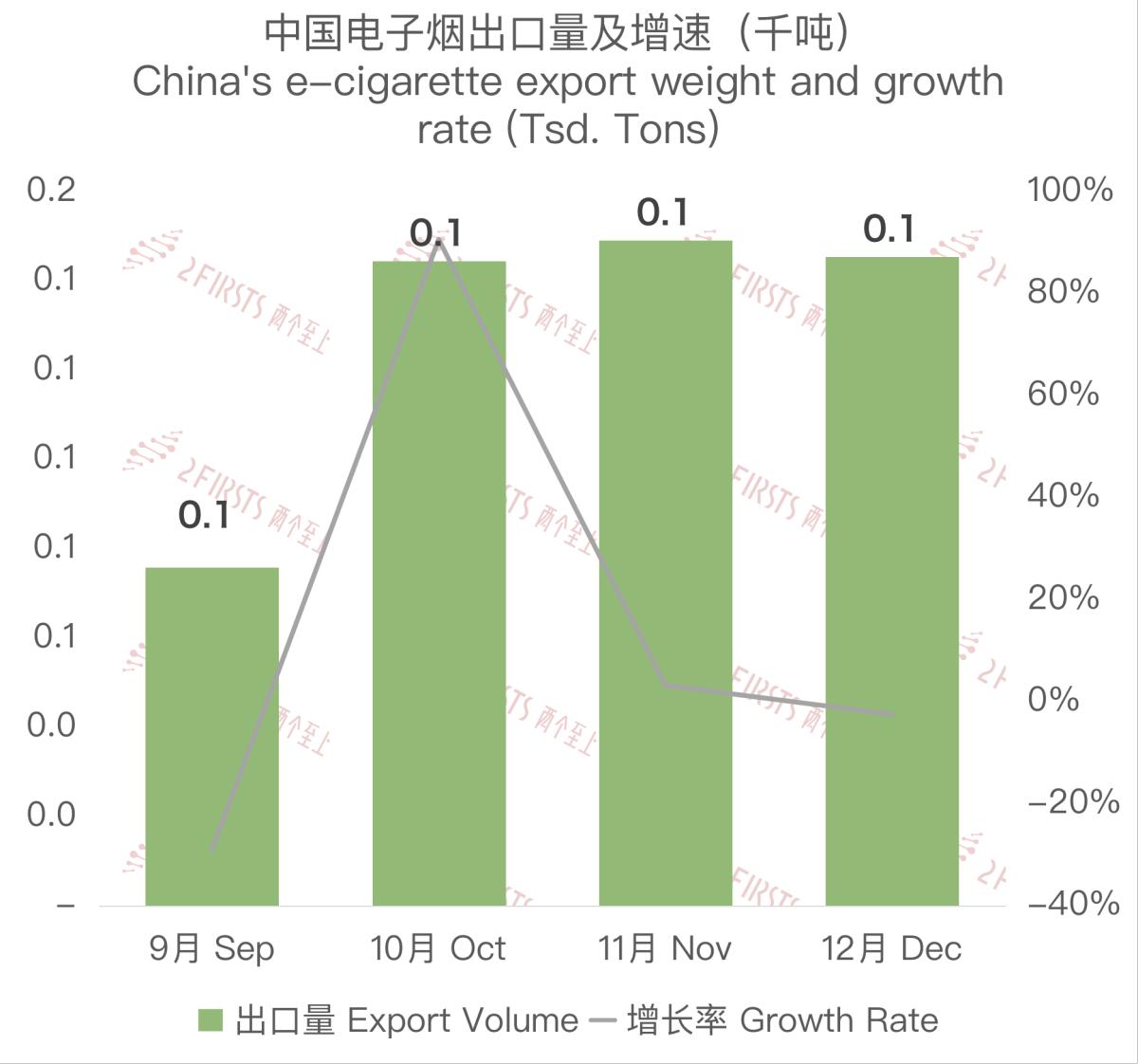


12月中国出口新西兰电子烟约760万美元 环比下降4.73%
Image source: 2FIRSTS (created by Mincy)


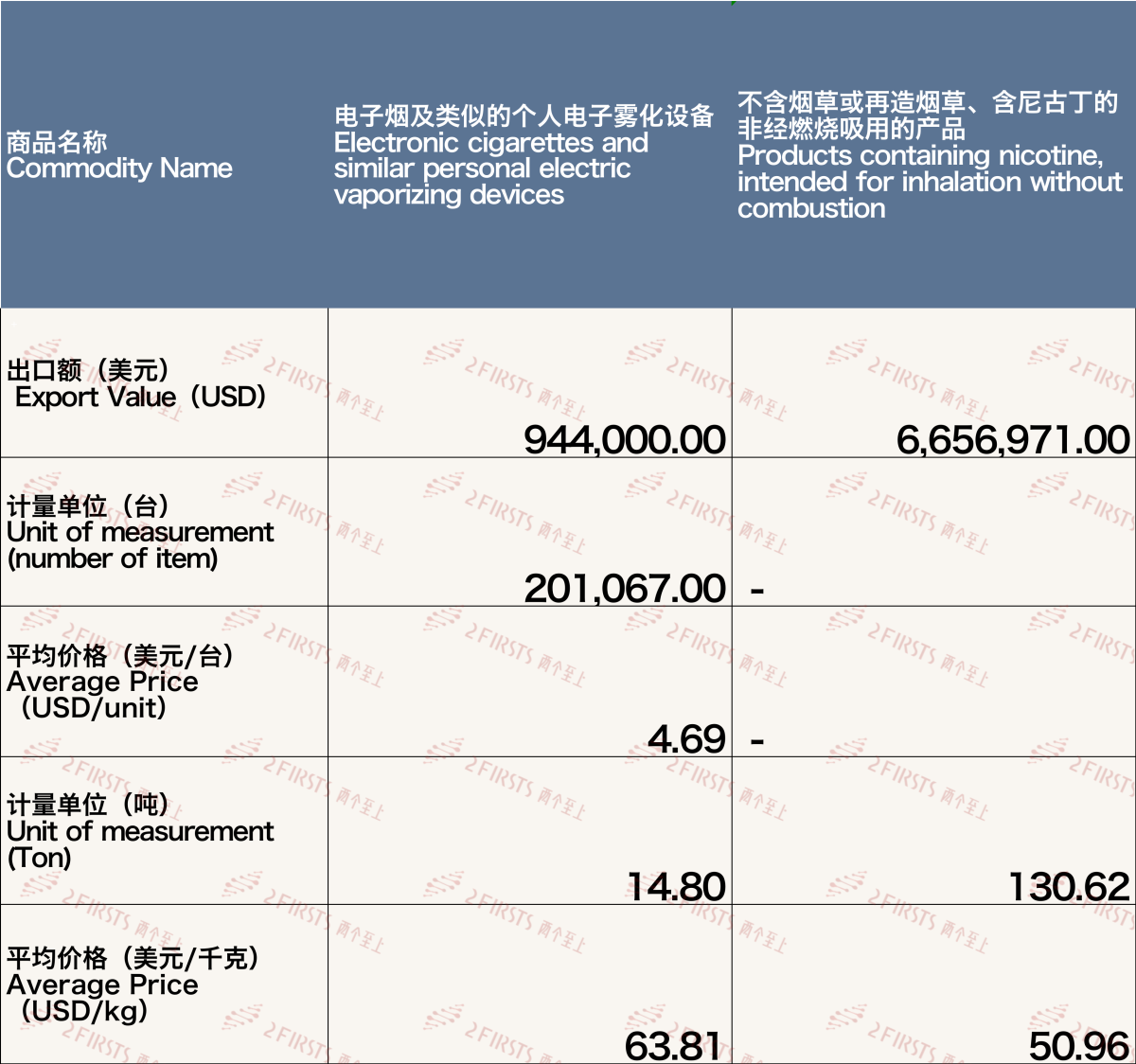
The export unit price is $52.27 per kilogram, a decrease of 2.32% month-on-month and 17.93% year-on-year; the average price of "e-cigarettes and similar personal electronic vaporizing devices" is $4.69 per unit.
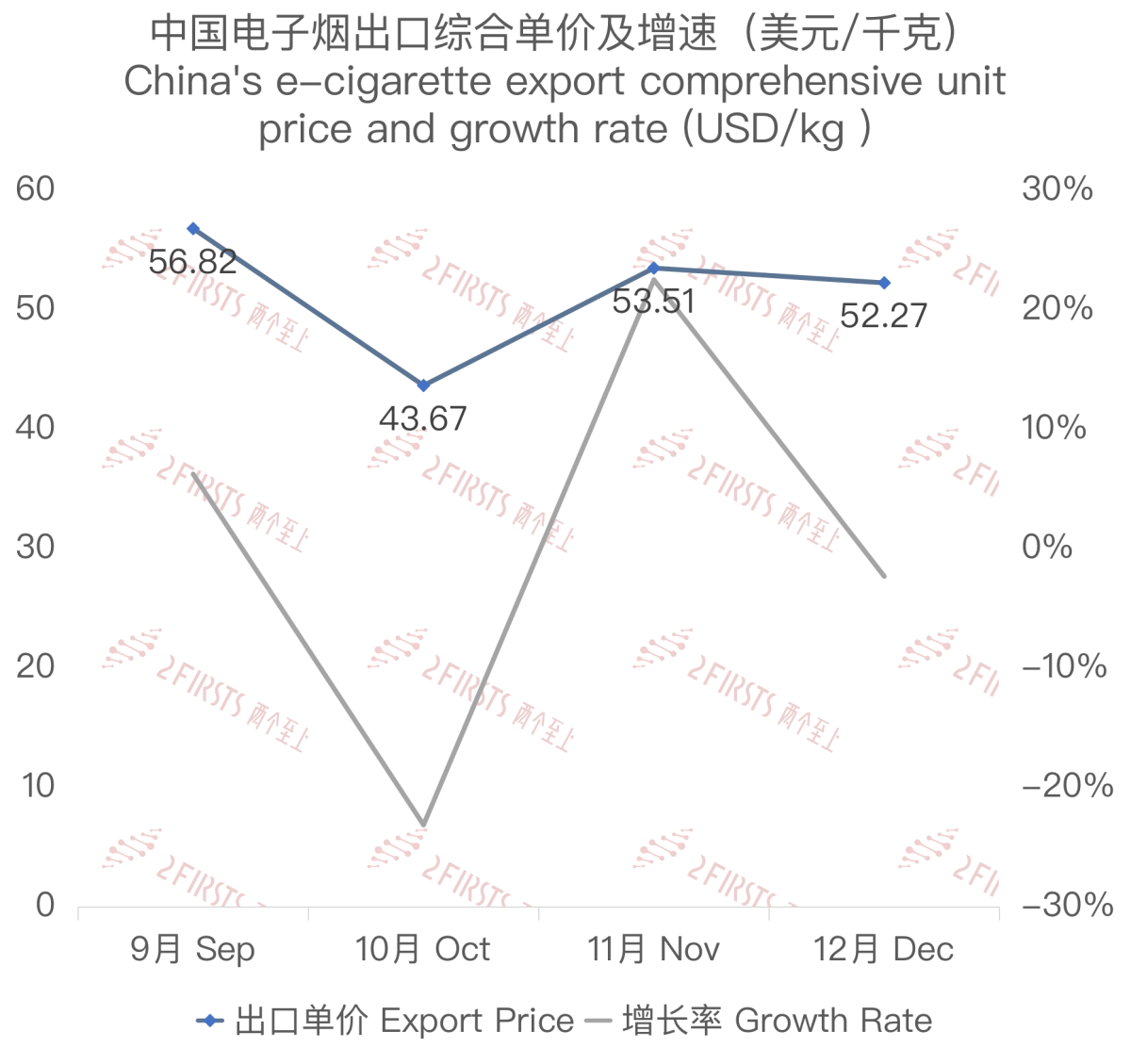
 

12月中国出口新西兰电子烟约760万美元 环比下降4.73%
Image source: 2FIRSTS (Chart by Mincy)


Among them, "e-cigarettes and similar personal electronic vaporization devices" account for 12.42% of the export categories, while "non-smoking or reconstituted tobacco, nicotine-containing non-combustible products" account for 87.58%.
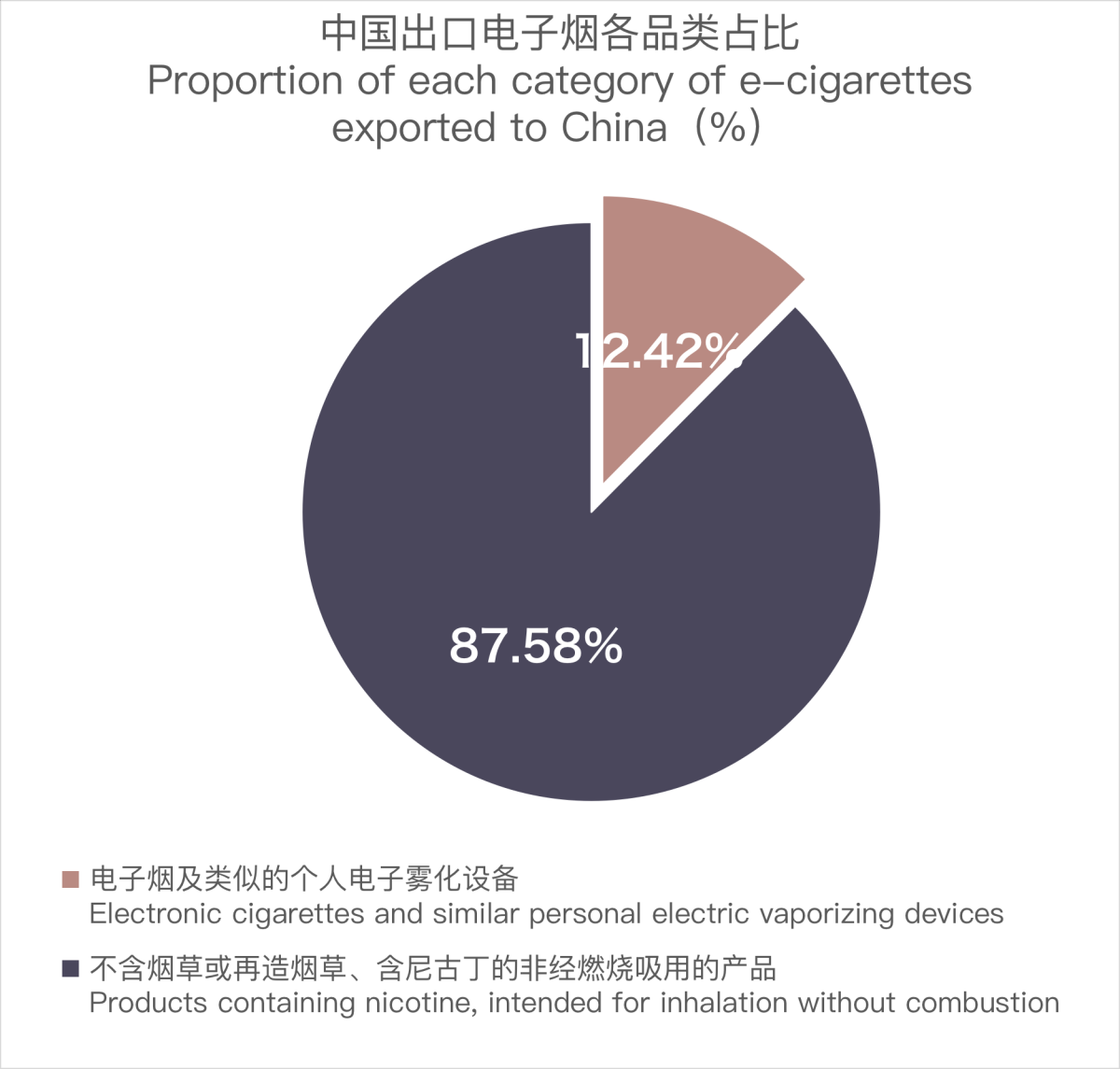
12月中国出口新西兰电子烟约760万美元 环比下降4.73%
Image source: 2FIRSTS (Created by Mincy)


We welcome news tips, article submissions, interview requests, or comments on this piece.

Please contact us at info@2firsts.com, or reach out to Alan Zhao, CEO of 2Firsts, on LinkedIn


Notice

1.  This article is intended solely for professional research purposes related to industry, technology, and policy. Any references to brands or products are made purely for objective description and do not constitute any form of endorsement, recommendation, or promotion by 2Firsts.

2.  The use of nicotine-containing products — including, but not limited to, cigarettes, e-cigarettes, nicotine pouchand heated tobacco products — carries significant health risks. Users are responsible for complying with all applicable laws and regulations in their respective jurisdictions.

3.  This article is not intended to serve as the basis for any investment decisions or financial advice. 2Firsts assumes no direct or indirect liability for any inaccuracies or errors in the content.

4.  Access to this article is strictly prohibited for individuals below the legal age in their jurisdiction.


Copyright


This article is either an original work created by 2Firsts or a reproduction from third-party sources with proper attribution. All copyrights and usage rights belong to 2Firsts or the original content provider. Unauthorized reproduction, distribution, or any other form of unauthorized use by any individual or organization is strictly prohibited. Violators will be held legally accountable.

For copyright-related inquiries, please contact: info@2firsts.com


AI Assistance Disclaimer


This article may have been enhanced using AI tools to improve translation and editorial efficiency. However, due to technical limitations, inaccuracies may occur. Readers are encouraged to refer to the cited sources for the most accurate information.

We welcome any corrections or feedback. Please contact us at: info@2firsts.com

Australia Quantifies Black Market for First Time, Illicit Nicotine Products Account for About 80% of Consumption
The Australian Bureau of Statistics (ABS) has released its first estimate of the illicit nicotine market, finding that about 80% of cigarettes, vapes and other nicotine products consumed in 2025 came from illegal sources, reigniting debate over tobacco taxation and enforcement policies.
Jun.03
One Year After UK Disposable Vape Ban: Youth Use Falls to 13%, Adult Use to 8%
among both youth and adults. However, industry groups and regulators warn that the illicit vape market remains a growing concern.
Jun.09
Bloomberg: Zyn’s Dry-Mouth Problem Threatens Its Hold on Nicotine Pouch Market
According to Bloomberg, Philip Morris International’s Zyn is facing growing competition in the U.S. nicotine pouch market as consumers shift toward moister alternatives such as British American Tobacco’s Velo Plus.
BATPMI
May.22
Product | Geek Bar BURJ 80K Extends High-Puff Competition Into Hookah-Style DTL Use
2Firsts has noted that Geek Bar has added BURJ to its official product portfolio under the E-HOOKAH category. Public information shows that BURJ 80K is a hookah-style disposable vape featuring a 25ml e-liquid capacity, a 1500mAh battery, 0.4Ω dual coils and three operating modes: ECO, Regular and Pulse. According to publicly available product information, the device is rated for up to 80,000 puffs in ECO mode and uses a nicotine strength of 0.5% (5mg/ml).
Market
May.29
Special Report| War continues to shape the Ukrainian tobacco market
Four years into the war, Ukraine’s tobacco market is being reshaped by stress-driven consumption, tax pressure, youth e-cigarette use and a growing illicit segment. Surveys point to rising tobacco and nicotine product use, while higher excise duties and shadow trade are adding new complexity to the market.
Apr.17
Bringing Tax and Insurance Into Nicotine Regulation: Insights From a Tobacco Harm-Reduction Report
A smoke-free nicotine policy report argues that tobacco harm reduction should move beyond product bans and health warnings into tax policy, insurance pricing and risk-based regulation. While some projections remain open to debate, the report highlights a wider challenge: nicotine products, technologies and consumer behavior have changed sharply over the past decade, and regulatory systems may need new tools to better align tobacco control with harm-reduction goals.
Jun.08