Chinese E-cigarette Export to Poland in April 2024 Data

Industry Insight by 2FIRSTS
Jun.07.2024
Chinese E-cigarette Export to Poland in April 2024 Data
China's e-cigarette exports to Poland in April 2024 dropped in value but increased in volume, according to trade data.

According to the latest trade data released by the General Administration of Customs, 2FIRSTS has compiled the e-cigarette exports from China to Poland in April 2024. The specifics are as follows:
4月中国出口波兰电子烟约1269万美元 环比下降3.45%


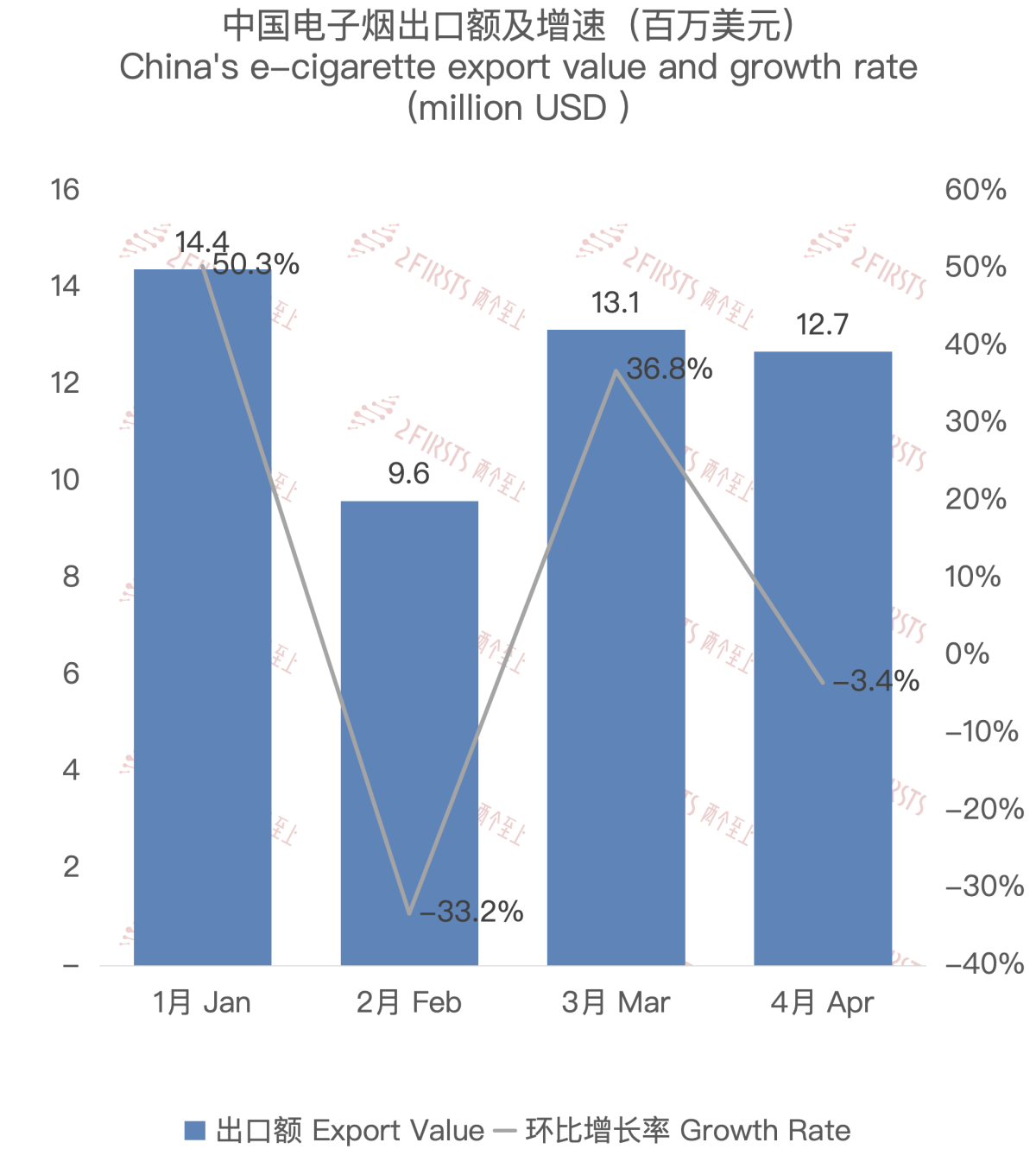
The export volume was approximately $12.69 million, a decrease of 3.45% compared to the previous period, and a decrease of 19.54% compared to the same period last year.
 

4月中国出口波兰电子烟约1269万美元 环比下降3.45%


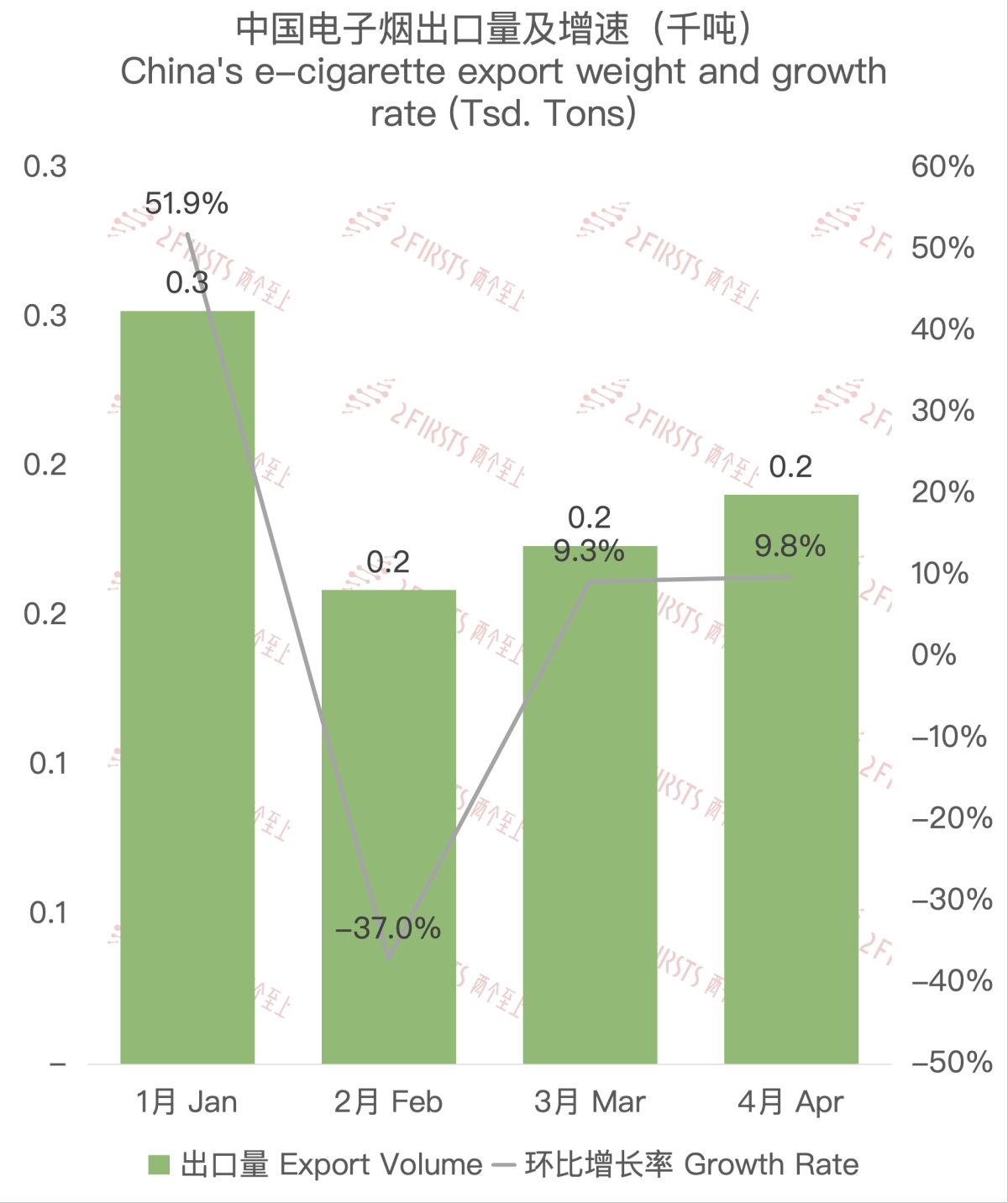
The export volume reached approximately 191 tons, showing a month-on-month increase of 9.85% but a year-on-year decrease of 16.85%.
4月中国出口波兰电子烟约1269万美元 环比下降3.45%


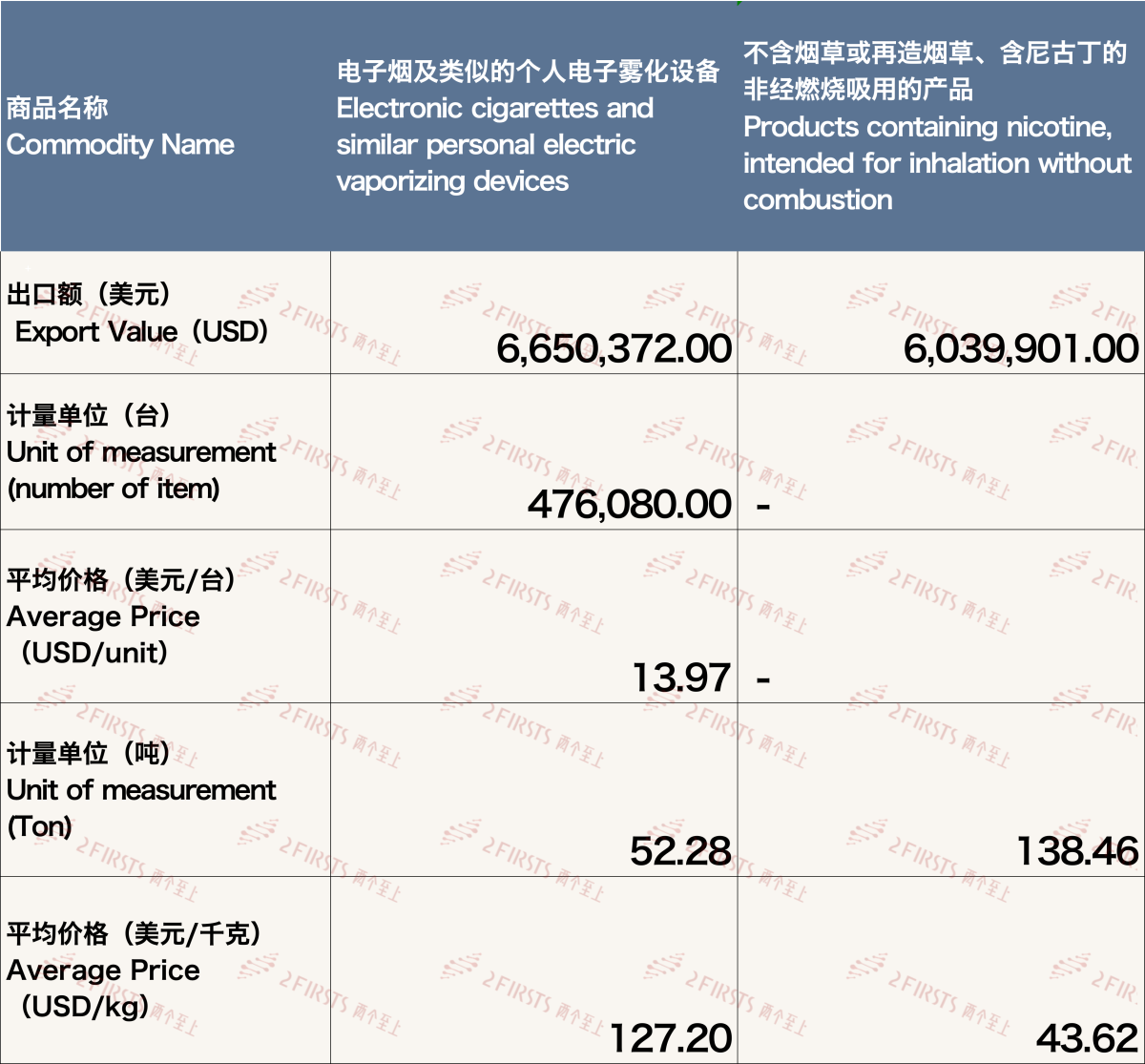
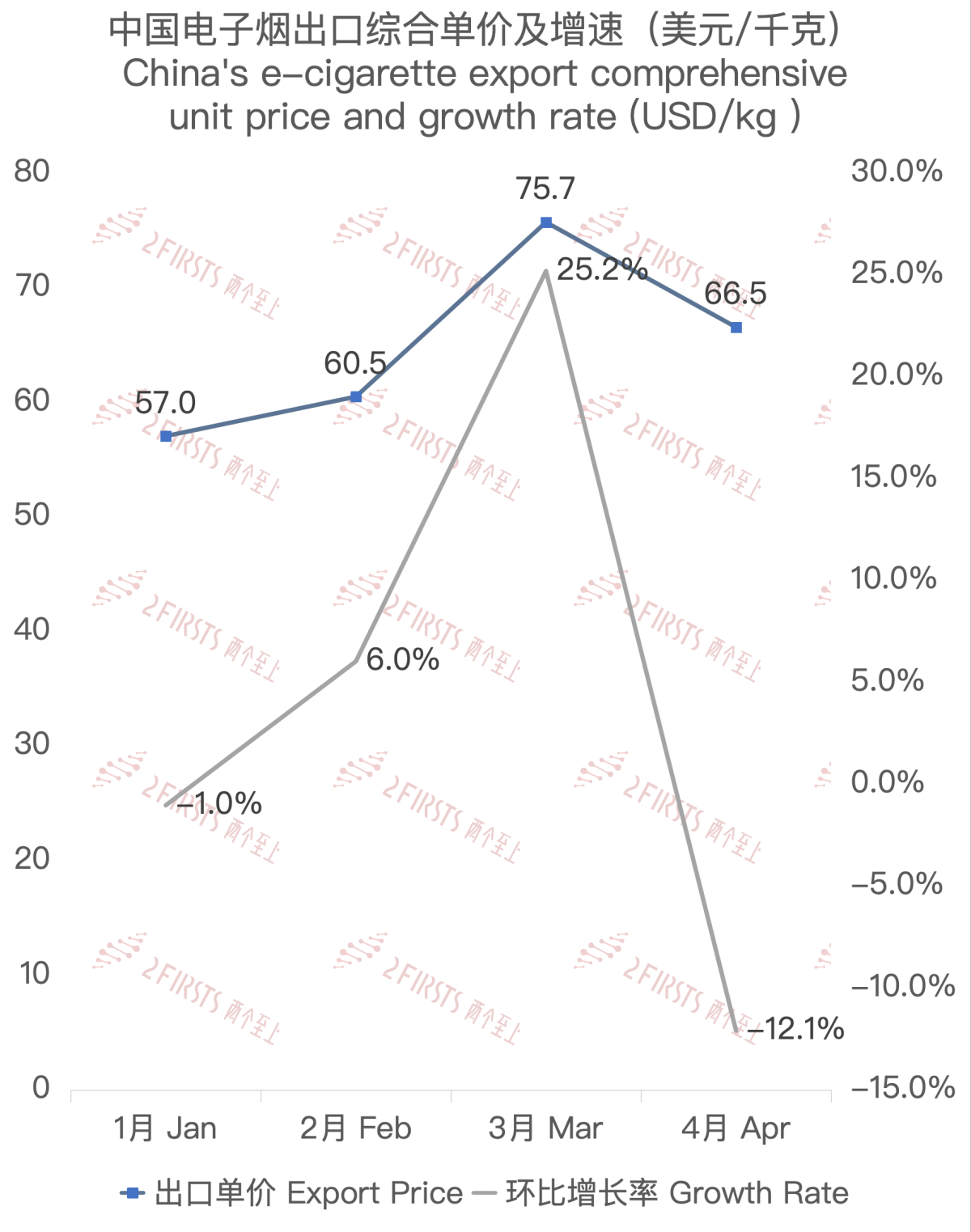
The export unit price is $66.53 per kilogram, a decrease of 12.1% on a monthly basis and a decrease of 3.2% compared to the same period last year; the average price of "e-cigarettes and similar personal electronic vaporization devices" is $13.97 per unit.
4月中国出口波兰电子烟约1269万美元 环比下降3.45%


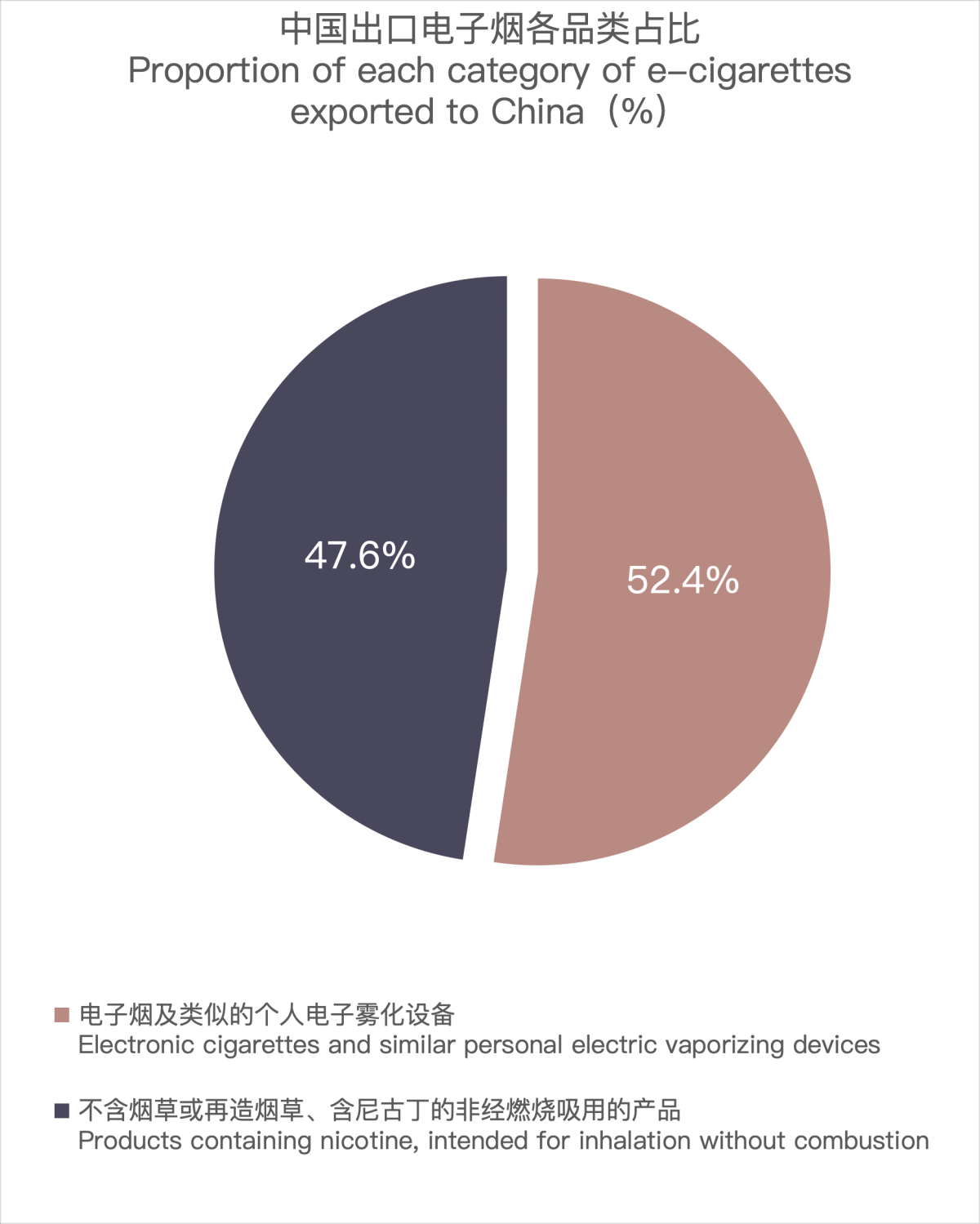
Among them, "e-cigarettes and similar personal electronic vaporization devices" accounted for 52.4% of the export category, while "products containing nicotine, not made from tobacco or reconstituted tobacco, for non-combustible inhalation" accounted for 47.6%.
4月中国出口波兰电子烟约1269万美元 环比下降3.45%


We welcome news tips, article submissions, interview requests, or comments on this piece.

Please contact us at info@2firsts.com, or reach out to Alan Zhao, CEO of 2Firsts, on LinkedIn


Notice

1.  This article is intended solely for professional research purposes related to industry, technology, and policy. Any references to brands or products are made purely for objective description and do not constitute any form of endorsement, recommendation, or promotion by 2Firsts.

2.  The use of nicotine-containing products — including, but not limited to, cigarettes, e-cigarettes, nicotine pouchand heated tobacco products — carries significant health risks. Users are responsible for complying with all applicable laws and regulations in their respective jurisdictions.

3.  This article is not intended to serve as the basis for any investment decisions or financial advice. 2Firsts assumes no direct or indirect liability for any inaccuracies or errors in the content.

4.  Access to this article is strictly prohibited for individuals below the legal age in their jurisdiction.


Copyright


This article is either an original work created by 2Firsts or a reproduction from third-party sources with proper attribution. All copyrights and usage rights belong to 2Firsts or the original content provider. Unauthorized reproduction, distribution, or any other form of unauthorized use by any individual or organization is strictly prohibited. Violators will be held legally accountable.

For copyright-related inquiries, please contact: info@2firsts.com


AI Assistance Disclaimer


This article may have been enhanced using AI tools to improve translation and editorial efficiency. However, due to technical limitations, inaccuracies may occur. Readers are encouraged to refer to the cited sources for the most accurate information.

We welcome any corrections or feedback. Please contact us at: info@2firsts.com

Reuters Tracks Big Tobacco’s Shift Beyond Cigarettes as Nicotine Pouches Vie for the Next Growth Curve
As cigarette markets face long-term pressure, major tobacco companies are increasingly turning to nicotine pouches in search of growth beyond combustible tobacco. Reuters has examined whether nicotine pouches can become the next strategic growth platform for companies including Philip Morris International, British American Tobacco and Japan Tobacco. PMI strengthened its position through the acquisition of Swedish Match and its ZYN brand, while BAT and JTI continue expanding their own nicotine pouch portfolios. The category has gained attention because of its smoke-free, device-free format, but regulation, youth-use concerns and market scale will determine whether it can become a long-term growth engine.
Regulations
Aug.18 by 2Firsts Perspectives
Product | KT&G Brings LOOP Nicotine Pouches to South Africa, Supporting ASF’s Expansion Across Africa
KT&G has introduced nicotine pouch brand LOOP in South Africa, expanding its modern oral nicotine portfolio. Developed by Swedish company Another Snus Factory (ASF), LOOP is a tobacco-free nicotine pouch brand. KT&G and U.S. tobacco company Altria previously participated in ASF’s strategic development, and the South Africa launch represents a further step in LOOP’s international expansion.
Aug.06
Product | R.J. Reynolds Launches Four Flavored Vuse Pro Pods for Vuse Alto Devices in U.S.
R.J. Reynolds Vapor Company has introduced Vuse Pro prefilled pods in Peach, Berry, Watermelon and Fresh Mint in selected U.S. states. Vuse’s U.S. website says the pods are intended for use with existing Vuse Alto devices. Each contains 2.0 mL of e-liquid at 5.0% nicotine by weight, uses nicotine salts and is offered in two- and four-pod packs. Reynolds said the rollout includes mandatory ID scanning for every purchase, purchase limits, stronger retailer-accountability requirements and strict age-restricted marketing standards. The four pods have not received marketing authorization from the U.S. Food and Drug Administration.
Sep.10
BAT New Categories Revenue Rises 18% in H1 2026 as Broad Portfolio Offers More Ways to Win—and Lose
British American Tobacco’s New Category revenue rose 18% at constant rates in the first half of 2026. Nicotine-pouch brand Velo expanded rapidly, while Vuse recovered as U.S. enforcement against illicit e-vapor products strengthened. Heated-tobacco platform glo remained under pressure, and cigarettes continued to provide most of the group’s profit and cash. Compared with PMI and JT, BAT has more routes to growth—but also greater regulatory, investment and execution risks across its broader portfolio.
BAT
Jul.30
China’s Jiangsu Tobacco Monopoly Bureau and Drug Regulator Target Illegal Vape Sales Disguised as Medical Devices, Define Six Violations
China’s Jiangsu Tobacco Monopoly Bureau and Jiangsu Provincial Medical Products Administration have issued a joint notice targeting illegal production and sales of vape products disguised as medical devices. The notice identifies six categories of violations, including obtaining medical licenses through false materials, misusing medical device credentials, expanding production beyond approved scopes, and using medical device-related online platforms to promote or sell vape products. The action is based on China’s tobacco and medical device regulations and aims to strengthen vape oversight and consumer protection.
Aug.04
From Border-Logistics Insiders to Retail Service Stations, Australia Mounts a Sweeping Crackdown on the Illicit Nicotine Trade as iGET Vapes Surface in A$80 Million Crime Networks
Australian authorities have disclosed two major enforcement actions that go beyond product seizures and retail closures to examine how illicit tobacco and vape networks operate. On Aug. 14, the Multi Agency Strike Team said seven people had been charged and two criminal networks were valued by authorities at a combined A$80 million, or about US$56.8 million. Investigators allege the groups used bonded warehouses, freight businesses and “trusted insiders” in legitimate industries to circumvent border controls. In a separate operation on Aug. 11, more than 100 service stations were targeted as authorities sought information on illicit tobacco importation, distribution networks and the movement of sales proceeds.
Aug.17