Bloomberg-Backed Campaign Wins as Denver Votes to Ban Flavored Nicotine

Nov.05.2025
Bloomberg-Backed Campaign Wins as Denver Votes to Ban Flavored Nicotine
Denver voters have upheld the city’s ban on flavored nicotine products—including fruity vapes and menthol cigarettes—with 72% in favor during the Nov. 4 election. The “Yes on 310” campaign, backed by $5 million from Michael Bloomberg, celebrated the result as a major victory for youth health. Opponents, mostly local vape shop owners, warned of economic harm and called the spending imbalance unfair.

Key Points


  • Result: 72% of voters supported the flavor ban; enforcement expected soon.
  • Context: The 2024 ordinance survives via Referendum 310; repeal effort defeated.
  • Funding: Bloomberg donated $5 million—the largest personal contribution in Denver’s municipal history.
  • Opposition: Vape shop owners cited free choice and small business losses.
  • National Impact: Denver becomes Colorado’s 14th city with flavored nicotine restrictions.


2Firsts, on November 4,2025,—— Voters have decisively supported maintaining Denver’s ban on flavored nicotine products, including fruity e-cigarettes and menthol tobacco, with 72% approval from more than 113,000 ballots counted.


The referendum, known as Measure 310, confirms the 2024 City Council “flavor ban” will remain in force. A “no” vote would have repealed the law.


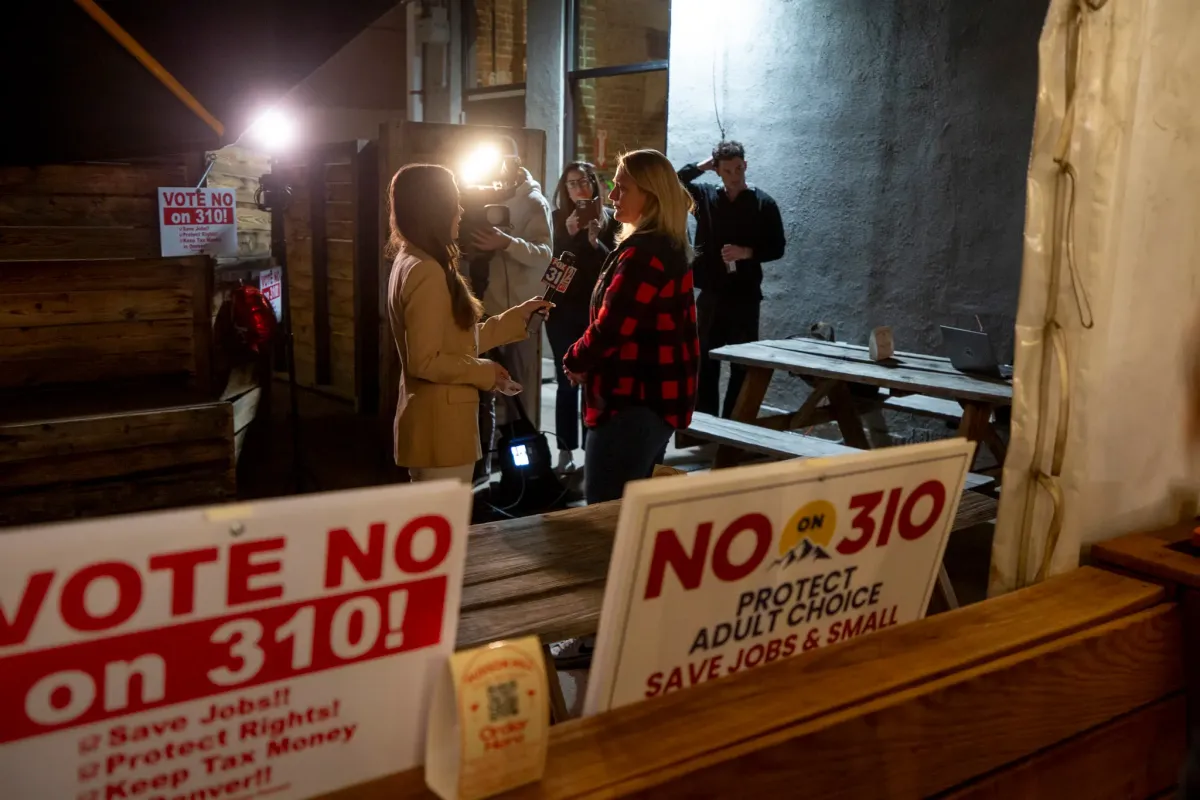
“People care about the health of our children and youth,” said Selena Dunham, outreach coordinator for the Yes on 310 campaign, celebrating the result at Denver’s Spangalang Brewery.


The campaign, branded Denver Kids vs. Big Tobacco, received a record-breaking $5 million donation from Michael Bloomberg, the largest single contribution in the city’s electoral history.


Opponents, led by Citizen Power! and vape shop coalition Rocky Mountain Smoke Free Alliance, raised $652,000. Business owner Phil Guerin said his group was “outspent to the point where voters couldn’t get all the information they needed.”


Denver now joins 13 other Colorado municipalities—including Aspen, Boulder, and Breckenridge—that restrict flavored tobacco sales. Across the U.S., nearly 400 cities and six states have implemented similar measures.


Public health advocates hailed the outcome as a pivotal win for youth protection. “This vote sends a message far beyond Colorado,” said Jodi Radke, regional director of the Campaign for Tobacco-Free Kids.

Image source: Denverite


We welcome news tips, article submissions, interview requests, or comments on this piece.

Please contact us at info@2firsts.com, or reach out to Alan Zhao, CEO of 2Firsts, on LinkedIn


Notice

1.  This article is intended solely for professional research purposes related to industry, technology, and policy. Any references to brands or products are made purely for objective description and do not constitute any form of endorsement, recommendation, or promotion by 2Firsts.

2.  The use of nicotine-containing products — including, but not limited to, cigarettes, e-cigarettes, nicotine pouchand heated tobacco products — carries significant health risks. Users are responsible for complying with all applicable laws and regulations in their respective jurisdictions.

3.  This article is not intended to serve as the basis for any investment decisions or financial advice. 2Firsts assumes no direct or indirect liability for any inaccuracies or errors in the content.

4.  Access to this article is strictly prohibited for individuals below the legal age in their jurisdiction.


Copyright


This article is either an original work created by 2Firsts or a reproduction from third-party sources with proper attribution. All copyrights and usage rights belong to 2Firsts or the original content provider. Unauthorized reproduction, distribution, or any other form of unauthorized use by any individual or organization is strictly prohibited. Violators will be held legally accountable.

For copyright-related inquiries, please contact: info@2firsts.com


AI Assistance Disclaimer


This article may have been enhanced using AI tools to improve translation and editorial efficiency. However, due to technical limitations, inaccuracies may occur. Readers are encouraged to refer to the cited sources for the most accurate information.

We welcome any corrections or feedback. Please contact us at: info@2firsts.com

ITC Keeps Exclusion and Cease-and-Desist Orders in Place Against Stiiizy
U.S. International Trade Commission has refused to pause the import and sales bans imposed on cannabis vape company Stiiizy while it appeals the agency’s patent infringement ruling in its dispute with Pax Labs.
Apr.07 by 2FIRSTS.ai
Thailand’s Bangkok Port Customs Reports E-Cigarette and Nitrous Oxide Seizure Worth More Than THB 27 Million
Bangkok Port Customs on April 28 announced the seizure of 52,000 complete e-cigarettes, 100 gallons of e-liquid and 126,226 canisters of nitrous oxide, with total economic damage exceeding THB 27 million, or about USD 831,178 based on an April 28 USD/THB rate of 32.484. The e-cigarette and e-liquid shipment was valued at THB 5.56 million, or about USD 171,161, while the nitrous oxide shipment was valued at THB 21.27 million, or about USD 654,784.
Apr.29 by 2FIRSTS.ai
The new regulations on nicotine in Argentina are creating caution, expectations, and doubts about the market, according to a local reference in harm reduction for smoking.
The new Argentine framework for tobacco and nicotine marks a shift from prohibition towards registration, traceability, and health surveillance. Juan Facundo Teme told 2Firsts that adult consumers and some of the commercial sector are cautiously optimistic, although concerns remain about flavors, registration costs, and market access.
May.11
Imperial Brands Pulls myblu Vape Business From U.S., Citing Prolonged FDA Approval Process
Imperial Brands said it will phase out its myblu vaping business in the United States, citing prolonged FDA approval timelines for new vape products. The company said it will instead focus on modern oral nicotine products in the U.S., including the expansion of its Zone brand and new flavors. While overall next-generation product revenue continued to grow, revenue from the category in the Americas declined sharply.
May.12
From myblu to Zone: Imperial Brands Refocuses NGP Strategy in HY26
mperial Brands’ HY26 results point to a more selective NGP transition. The company is using cash flow from traditional tobacco to fund targeted investments in modern oral nicotine, heated tobacco and reusable vaping systems. Its decision to exit the legacy myblu vaping business in the U.S., while expanding Zone nicotine pouches. In Europe, Imperial’s NGP growth is being driven by a multi-category portfolio including blu, Pulze and Zone/Skruf.
Special Report
May.12
KT&G Moves Ahead With Oral Nicotine Product Development and Pilot Line Preparation
According to a Korean media report, KT&G is developing a smokeless nicotine product that delivers nicotine through oral absorption and is preparing a pilot production line for research and development.
Apr.08 by 2FIRSTS.ai