Columbia Passes New Laws to Regulate E-cigarette Devices Usage

Regulations by 2FIRSTS.ai
May.16.2024
Columbia Passes New Laws to Regulate E-cigarette Devices Usage
Colombian President Gustavo Petro approves new legislation regulating e-cigarette devices to protect public health, especially minors.

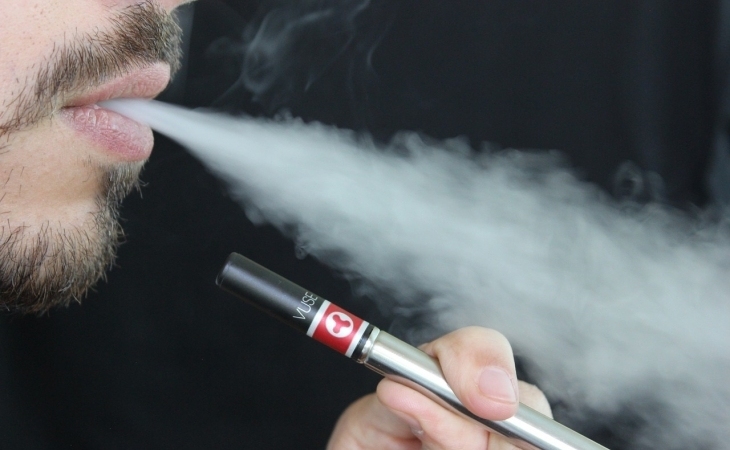
According to the Colombian media outlet El Nuevo Siglo, on May 15th, Colombian President Gustavo Petro approved new legislation regulating the use of e-cigarette devices in Colombia to protect public health, especially that of minors. The law, known as the "Anti-Tobacco Law 2.0," prohibits the direct or indirect sale of e-cigarettes and e-cigarette devices to minors within the country.


The "Anti-Tobacco Law 2.0," which came into effect on May 9th, amends the Anti-Tobacco Law No. 1335 of 2009 to address the emerging use of e-cigarette devices and electronic nicotine delivery systems. Through legislative changes, these devices are now subject to the same regulations as traditional tobacco products.


The initiator of this initiative, Senator Jose David Name, emphasizes that this new law represents a significant step forward for Colombia in protecting public health. He points out that after more than 15 years of work to ensure proper regulation of tobacco products, they have now established regulations that adapt to the new reality and comply with World Health Organization (WHO) standards.


This law opens up strategic space for developing regulations on the potential health impacts of these devices," Senator Nam explained. He further added that specific health and education programs will be developed targeting children and young people in the country to increase awareness of the risks associated with using e-cigarettes and e-cigarette devices.


This legislation also recognizes the rights of consumers, ensuring they receive information about tobacco products and their derivatives, as well as prevention and smoking cessation programs. The Ministry of Health and Social Security will be responsible for designing and carrying out educational activities about the potential health impacts and risks of using these products.


Certain provisions of the law have been given a transitional period to allow the industry to adapt and promote compliance with the new regulations. The law will take immediate effect upon its promulgation and repeal any previous legislation that conflicts with its provisions.


We welcome news tips, article submissions, interview requests, or comments on this piece.

Please contact us at info@2firsts.com, or reach out to Alan Zhao, CEO of 2Firsts, on LinkedIn


Notice

1.  This article is intended solely for professional research purposes related to industry, technology, and policy. Any references to brands or products are made purely for objective description and do not constitute any form of endorsement, recommendation, or promotion by 2Firsts.

2.  The use of nicotine-containing products — including, but not limited to, cigarettes, e-cigarettes, nicotine pouchand heated tobacco products — carries significant health risks. Users are responsible for complying with all applicable laws and regulations in their respective jurisdictions.

3.  This article is not intended to serve as the basis for any investment decisions or financial advice. 2Firsts assumes no direct or indirect liability for any inaccuracies or errors in the content.

4.  Access to this article is strictly prohibited for individuals below the legal age in their jurisdiction.


Copyright


This article is either an original work created by 2Firsts or a reproduction from third-party sources with proper attribution. All copyrights and usage rights belong to 2Firsts or the original content provider. Unauthorized reproduction, distribution, or any other form of unauthorized use by any individual or organization is strictly prohibited. Violators will be held legally accountable.

For copyright-related inquiries, please contact: info@2firsts.com


AI Assistance Disclaimer


This article may have been enhanced using AI tools to improve translation and editorial efficiency. However, due to technical limitations, inaccuracies may occur. Readers are encouraged to refer to the cited sources for the most accurate information.

We welcome any corrections or feedback. Please contact us at: info@2firsts.com

Putin Signs Russia’s Tobacco and Nicotine Product Licensing Law, Banning Unlicensed Sales From 2027
Russian President Vladimir Putin has signed a law introducing mandatory licensing for wholesale and retail trade in tobacco and nicotine-containing products, with the system taking effect on October 1, 2026, and unlicensed operations banned from March 1, 2027, while vape and e-liquid retail may also face uncertainty from temporary regional sales-ban powers.
Jul.01
Illegal Vape Sellers Still Use TikTok and Other Platforms to Drive Sales Despite Australia’s Ad Ban
Illegal vape sellers are still promoting nicotine products on TikTok, Instagram and YouTube despite Australia’s 2024 advertising ban, while illicit tobacco sales are increasingly moving from physical stores to online marketplaces.
Jul.15
UK Parliament Briefing Puts Vape Hardware Design and Materials in Regulatory Focus
The UK Parliament’s Parliamentary Office of Science and Technology (POST) has published a scientific briefing reviewing current evidence on the health effects of vape device components, including heating elements, power settings, metals, plastics, batteries and e-liquid ingredients, signalling growing regulatory attention to device design and whole-product systems beyond e-liquids, flavours and packaging.
Special Report
Jun.29
Hunan China Tobacco Industry files heated tobacco device patent featuring adult-user identification through pressure sensing
China-based Hunan China Tobacco Industry Co., Ltd. and Shenzhen Baisha Technology Co., Ltd. have filed a patent application covering an adult-user identification mechanism for heated tobacco devices. The patent proposes using flexible pressure sensors installed in the device grip area to collect pressure distribution patterns generated when users hold the device. The system evaluates factors including effective contact area, grip shape and contact duration, and combines roller movement detection to determine whether unlocking conditions are met. The filing reflects exploration of device-level user recognition and smarter interaction technologies for heated tobacco products (HTPs).
Aug.05
JT’s Ploom Volumes Rise 43.5% as Cigarettes Anchor Its Transition
JT’s Ploom heated-tobacco volumes rose 43.5% in the first half of 2026, while combustibles still represented about 97% of its tobacco volume and remained the main earnings base. In Japan, reduced-risk products now account for 48.7% of industry shipments, shifting competition from category adoption towards brand share, pricing and consumer retention. JT’s results offer a revealing case of a traditional tobacco company pursuing a prolonged, dual-track transformation.
JTI
Jul.30
EU ‘TPD3’ Enters Next Phase on Aug. 14 as Fragmented Vape and Nicotine Pouch Rules Push the Single Market Toward Regulatory Overhaul
A 12-week European Commission consultation on revising the Tobacco Products Directive and Tobacco Advertising Directive is due to close on Aug. 14, 2026. The Commission has identified e-cigarette flavours, disposable vapes, tobacco heating devices, nicotine pouches, nicotine-free e-cigarettes, packaging and digital marketing among areas for possible new EU rules. National regulations already vary significantly across the bloc, a fragmentation the Commission says creates internal-market barriers and distorts competition. No formal revised TPD/TAD legislative text has yet been published, with the Commission currently indicating December 2026 for the legislative initiative.
Aug.14