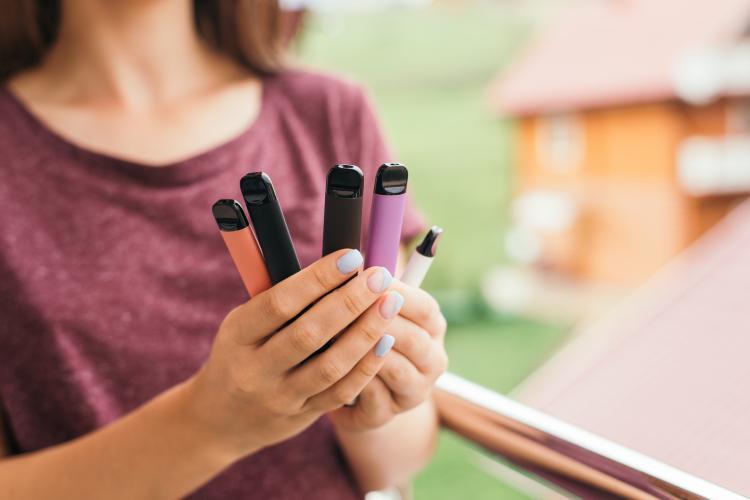
According to a report from betterretailing on August 14th, one-fifth of Scottish retailers are found to be selling e-cigarettes to children, based on testing and purchasing results done by the Scottish Trading Standards Institute. Furthermore, twelve percent of independent convenience stores were found to be selling products that violate statutory e-liquid restrictions. As a result, the government has emphasized the urgent need to strengthen enforcement measures.
A survey conducted by the Scottish Chief Trading Standards Officer Association (SCOTSS) on August 14 revealed that out of the 312 visited stores, 63 were found to have allowed underage individuals to purchase e-cigarette products for testing purposes.
The research findings have been described as "significantly worse than expected," with SCOTSS attributing the issue to the widespread use of e-cigarettes, especially disposable ones, and their appeal to children.
David MacKenzie, Chairperson of the Scottish Chief Trading Standards Officers Association (SCOTSS), expressed concerns over the results, stating, "These findings are extremely worrisome. We will intensify our efforts this year to provide guidance for sellers and continue to take enforcement action against non-compliant sellers.
He stated that individuals who sell tobacco and e-cigarette products to individuals under the age of 18 may receive fixed fines or be prohibited from selling the products. Alcohol licenses may also be revoked.
McKenzie also called for restrictions on e-cigarette products, stating, "The vibrant packaging colors and sugary, fruity flavors are particularly appealing to children, and the ease of accessibility of disposable e-cigarettes is especially unhelpful. We would like to see display rules for NVPs similar to those for tobacco, where they are kept out of sight in stores.
Reference materials
Exclusive: A recent investigation has uncovered a concerning statistic – one in five shops in Scotland are found to be selling vaping products to minors.
Disclaimer
This article is provided solely for professional research, industry discussion, and informational purposes. Any references to brands, companies, products, technologies, or policies are made for factual reporting and analytical purposes only, and do not constitute endorsement, recommendation, promotion, or advertising by 2Firsts.
Nicotine-containing products, including but not limited to cigarettes, e-cigarettes, heated tobacco products, and nicotine pouches, carry significant health risks. Readers are responsible for complying with all applicable laws and regulations in their respective jurisdictions, including age restrictions and access limitations.
The information contained in this article should not be regarded as investment, legal, medical, regulatory, or commercial advice. While 2Firsts strives to ensure the accuracy and reliability of its content, it does not assume liability for any direct or indirect loss arising from errors, omissions, inaccuracies, or reliance on the information contained herein.
This article is not intended for individuals below the legal age for accessing tobacco or nicotine-related information in their jurisdiction.
Copyright Notice
This article is either original content produced by 2Firsts or content reproduced, translated, summarized, or adapted from third-party sources with attribution where applicable. The intellectual property rights of the original content remain with 2Firsts or the respective original rights holders.
No individual or organization may copy, reproduce, distribute, republish, modify, translate, or otherwise use this content without prior authorization. Any unauthorized use may result in legal action.
For copyright-related inquiries, corrections, or removal requests, please contact: info@2firsts.com.
AI-Assisted Translation and Editing Notice
Portions of this article may have been translated, edited, or reviewed with the assistance of artificial intelligence tools to improve efficiency and readability. Due to the limitations of AI-assisted translation and editing, discrepancies, omissions, or inaccuracies may exist when compared with the original source.
Where applicable, readers are advised to refer to the original source for the most complete and accurate information. If you identify any errors or believe that any content infringes upon your rights, please contact us at info@2firsts.com, and we will review and address the matter promptly.