Controversial Minister Order Restricts Nicotine Pouch Sales in Canada

Sep.09.2024
Controversial Minister Order Restricts Nicotine Pouch Sales in Canada
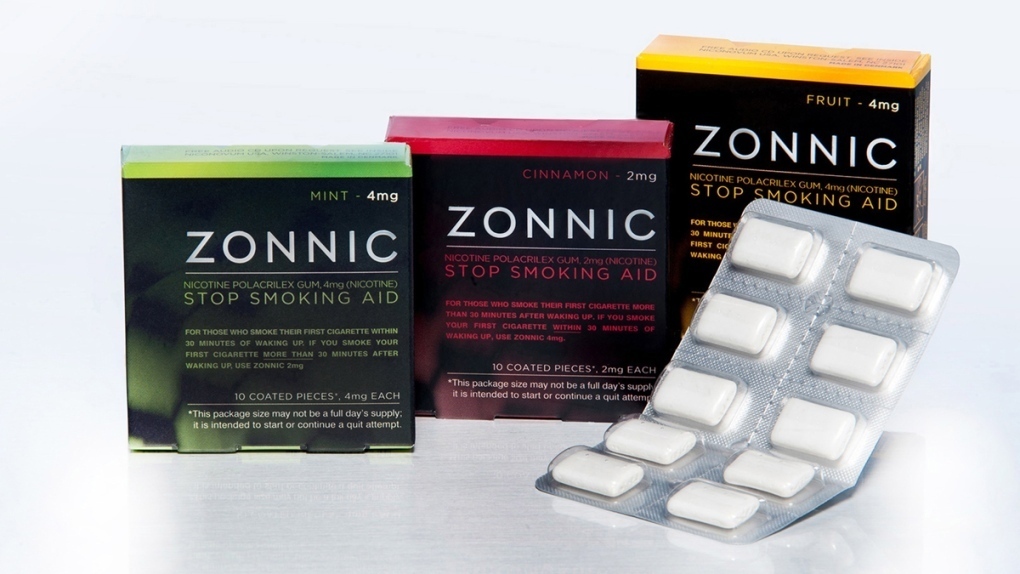
Canadian Health Minister Mark Holland issued a controversial ministerial order limiting nicotine pouch sales to pharmacies, affecting ZONNIC sales.

According to a report from CTV News on September 9th, Canadian Health Minister Mark Holland has issued a controversial ministerial order. Starting on Wednesday, Canadians will only be able to purchase nicotine pouches at pharmacies. The announcement of this measure has impacted the sales of ZONNIC, a nicotine pouch brand owned by Imperial Tobacco Canada (ITCAN), in convenience stores.


Two pharmacies in Brookville, Ontario, Shoppers Drug Mart and Rexall, have stated that they currently have no plans to stock the product.


A convenience store in Qiandao City expressed that these nicotine pouches are very popular, with three to four customers coming to purchase them just last Sunday morning, but ultimately leaving empty-handed.


Some officials in Canada have expressed concerns that these products are too easily accessible to minors. Supporters of nicotine pouches argue that the new regulations make it more difficult for those who actually use them to quit smoking to obtain them.


We welcome news tips, article submissions, interview requests, or comments on this piece.

Please contact us at info@2firsts.com, or reach out to Alan Zhao, CEO of 2Firsts, on LinkedIn


Notice

1.  This article is intended solely for professional research purposes related to industry, technology, and policy. Any references to brands or products are made purely for objective description and do not constitute any form of endorsement, recommendation, or promotion by 2Firsts.

2.  The use of nicotine-containing products — including, but not limited to, cigarettes, e-cigarettes, nicotine pouchand heated tobacco products — carries significant health risks. Users are responsible for complying with all applicable laws and regulations in their respective jurisdictions.

3.  This article is not intended to serve as the basis for any investment decisions or financial advice. 2Firsts assumes no direct or indirect liability for any inaccuracies or errors in the content.

4.  Access to this article is strictly prohibited for individuals below the legal age in their jurisdiction.


Copyright


This article is either an original work created by 2Firsts or a reproduction from third-party sources with proper attribution. All copyrights and usage rights belong to 2Firsts or the original content provider. Unauthorized reproduction, distribution, or any other form of unauthorized use by any individual or organization is strictly prohibited. Violators will be held legally accountable.

For copyright-related inquiries, please contact: info@2firsts.com


AI Assistance Disclaimer


This article may have been enhanced using AI tools to improve translation and editorial efficiency. However, due to technical limitations, inaccuracies may occur. Readers are encouraged to refer to the cited sources for the most accurate information.

We welcome any corrections or feedback. Please contact us at: info@2firsts.com

Major U.S.  Vape Distributor Demand Vape Pays at Least $300,000 for White House Lobbying Amid Enforcement Pressure
Major U.S. Vape Distributor Demand Vape Pays at Least $300,000 for White House Lobbying Amid Enforcement Pressure
New York vape distributor Ecto World, which operates as Demand Vape, hired political consultant Roger Stone to lobby the Executive Office of the President on regulation of vaping and related products while facing state enforcement and multiple lawsuits. Public lobbying disclosures show that Ecto World paid at least $300,000 for the work through June 30, 2026. Separately, New York State announced in March that more than 28,500 pounds of vaping products tied to the company had been seized, while New York City and the state have pursued legal or enforcement actions. Public records do not show that the lobbying directly changed any specific regulatory or enforcement outcome.
Sep.08
BAT Expands ITC Infotech Partnership Across Poland, Romania and India to Advance AI
ITC Infotech has expanded its multi-year strategic technology partnership with British American Tobacco (BAT), providing technology services across Poland, Romania and India while continuing to support BAT's newly launched Future Capabilities Centre in India and existing technology hubs in Malaysia and Mexico. The companies said the agreement will focus on AI-enabled innovation, technology capability building and greater operational efficiency. The partnership also aligns with BAT's broader Fit2Win transformation programme, under which the group is expanding the use of external technology and business-services partners to simplify its global operating model.
Aug.13
U.S. Fifth Circuit Vacates NicQuid Vape MDO, Says FDA Comparative-Efficacy Standard Violated APA Procedures
According to VitalLaw on August 27, 2026, the U.S. Court of Appeals for the Fifth Circuit vacated an FDA marketing denial order (MDO) against NicQuid LLC, ruling that the agency’s comparative-efficacy standard for electronic nicotine delivery system (ENDS) applications had become a substantive rule requiring notice-and-comment rulemaking under the Administrative Procedure Act (APA). The court did not reject FDA’s authority to compare the public health benefits and risks of flavored vapes, but held that the agency could not establish a broadly binding standard through informal adjudications. The case was remanded to FDA for further proceedings.
Aug.28
Retail Case Study | Wisconsin Vape Market One Year After New Regulations: Johnny Vapes Reports 80% Sales Decline as Consumers Shift Online and Across State Lines
According to WNCY on August 24, 2026, some independent vape retailers in Wisconsin say they have faced significant business pressure one year after new vape regulations took effect. Johnny Vapes, a retailer operating in northeast Wisconsin, said its store count fell from seven locations to four, sales declined by about 80%, and roughly 90% of its inventory was affected. Retailers said some consumers have shifted to online purchases or traveled to neighboring Michigan to buy vape products. The case highlights how local regulations can reshape retail operations, inventory management and consumer purchasing patterns.
Aug.28
China Tobacco Supply-Chain Leader Huabao’s Three-Way Transformation Takes Hold as Overseas Revenue Jumps 216%, Non-Flavor Businesses Reach 42.2% and the Company Expands Into Global Next-Generation Tobacco Supply Chains
Huabao’s H1 2026 results show the company advancing across three connected fronts: international expansion, entry into next-generation tobacco supply chains and diversification beyond its traditional tobacco-related base. Overseas revenue rose 216.08% to CNY 96.02 million, while non-flavor businesses reached 42.2% of total revenue. Huabao also said it had entered the supply chains of leading global tobacco customers, as its nutrition, food ingredient, fragrance and personal-care businesses gained ground in Europe, Southeast Asia, Australia and New Zealand. However, adjusted net profit increased only 2.78%, and next-generation tobacco revenue was not separately disclosed, showing that the transformation is reshaping revenue and customer exposure but has yet to translate fully into underlying earnings.
Aug.28
Australia Extends Illicit Tobacco Crackdown From Tougher Penalties to Customs and Logistics Supply Chains
Australia's federal government introduced a new illicit tobacco enforcement bill on September 10 that would strengthen evidentiary presumptions, representative sampling, seizure and forfeiture procedures, proceeds-of-crime powers and obligations for customs and logistics operators. The proposal follows the Combatting Illicit Tobacco Act 2026, which took effect in August and increased penalties while expanding investigative and asset-recovery tools. Together, the reforms extend Australia's crackdown from tougher criminal sanctions into import, logistics and evidentiary enforcement.
Sep.14