Crackdown on Smuggling: Turkey Seizes Millions in Contraband

Regulations by 2FIRSTS.ai
Jan.10.2024
Crackdown on Smuggling: Turkey Seizes Millions in Contraband
Turkish authorities have seized smuggled items worth millions during 2023 inspections, including cigarettes, e-cigarettes, animals, and cultural artifacts.

According to Turkish media outlet Hurriyetdailynews, data on the crackdown on smuggling at border crossings and ports in 2023 has been released. During the inspections and operations conducted in 2023, approximately 1.15 million packages of smuggled cigarettes with a value of 46.2 million Turkish lira were seized. Additionally, around 1.2 million e-cigarettes worth 565.5 million Turkish lira (approximately 18.86 million US dollars), 7 million e-cigarette components worth 80.4 million Turkish lira, 8,670 live animals, and 3,924 historical, natural, and cultural items were confiscated.


As the import and domestic sale of smuggled e-cigarettes are prohibited and they are not subject to taxation, these items are not included in the potential fiscal revenue loss.


In the opening ceremony at the Istanbul headquarters of the Turkish Young Businessmen and Industrialists Association (TÜGİAD), Trade Minister Erman Bulut stated on January 8th that his department is making efforts to combat individuals engaging in unfair trade practices.


At this juncture, should we identify any disparities, unfairness, or excessive conduct in any sector or industry, we undertake investigations through our inspection team. If any legal loopholes are found, we promptly make the necessary adjustments.


We welcome news tips, article submissions, interview requests, or comments on this piece.

Please contact us at info@2firsts.com, or reach out to Alan Zhao, CEO of 2Firsts, on LinkedIn


Notice

1.  This article is intended solely for professional research purposes related to industry, technology, and policy. Any references to brands or products are made purely for objective description and do not constitute any form of endorsement, recommendation, or promotion by 2Firsts.

2.  The use of nicotine-containing products — including, but not limited to, cigarettes, e-cigarettes, nicotine pouchand heated tobacco products — carries significant health risks. Users are responsible for complying with all applicable laws and regulations in their respective jurisdictions.

3.  This article is not intended to serve as the basis for any investment decisions or financial advice. 2Firsts assumes no direct or indirect liability for any inaccuracies or errors in the content.

4.  Access to this article is strictly prohibited for individuals below the legal age in their jurisdiction.


Copyright


This article is either an original work created by 2Firsts or a reproduction from third-party sources with proper attribution. All copyrights and usage rights belong to 2Firsts or the original content provider. Unauthorized reproduction, distribution, or any other form of unauthorized use by any individual or organization is strictly prohibited. Violators will be held legally accountable.

For copyright-related inquiries, please contact: info@2firsts.com


AI Assistance Disclaimer


This article may have been enhanced using AI tools to improve translation and editorial efficiency. However, due to technical limitations, inaccuracies may occur. Readers are encouraged to refer to the cited sources for the most accurate information.

We welcome any corrections or feedback. Please contact us at: info@2firsts.com

Japan Survey Finds 49.5% Would Cut Tobacco Use if Prices Rise, 64.6% Show Interest in Nicotine-Free Alternatives
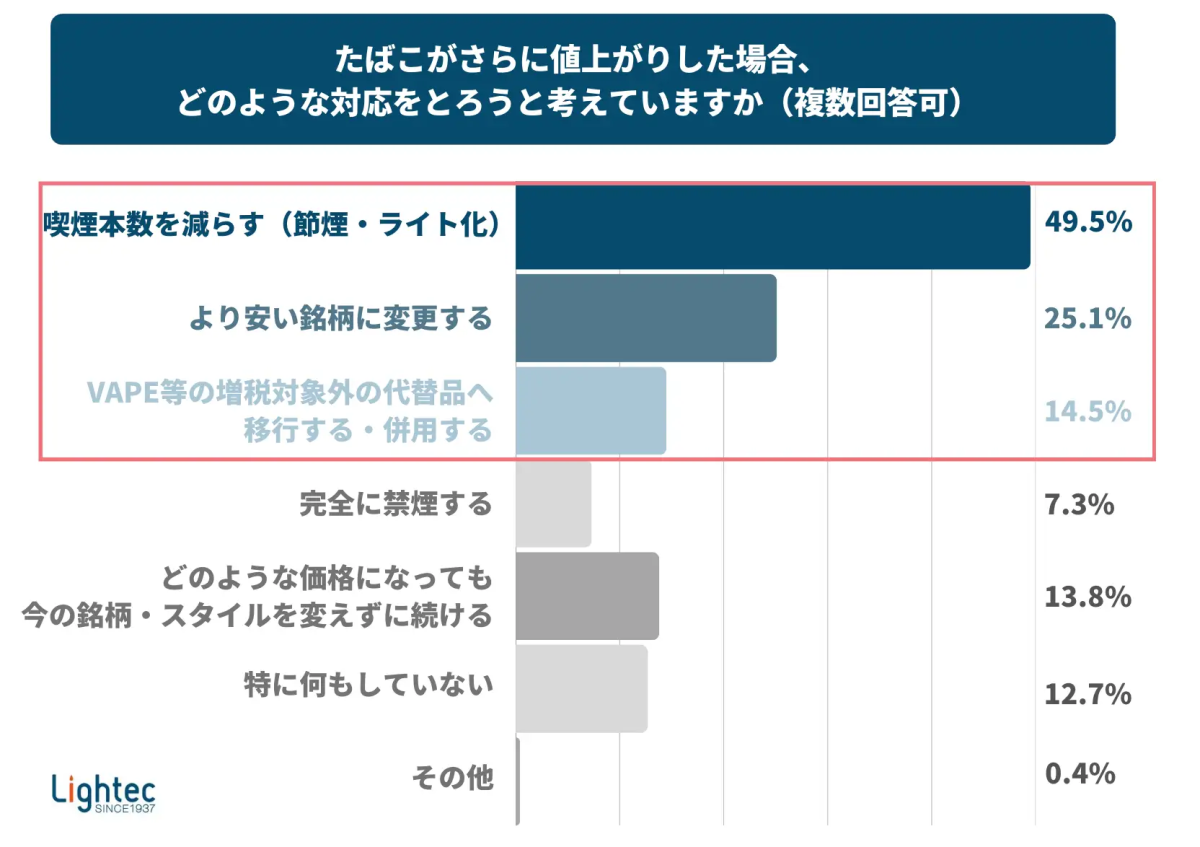
A September online survey commissioned by Japanese smoking-accessories company Lightec found that 49.5% of respondents would consider reducing tobacco use if prices rose further, while 25.1% would consider switching to cheaper brands and 14.5% would consider using or combining alternatives such as vapes and nicotine-free herbal sticks. Another 64.6% expressed some level of interest in such alternatives. The survey covered 1,088 respondents aged 20 to 70 and was conducted by a company that sells NICOLESS nicotine-free vaping and herbal-stick products, meaning its findings should not be treated as representative of Japan's smoking population.
DATA
Oct.12
Swedish Match Faces Broader Labeling Order After ZYN Inspection, Documents Obtained by 2Firsts Show
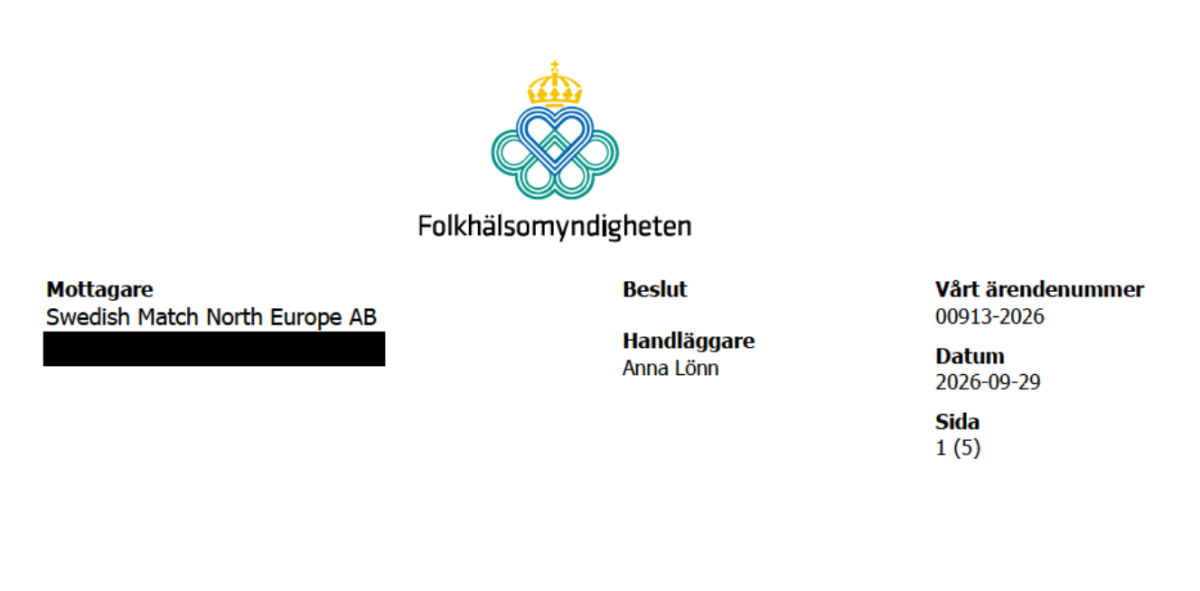
Documents obtained by 2Firsts show that Sweden's Public Health Agency ordered Swedish Match to revise ingredient labels beyond the five ZYN products inspected. The dispute centers on whether flavoring ingredients must be individually disclosed, with Swedish Match citing trade-secret protection and the regulator insisting on full ingredient disclosure. The company faces a conditional penalty of SEK 2 million per month for noncompliance. As of October 22, the agency had received no appeal, despite the company's stated intention to challenge the decision.
Oct.22
Product | BAT Revises Japan's VELO Convenience Store Lineup, Adding ¥380 Mango Pouches as Selected SKUs Exit
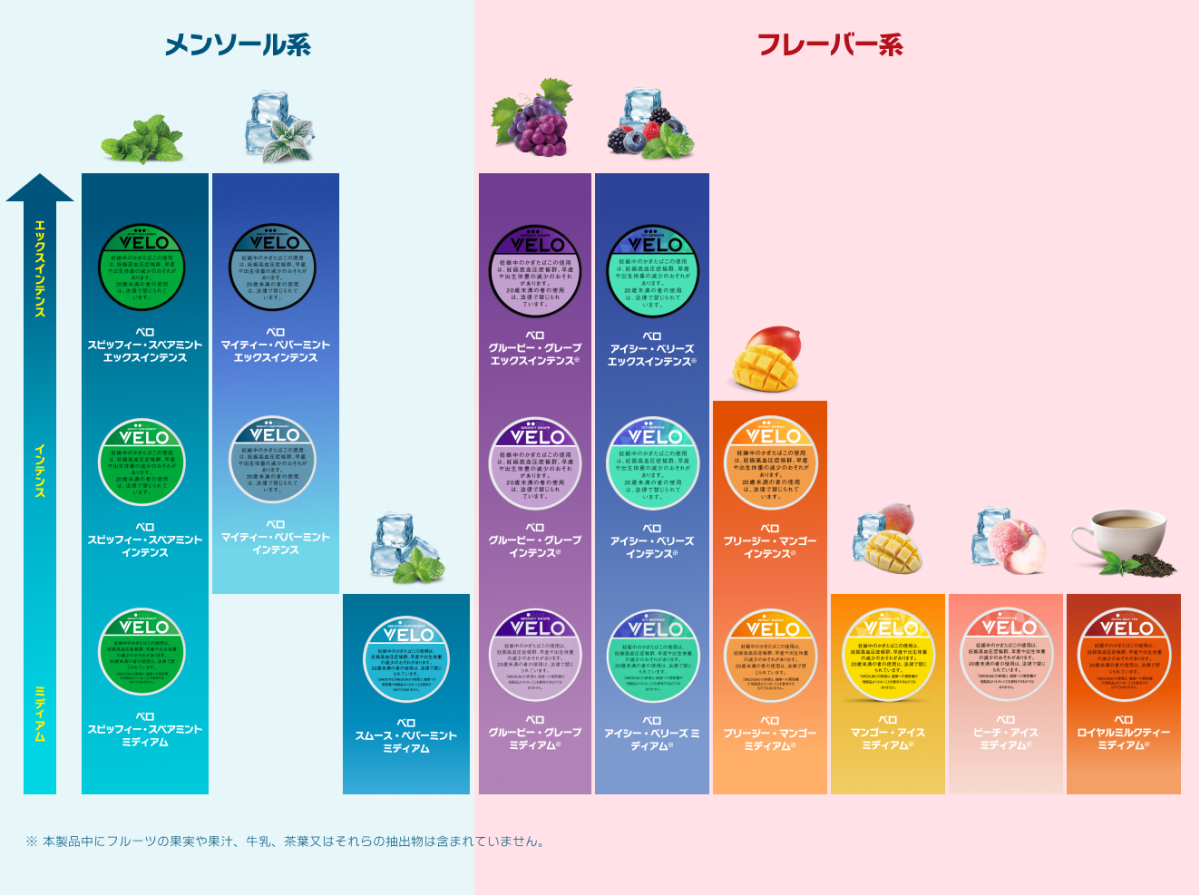
British American Tobacco's Japanese subsidiary, BAT Japan, launched VELO Mango Ice Medium on November 2, 2026, with distribution expanding to selected 7-Eleven, FamilyMart, NewDays and Seicomart stores from November 3. The new oral tobacco product contains 15 pouches per can and retails for ¥380, featuring a mango and cooling flavor profile at Medium intensity. At the same time, BAT Japan raised prices on multiple existing VELO products from ¥360 to ¥380 per can and withdrew selected SKUs from convenience store distribution without discontinuing them entirely. The changes affect product assortment, pricing and retail channel allocation.
product
Nov.04
PMI Showcases ZYN, IQOS and U.S. Investments at NACS Show 2026
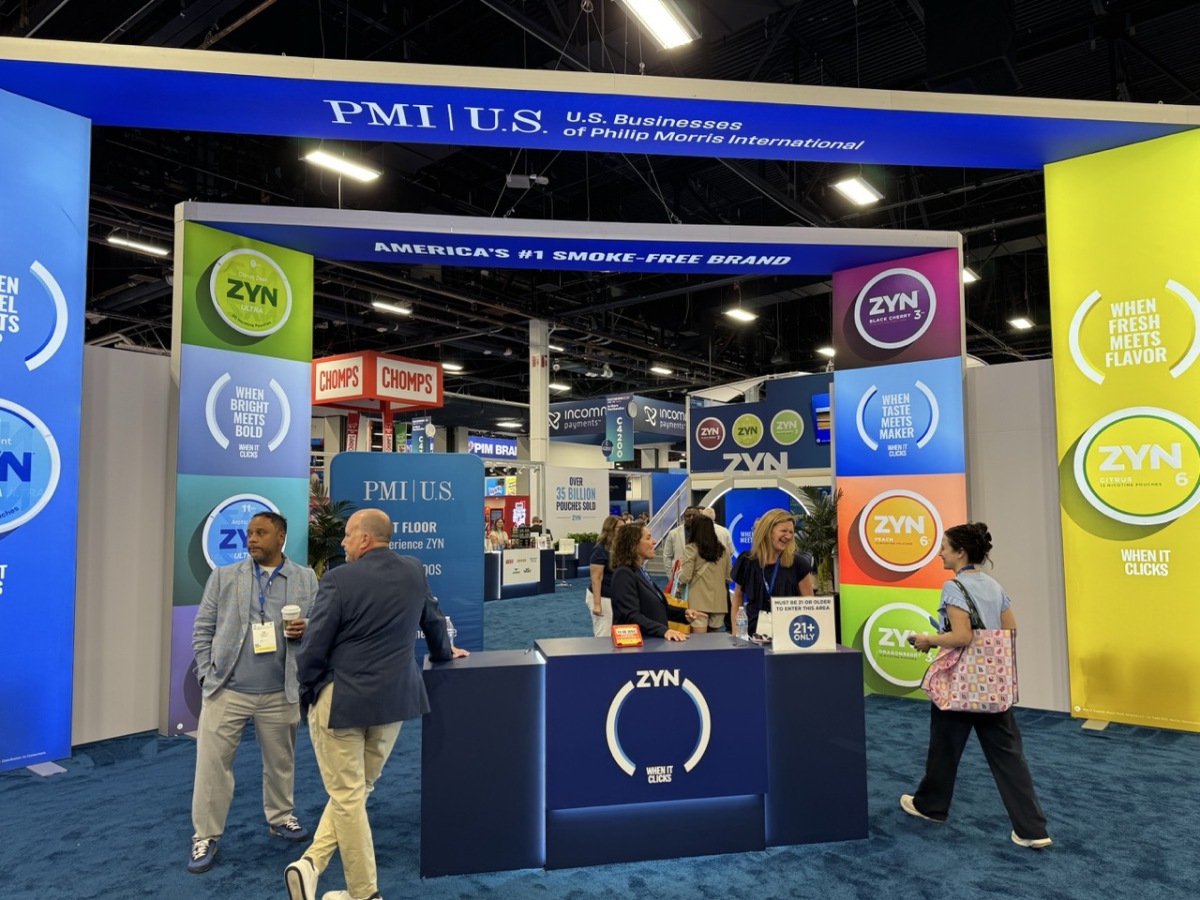
At the 2026 NACS Show in Las Vegas, Philip Morris International (PMI) showcased its ZYN nicotine pouches, IQOS heated tobacco products and U.S. investments. A 2Firsts review of FDA records found that several ZYN products displayed at the booth were not on the agency's marketing authorization list, including certain nicotine strengths and flavors. A PMI booth representative also confirmed that IQOS is currently sold in three U.S. states, while the newer IQOS ILUMA system remains under FDA review.
EXPO
Oct.10
India Duty-Free Nicotine Pouch Sales Face Regulatory Test as ZYN, FOX Classification Remains Open
The Bombay High Court has ruled that airport duty-free shops are not exempt from India's domestic regulatory laws merely because they operate beyond the customs barrier, leaving in place a sales halt covering ZYN and FOX nicotine pouches at Mumbai's international airport. The court, however, did not determine that the products necessarily qualify as "drugs" under India's Drugs and Cosmetics Act. The retailers have four weeks to submit product information to the appropriate authorities, including CDSCO, which must complete its review within 30 days of receiving the submissions.
Sep.24
North Carolina Tightens Vape Product Directory Enforcement, Expands State and Local Powers as Violators Face Fines, Product Seizures and License Suspension or Revocation
North Carolina has expanded enforcement of its vapor product directory rules, authorizing more state and local law enforcement participation and establishing a task force led by the State Bureau of Investigation. The legislation requires at least one unannounced compliance inspection annually for retailers, distributors and wholesalers handling covered products. Penalties effective October 1, 2026, include civil fines of $500–$750 for a first violation and $1,000–$1,500 for repeated violations within 12 months, along with potential license suspension or revocation. Manufacturers may face penalties of $10,000 per unlisted product. The measures strengthen the product directory system established in 2024.
Regulations
Oct.28