Pakistan Speeds Up Local Nicotine Pouch Production as PMI Unit Prepares to Launch ZYN

Dec.05.2025
Pakistan Speeds Up Local Nicotine Pouch Production as PMI Unit Prepares to Launch ZYN
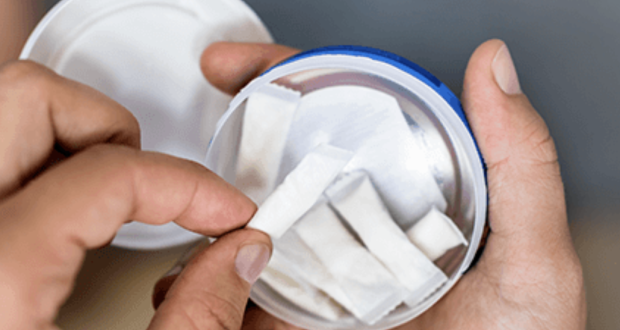
Pakistan’s smokeless, tobacco-free nicotine pouch market has expanded rapidly in recent years, prompting major tobacco companies to accelerate local investments, with Philip Morris Pakistan Ltd. (PMPKL) set to produce ZYN at its Sahiwal facility.

Key Points


  • Pakistan’s nicotine pouch market is growing rapidly, reshaping traditional tobacco consumption patterns.
  • PMI’s subsidiary PMPKL is set to begin local production of ZYN in Sahiwal in 2025.
  • Studies indicate that several carcinogenic substances in nicotine pouches are significantly lower than in traditional smokeless tobacco.
  • Local manufacturing is expected to strengthen regulation, curb illicit products, and reduce public health costs.


2Firsts, December 5, 2025 — According to Dhaka Tribune, Pakistan’s smokeless, tobacco-free nicotine pouch market has been expanding rapidly, transforming the country’s traditional tobacco consumption landscape.


Since 2019, modern smokeless nicotine products have grown quickly in the local market, with Velo—introduced by BAT-owned Pakistan Tobacco Company (PTC)—taking the lead. Major tobacco companies have since moved to localize production, including Philip Morris (Pakistan) Limited (PMPKL), the local subsidiary of Philip Morris International (PMI). In November 2025, PMPKL is scheduled to begin producing ZYN at its facility in Sahiwal, Punjab Province, marking Pakistan’s transition from being primarily a consumption market to a market with domestic manufacturing and integrated supply chains.


The report notes that local production can reduce reliance on imports while enabling taxation through formal channels, improving age verification and product quality oversight, and helping combat smuggling and illicit trade—ultimately lowering public health and social costs. At the same time, government and public health authorities are urged to establish robust regulatory frameworks to balance harm-reduction potential with the need to prevent youth access and misuse of emerging nicotine products.


We welcome news tips, article submissions, interview requests, or comments on this piece.

Please contact us at info@2firsts.com, or reach out to Alan Zhao, CEO of 2Firsts, on LinkedIn


Notice

1.  This article is intended solely for professional research purposes related to industry, technology, and policy. Any references to brands or products are made purely for objective description and do not constitute any form of endorsement, recommendation, or promotion by 2Firsts.

2.  The use of nicotine-containing products — including, but not limited to, cigarettes, e-cigarettes, nicotine pouchand heated tobacco products — carries significant health risks. Users are responsible for complying with all applicable laws and regulations in their respective jurisdictions.

3.  This article is not intended to serve as the basis for any investment decisions or financial advice. 2Firsts assumes no direct or indirect liability for any inaccuracies or errors in the content.

4.  Access to this article is strictly prohibited for individuals below the legal age in their jurisdiction.


Copyright


This article is either an original work created by 2Firsts or a reproduction from third-party sources with proper attribution. All copyrights and usage rights belong to 2Firsts or the original content provider. Unauthorized reproduction, distribution, or any other form of unauthorized use by any individual or organization is strictly prohibited. Violators will be held legally accountable.

For copyright-related inquiries, please contact: info@2firsts.com


AI Assistance Disclaimer


This article may have been enhanced using AI tools to improve translation and editorial efficiency. However, due to technical limitations, inaccuracies may occur. Readers are encouraged to refer to the cited sources for the most accurate information.

We welcome any corrections or feedback. Please contact us at: info@2firsts.com

2Firsts Data | China’s Vape Exports Rise 3.1% in H1 2026 as 6-Methyl Nicotine-Related Products Surge 65.2%
China’s vape exports showed resilience in the first half of 2026 after a short-term shock from China’s export rebate adjustment. But customs data points to more than a simple recovery: the structure of growth is changing. Vaping devices and atomization hardware emerged as the strongest growth driver, while nicotine-containing vaping products remained broadly stable. Meanwhile, nicotine substitute-related products represented by 6-methyl nicotine expanded rapidly, becoming a new category to watch for both industry and regulators. After the U.S. market went through a cycle of shortages, replenishment and inventory rebuilding in 2025, China’s vape supply chain is entering a new phase of reallocation.
Special Report
Jul.20
Altria Smokeable Profit Rises 2.4% as Marlboro Share Falls and U.S. Discounts Gain
Altria’s second-quarter results show a U.S. nicotine market splitting across price, product and regulation. Smokeable profit rose 2.4% as Marlboro pricing offset lower volumes, while discount brand Basic gained share among value-conscious smokers. In oral nicotine, on! PLUS expanded distribution but faced intensifying competition from ZYN and Velo. NJOY remained off the market as patent and regulatory hurdles delayed its return. The broader lesson: U.S. growth increasingly depends on price-tier strategy, retail execution, authorisation and enforcement readiness across the industry.
Special Report
Jul.31
Charlie’s Says 30 PACHA Vape SKUs Tentatively Identified for FDA’s Non-Priority Enforcement Public List
Charlie’s Holdings said the U.S. Food and Drug Administration notified the company on June 23, 2026, that 30 PACHA vape SKUs with submitted PMTAs had been tentatively identified for inclusion on a planned public-facing FDA webpage. Under enforcement guidance issued by FDA in May, the webpage is intended to identify certain unauthorized products for which the agency generally does not intend to prioritize enforcement of premarket authorization requirements. Charlie’s disclosed the development alongside second-quarter revenue of $3.8 million, up 116% year over year.
Aug.25
 $20 Million, a Permanent Injunction and Distributor Controls: Posh Deal Tightens Illinois Vape Compliance
$20 Million, a Permanent Injunction and Distributor Controls: Posh Deal Tightens Illinois Vape Compliance
An Illinois court ordered three companies tied to Posh vapes to pay $20 million and permanently restricted the sale, marketing and distribution in Illinois of products lacking required FDA authorization. The consent order also imposes downstream distributor controls, age-verification measures and social-media marketing limits, creating a new state-level compliance benchmark for disposable vape businesses.
Regulations
Aug.05
BAT UK Director Tolga Kilic Says Illicit Nicotine Market Squeezes Legal Retailers Amid Rising Compliance Costs
UK retail publication Grocery Trader has published a viewpoint article from Tolga Kilic, Commercial Director for BAT UK & Ireland, discussing the impact of illicit nicotine products on legitimate retail channels. Kilic said illegal vapes and other illicit nicotine products create competitive pressure for compliant retailers and called for stronger market controls and supply-chain oversight. The comments come as the UK advances policies including the disposable vape ban and Vaping Products Duty, creating a more complex operating environment for legal vape retailers.
Jul.28
Shopify Requires Merchants to Remove All Vape Products by July 8, Reshaping Online Sales Channels
Shopify has instructed merchants using its web-hosting services to remove vape products from their online stores by July 8, 2026. The policy expands beyond illegal products and applies to all electronic nicotine delivery systems (ENDS), marking a broader shift in online platform oversight of nicotine sales.
Innovation
Jul.14 by 2Firsts Perspectives