Key Points:
· Donation & Recipient: Michael R. Bloomberg donated $1.5 million to the pro-ban campaign committee Denver Kids vs Big Tobacco, on top of a prior $73,500 in in-kind support.
· Referendum & Ballot Meaning: Denver’s “flavored-tobacco ban” goes to a Nov. 4 referendum; Yes = keep the ban, No = repeal the ban.
· Policy Background: In Dec. 2024, the Denver City Council voted to prohibit retail sales of “flavored tobacco products.” In March 2025, e-cigarette retailers submitted about 17,000 signatures to force a referendum, spending roughly $240,000 on the effort.
· Fundraising Comparison (as of Oct. 8): Pro-ban side has raised over $2 million; opposition about $468,000 (per city records).
· Arguments: Opponents say the ban affects ~550 retailers and could cost $13 million in sales-tax revenue. Supporters and medical experts cite about $22 billion in annual healthcare costs and $44 billion in productivity losses from flavored tobacco, plus $415 million in Medicaid spending.
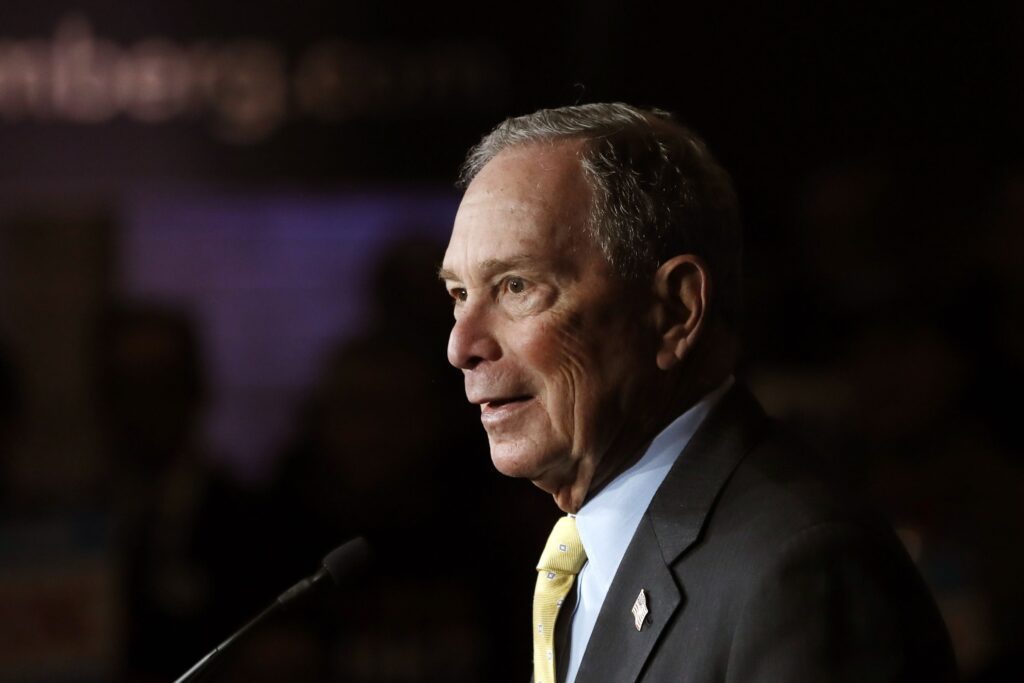
2Firsts, Oct. 9, 2025 — Citing reports from Denver Searchlight and the Denver Gazette, former New York City mayor and Bloomberg LP founder Michael Bloomberg has stepped into Denver’s fight over its flavored-tobacco ban, which faces a repeal bid via referendum.
According to the Denver Gazette, Bloomberg contributed $1.5 million to Denver Kids vs Big Tobacco, the campaign supporting the ban’s retention. Known for his anti-tobacco stance and work through Bloomberg Philanthropies, the gift follows $73,500 in earlier in-kind support.
In December 2024, the Denver City Council voted to bar retailers from selling or offering any “flavored tobacco products.” In March 2025, e-cigarette retailers—including Phil Guerin—submitted 17,000 signatures, securing a Nov. 4 referendum. Guerin said getting the measure on the ballot cost over $240,000.
Under the ballot rules, a Yes vote keeps the ban; a No vote repeals it. City data show the pro-ban camp had raised over $2 million by Oct. 8, versus about $468,000 for opponents.
Guerin criticized Bloomberg as being “out of touch with Denver,” arguing that cigarettes—not e-cigarettes—should be targeted. He said the ban affects roughly 550 retailers and could mean $13 million in lost sales-tax revenue.
Meanwhile, city officials and medical experts estimate flavored tobacco leads to $2.2 billion in annual healthcare costs, $4.4 billion in productivity losses, and $415 million in Medicaid spending—an estimated $772 tax burden per household.
Cover image: denvergazette
We welcome news tips, article submissions, interview requests, or comments on this piece.
Please contact us at info@2firsts.com, or reach out to Alan Zhao, CEO of 2Firsts, on LinkedIn
Notice
1. This article is intended solely for professional research purposes related to industry, technology, and policy. Any references to brands or products are made purely for objective description and do not constitute any form of endorsement, recommendation, or promotion by 2Firsts.
2. The use of nicotine-containing products — including, but not limited to, cigarettes, e-cigarettes, nicotine pouchand heated tobacco products — carries significant health risks. Users are responsible for complying with all applicable laws and regulations in their respective jurisdictions.
3. This article is not intended to serve as the basis for any investment decisions or financial advice. 2Firsts assumes no direct or indirect liability for any inaccuracies or errors in the content.
4. Access to this article is strictly prohibited for individuals below the legal age in their jurisdiction.
Copyright
This article is either an original work created by 2Firsts or a reproduction from third-party sources with proper attribution. All copyrights and usage rights belong to 2Firsts or the original content provider. Unauthorized reproduction, distribution, or any other form of unauthorized use by any individual or organization is strictly prohibited. Violators will be held legally accountable.
For copyright-related inquiries, please contact: info@2firsts.com
AI Assistance Disclaimer
This article may have been enhanced using AI tools to improve translation and editorial efficiency. However, due to technical limitations, inaccuracies may occur. Readers are encouraged to refer to the cited sources for the most accurate information.
We welcome any corrections or feedback. Please contact us at: info@2firsts.com