Dr. Ben Carson Criticizes Biden's Delayed Menthol Cigarette Ban

Industry Insight by 2FIRSTS.ai
Dec.15.2023
Dr. Ben Carson Criticizes Biden's Delayed Menthol Cigarette Ban
Former United States Secretary of Housing and Urban Development, Dr. Ben Carson, accuses the Biden administration of delaying the menthol cigarette ban to appease Black voters, according to Newsmax.

According to a report by Newsmax this Thursday, former US Secretary of Housing and Urban Development, Dr. Ben Carson, stated that the Biden administration's decision to delay its ban on menthol cigarettes is an attempt to appease African American voters.


The former Minister of Housing and Urban Development delved into the recent decision by White House officials to delay the comprehensive plan by the US health regulatory agency to ban menthol cigarettes during an episode of the "National Report" program.


Carson was questioned about whether this administrative decision met the satisfaction of the civil rights organizations opposing the smoking ban, as they argued that the ban unfairly targeted black communities.


It's hard to find a valid public health reason to delay such a ban," Carson told the host. "When you consider that 85% of black adult smokers are menthol smokers, this is a significant figure.


He added, "The National Institutes of Health (NIH) predicts that if the (menthol cigarettes) ban continues to be implemented, it will save the lives of one million people.


Therefore, he stated that the Biden administration does not have any other convincing reasons for not implementing this ban.


We welcome news tips, article submissions, interview requests, or comments on this piece.

Please contact us at info@2firsts.com, or reach out to Alan Zhao, CEO of 2Firsts, on LinkedIn


Notice

1.  This article is intended solely for professional research purposes related to industry, technology, and policy. Any references to brands or products are made purely for objective description and do not constitute any form of endorsement, recommendation, or promotion by 2Firsts.

2.  The use of nicotine-containing products — including, but not limited to, cigarettes, e-cigarettes, nicotine pouchand heated tobacco products — carries significant health risks. Users are responsible for complying with all applicable laws and regulations in their respective jurisdictions.

3.  This article is not intended to serve as the basis for any investment decisions or financial advice. 2Firsts assumes no direct or indirect liability for any inaccuracies or errors in the content.

4.  Access to this article is strictly prohibited for individuals below the legal age in their jurisdiction.


Copyright


This article is either an original work created by 2Firsts or a reproduction from third-party sources with proper attribution. All copyrights and usage rights belong to 2Firsts or the original content provider. Unauthorized reproduction, distribution, or any other form of unauthorized use by any individual or organization is strictly prohibited. Violators will be held legally accountable.

For copyright-related inquiries, please contact: info@2firsts.com


AI Assistance Disclaimer


This article may have been enhanced using AI tools to improve translation and editorial efficiency. However, due to technical limitations, inaccuracies may occur. Readers are encouraged to refer to the cited sources for the most accurate information.

We welcome any corrections or feedback. Please contact us at: info@2firsts.com

South Korea’s Cigarette Smoking Rate Falls to 17.9%, E-Cigarette Use Continues to Rise
Data released by the Korea Disease Control and Prevention Agency (KDCA) showed South Korea’s conventional cigarette smoking rate fell to 17.9% in 2025, while heated tobacco and liquid e-cigarette use continued to rise, particularly among young adults and women.
Jun.01
BAT Estimates U.S. Unauthorized Vape Market at $9.4 Billion, Plans New Vuse and Velo Launches After FDA Enforcement Shift
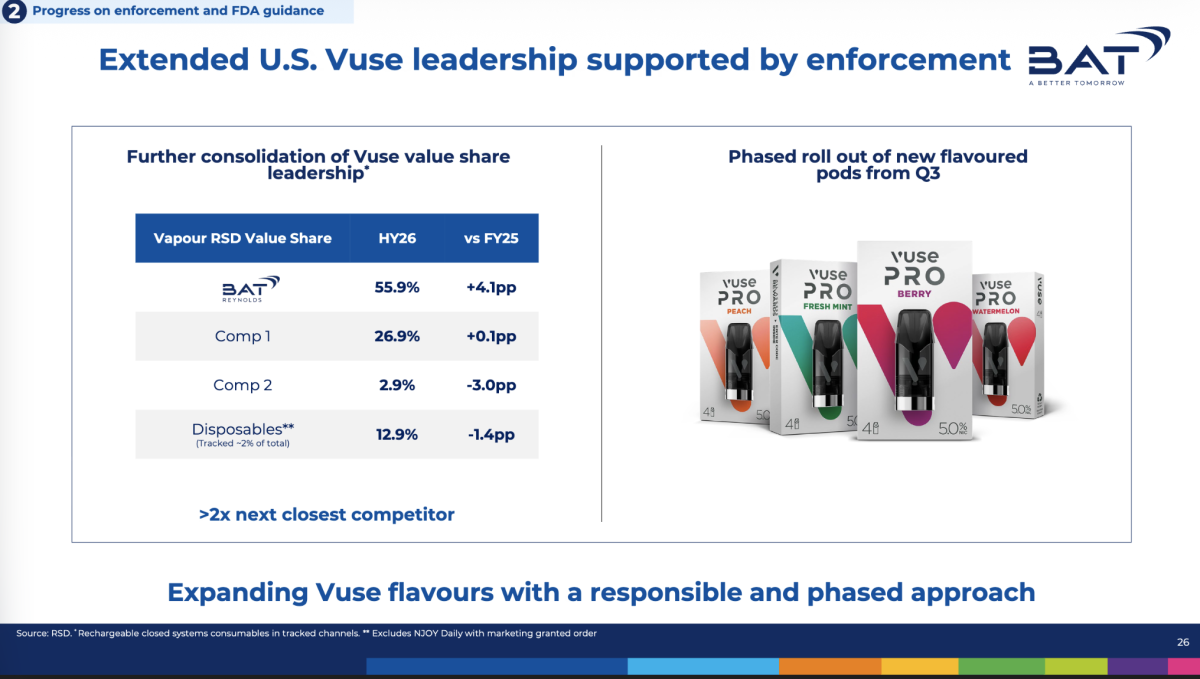
British American Tobacco (BAT) CEO Tadeu Marroco said the U.S. unauthorized vape market is worth about £7 billion, or US$9.43 billion. Following a shift in FDA enforcement policy, BAT plans to launch flavored Vuse products in the third quarter and an updated Velo pouch in August or September.
Jun.15
Illicit Vape and Nicotine Pouch Seizures Concentrated in UK Hotspots, New Data Shows
Freedom of Information (FOI) data from the UK shows that more than 3,000 seizures of illegal nicotine products were recorded in the 2024/25 financial year, with Hull, Liverpool and Bolton emerging as the most active enforcement hotspots — highlighting that the problem of illicit vapes, nicotine pouches and smokeless tobacco products persists across many parts of the country.
Jun.16
Altria’s USSTC to Close Nashville Plant and Shift Operations to Kentucky by 2028
U.S. Smokeless Tobacco Company (USSTC), a subsidiary of Altria Group, announced plans to close its Nashville manufacturing facility by 2028 and consolidate production operations at a new facility in Hopkinsville, Kentucky.
Market
Jun.02
France Bans Zyn and Other Nicotine Pouches, Violators Face Jail and Fines
France has officially banned nicotine pouches and other oral nicotine products, including Zyn. The new regulation classifies such products as “toxic substances” and imposes criminal penalties on their use, possession, purchase, and sale. Violators may face up to five years in prison and fines of up to €400,000 (approximately $436,600).
Regulations
May.25
Bringing Tax and Insurance Into Nicotine Regulation: Insights From a Tobacco Harm-Reduction Report
A smoke-free nicotine policy report argues that tobacco harm reduction should move beyond product bans and health warnings into tax policy, insurance pricing and risk-based regulation. While some projections remain open to debate, the report highlights a wider challenge: nicotine products, technologies and consumer behavior have changed sharply over the past decade, and regulatory systems may need new tools to better align tobacco control with harm-reduction goals.
Jun.08