Exclusive Interview with VGOD: Once the Top E-Liquid Brand in US, Set to Relaunch in Malaysia

2Firsts Events by 2FIRSTS
Sep.06.2024
Exclusive Interview with VGOD: Once the Top E-Liquid Brand in US, Set to Relaunch in Malaysia
ANTY EXPO opens in Malaysia; VGOD discusses market challenges and re-entry strategy at international tobacco industry exhibition.

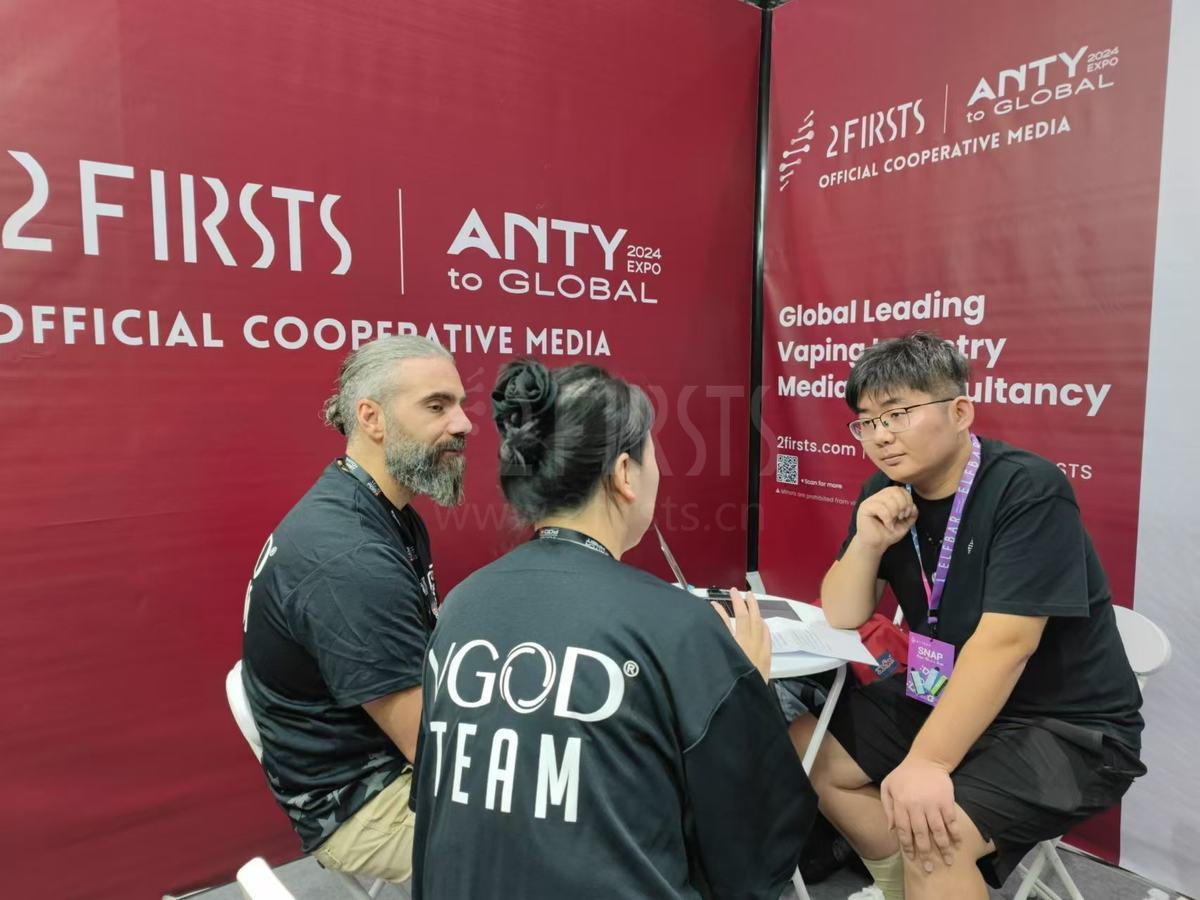
On September 6, the Asian International New Tobacco Industry Expo (ANTY EXPO) officially opened at the Malaysia International Exhibition and Convention Centre (MIECC). At the exhibition, 2Firsts invited VGOD's Director of Marketing, Kenny, to discuss VGOD's position in the American market, strategies for dealing with policy changes, as well as their plans for re-entering the Malaysian market and future plans.


Challenges and Opportunities for VGOD in the American Market


VGOD was once one of the leading brands in the American e-cigarette market, with its self-developed e-liquid brand ranking as the top in the market at one point. However, with the increasing regulatory efforts by the FDA in the e-cigarette market, VGOD is facing more pressure. Currently, VGOD's e-liquid brand remains in the top 5 in the American market. Kenny admitted, "The FDA's regulatory policies are constantly changing, and at the same time, the e-cigarette regulations vary from state to state in the United States, adding complexity to market compliance.


Faced with tightening regulations, VGOD is actively adjusting its strategies to ensure its continued presence and competitiveness in the US market. At the same time, VGOD has also achieved good results outside the US market. Kenny revealed to two sources that VGOD is currently ranked top 1 in the Middle East market, marking an important step towards internationalization.

 

Exclusive Interview with VGOD: Once the Top E-Liquid Brand in US, Set to Relaunch in Malaysia
VGOD booth | Image source: 2Firsts


Abandoning and Returning: VGOD's Market Strategy in Malaysia


When discussing the Malaysian market, Kenny pointed out that VGOD once focused primarily on the high vapor market in Malaysia and gained a certain market share. However, with the rise of disposable e-cigarette products, consumer preferences changed significantly, leading VGOD to choose to exit the Malaysian market at that time.


In recent years, with the further development of the e-cigarette market in Malaysia and changes in consumer preferences, VGOD has reassessed the potential of this market. Kenny stated:


The consumer structure in the Malaysian market is undergoing a transformation. Based on this trend, VGOD is determined to re-enter the Malaysian market and reorganize our product line.


Expand business operations in Southeast Asia market


In the face of the complex international market situation, VGOD is undergoing global strategic adjustments, especially in response to changing market demands in different regions, by introducing more flavors of products. Kenny revealed that their participation in the exhibition in Malaysia signifies VGOD's continuous expansion in Malaysia and other emerging markets in Southeast Asia. "We hope to meet the diverse needs of global consumers through technological innovation and high-quality product experiences." VGOD is accelerating its internationalization and looks forward to continuing to play a leading role in the global e-cigarette market.


We welcome news tips, article submissions, interview requests, or comments on this piece.

Please contact us at info@2firsts.com, or reach out to Alan Zhao, CEO of 2Firsts, on LinkedIn


Notice

1.  This article is intended solely for professional research purposes related to industry, technology, and policy. Any references to brands or products are made purely for objective description and do not constitute any form of endorsement, recommendation, or promotion by 2Firsts.

2.  The use of nicotine-containing products — including, but not limited to, cigarettes, e-cigarettes, nicotine pouchand heated tobacco products — carries significant health risks. Users are responsible for complying with all applicable laws and regulations in their respective jurisdictions.

3.  This article is not intended to serve as the basis for any investment decisions or financial advice. 2Firsts assumes no direct or indirect liability for any inaccuracies or errors in the content.

4.  Access to this article is strictly prohibited for individuals below the legal age in their jurisdiction.


Copyright


This article is either an original work created by 2Firsts or a reproduction from third-party sources with proper attribution. All copyrights and usage rights belong to 2Firsts or the original content provider. Unauthorized reproduction, distribution, or any other form of unauthorized use by any individual or organization is strictly prohibited. Violators will be held legally accountable.

For copyright-related inquiries, please contact: info@2firsts.com


AI Assistance Disclaimer


This article may have been enhanced using AI tools to improve translation and editorial efficiency. However, due to technical limitations, inaccuracies may occur. Readers are encouraged to refer to the cited sources for the most accurate information.

We welcome any corrections or feedback. Please contact us at: info@2firsts.com

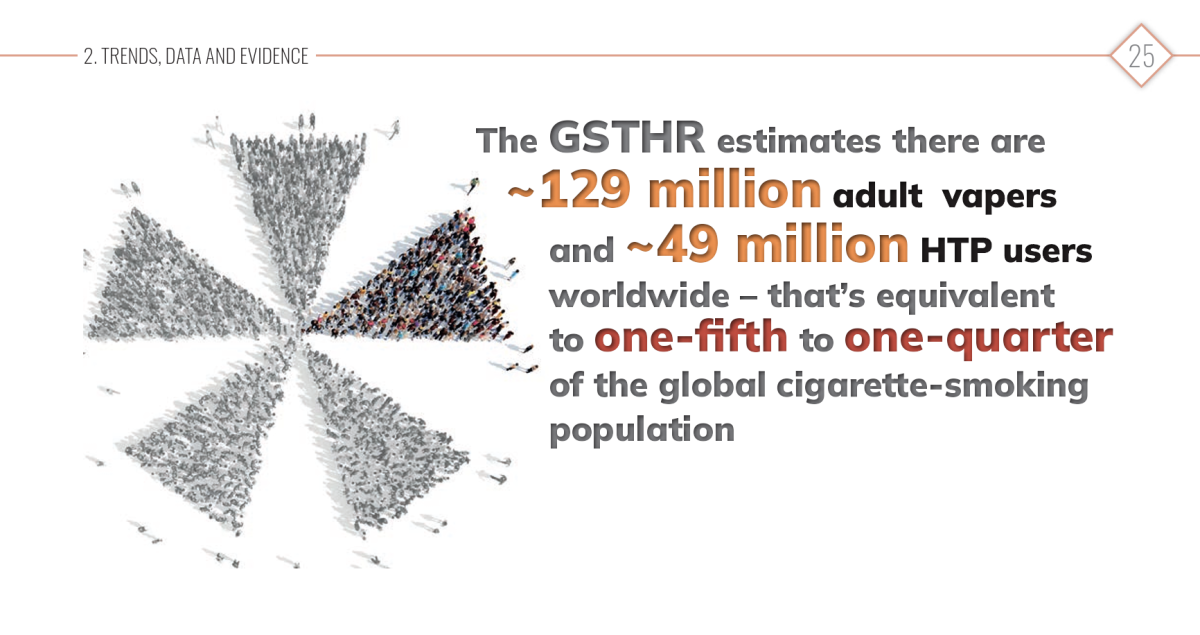
GSTHR Estimates 200 Million People Use Non-Combustible Nicotine Products as 28 Countries Show Rising Use Alongside Falling Smoking Rates
The Global State of Tobacco Harm Reduction, a project operated by Knowledge·Action·Change, estimates that about 200 million people worldwide use non-combustible nicotine products including vapes, heated tobacco, nicotine pouches and snus. Its 2026 report says use of these products rose alongside declining smoking rates in 28 countries it analyzed. The data do not establish that all 200 million users have quit smoking, nor do they prove a direct causal relationship. GSTHR also says regulatory restrictions on the products continue to expand in many markets.
Sep.10
AIR Global Starts Debt Refinancing Four Months After Nasdaq Listing With About $400 Million Notes Expected
AIR Limited, a wholly owned subsidiary of AIR Global, has launched an offering of U.S. dollar-denominated senior unsecured notes, with proceeds primarily intended to repay its existing term loan and revolving credit facility. AIR has not disclosed the final size, maturity or coupon; Refinitiv, citing Moody's, reported an expected issuance of approximately $400 million and a Ba3 rating. AIR had about $412.4 million outstanding under the two bank facilities at June 30 and net debt of $344.8 million. In the first half of 2026, AIR's Al Fakher-led flavored shisha molasses business generated about 99% of company revenue, while New Growth Categories including Crown Switch produced $2.2 million in revenue and remained loss-making on an adjusted EBITDA basis.
Sep.23
Arizona Turns to a 50% Retail Vape Tax as Tobacco Tax Revenue Falls 47% From 2008
Arizona's First Things First is pushing for an excise tax equal to 50% of the retail price of vaping products, estimating that the measure could generate about $100 million annually. The agency says its tobacco-tax revenue has fallen 47% from 2008 levels. Arizona has attempted to broaden its nicotine tax base in each of the past two years: a 2025 bill proposed a 50% wholesale-price tax, while a 2026 measure shifted to a 50% retail-price tax covering alternative nicotine products and vapor products. Separately, the state enacted HB 4001 this year to establish a new licensing and sales framework for alternative nicotine products.
Sep.21
As JUUL2 Wins FDA Authorization, Harm Reduction Journal Highlights the Role of Real-World Evidence in Nicotine Product Regulation
A commentary published in the international open-access, peer-reviewed Harm Reduction Journal argues that randomized controlled trials remain central to evaluating smoking cessation efficacy but cannot alone capture real-world uptake, complete switching, longer-term use and population impact of non-combustible nicotine products such as e-cigarettes, heated tobacco and nicotine pouches. The authors frame impact as “reach × efficacy” and call for real-world evidence to complement RCTs. Three days after publication, the FDA authorized three JUUL2 products and highlighted complete switching among adult smokers in explaining its decision, providing a timely regulatory backdrop to the debate.
Sep.08
2Firsts Hosts China Market Forum at InterTabac as Global Industry Attention to China’s Tobacco Sector Deepens
On September 16, 2Firsts hosted a China-focused industry forum during InterTabac in Dortmund, bringing together more than 30 participants from North America, Europe, India, South Korea and other markets. The session covered traditional tobacco, next-generation products, exports, technology, regulation and supply chains, while examining how China’s tobacco sector operates, where its transformation may be heading, and why its growing role matters increasingly to companies across the global tobacco and nicotine industry.
Sep.21
China Tobacco Supply-Chain Leader Huabao’s Three-Way Transformation Takes Hold as Overseas Revenue Jumps 216%, Non-Flavor Businesses Reach 42.2% and the Company Expands Into Global Next-Generation Tobacco Supply Chains
Huabao’s H1 2026 results show the company advancing across three connected fronts: international expansion, entry into next-generation tobacco supply chains and diversification beyond its traditional tobacco-related base. Overseas revenue rose 216.08% to CNY 96.02 million, while non-flavor businesses reached 42.2% of total revenue. Huabao also said it had entered the supply chains of leading global tobacco customers, as its nutrition, food ingredient, fragrance and personal-care businesses gained ground in Europe, Southeast Asia, Australia and New Zealand. However, adjusted net profit increased only 2.78%, and next-generation tobacco revenue was not separately disclosed, showing that the transformation is reshaping revenue and customer exposure but has yet to translate fully into underlying earnings.
Aug.28