FDA nicotine pouch review delay report knocks tobacco shares lower

Apr.02
FDA nicotine pouch review delay report knocks tobacco shares lower
After Reuters reported before the market open that FDA reviews of nicotine pouch applications could face delays, shares of Philip Morris International, Turning Point Brands and British American Tobacco fell on April 1, underscoring the direct impact of U.S. regulatory signals on major tobacco companies and nicotine pouch expectations.

2Firsts

Shenzhen, April 2, 2026


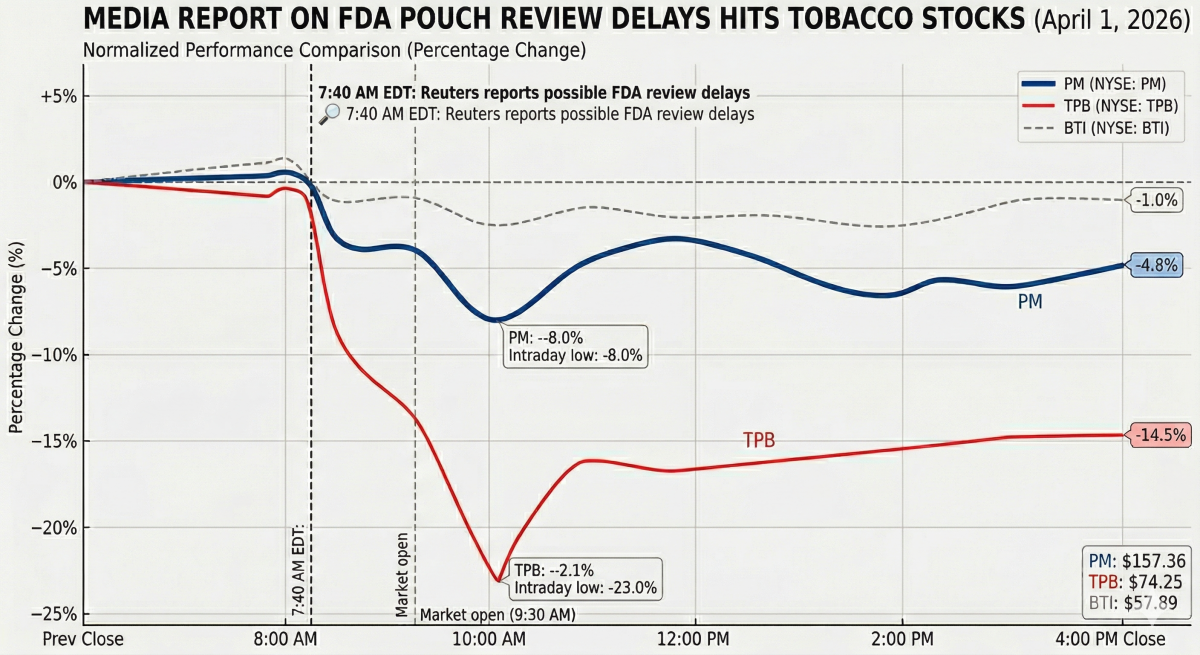
Shares of tobacco companies tied to the U.S. nicotine pouch market fell on Wednesday after Reuters reported before the opening bell that the U.S. Food and Drug Administration’s fast-track review of some nicotine pouch applications was facing delays, sharpening investor focus on the regulatory outlook for one of the industry’s key growth categories. Reuters published the report at 7:40 a.m. EDT on April 1, nearly two hours before U.S. markets opened.


Philip Morris International (NYSE: PM) led the decline among the large-cap names exposed to the segment. The stock opened at $161.50 and later fell more than 7% intraday before trimming losses. Barron’s, a financial news outlet, reported PM closed down 4.8% at $157.36 after the Reuters report.


Turning Point Brands (NYSE: TPB) posted the steepest one-day drop among the group. Yahoo Finance historical data show TPB closed at $74.25, down 14.45% on the day, after trading down into the mid-$65 range intraday.


British American Tobacco’s U.S.-listed ADRs (NYSE: BTI) also finished lower. Publicly available historical pricing indicates BTI ended the session at $57.89, down about 1% on the day.


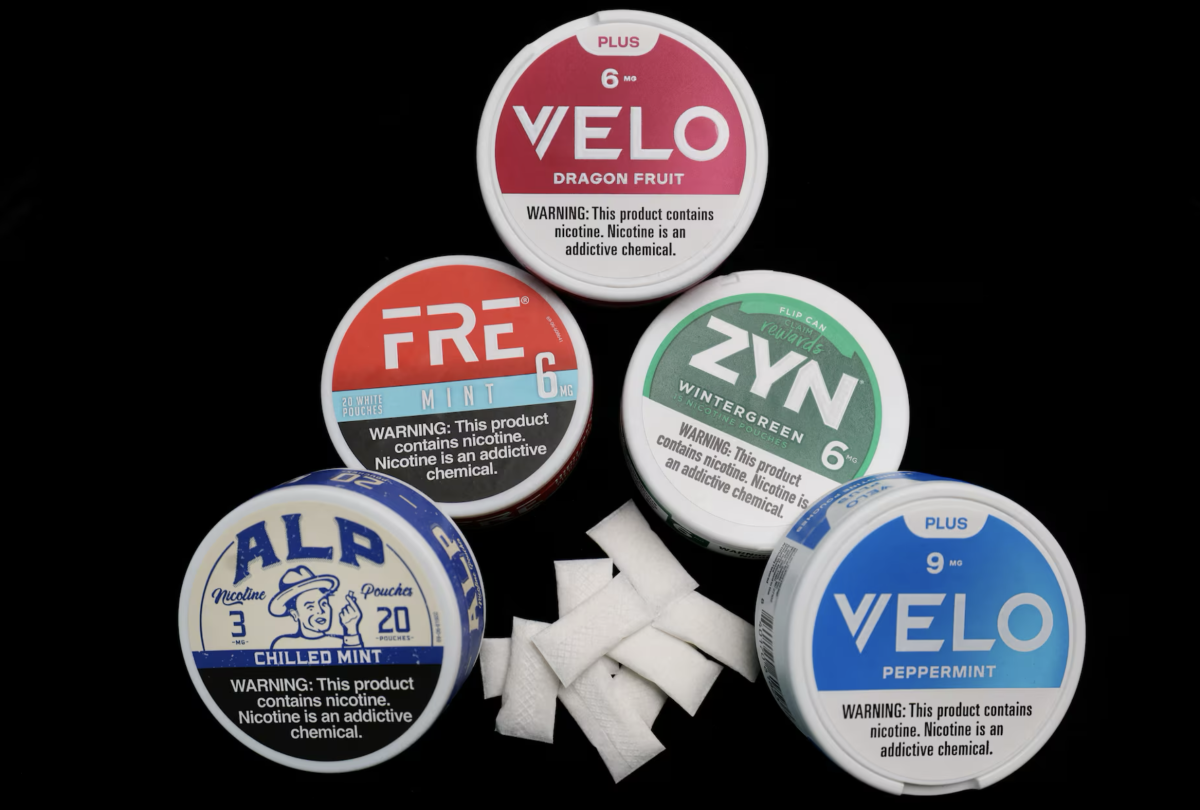
The market reaction underscored the importance of the U.S. nicotine pouch business for major international tobacco groups. Reuters reported that the delayed applications involved leading pouch brands including Philip Morris’ Zyn and BAT’s Velo, while FDA’s nicotine pouch pilot was intended to make PMTA review more efficient.


Further updates on U.S. FDA progress on market authorization for next-generation tobacco products will be available from 2Firsts.


 Illustration of selected tobacco stocks on April 1, 2026, showing declines after a premarket media report on possible delays in FDA nicotine pouch reviews. Illustration for reference only. This chart does not represent exact intraday stock price data. |Source: Graphic by 2Firsts


相关阅读:

 

2FIRSTS | Alan Zhao: What the Rise of Nicotine Pouches Means for Tobacco Retailers
Alan Zhao argues that nicotine pouches are no longer a niche alternative, but a force quietly reshaping the future of tobacco retail. For distributors and retailers, the real risk is not missing a trend—it is moving too late, after regulation tightens, shelf space hardens and the market begins to choose its winners.
www.2firsts.com

2FIRSTS | Reuters Exclusive: FDA’s Fast-Track Review of Nicotine Pouches Slows Over Youth and New-User Concerns
Reuters reported on April 1 that several popular nicotine pouch products still have not been cleared for sale in the United States despite a fast-track review pilot run by the U.S. Food and Drug Administration. Three sources said FDA reviewers have taken a cautious approach because of potential risks to youth and other non-tobacco users, including the possibility of driving nicotine addiction among adults who do not already smoke.
www.2firsts.com

Australia’s Victoria Steps Up Illegal Tobacco Enforcement With Store Closures and Penalties of Up to A$2.5 Million
Australia’s state of Victoria has activated new powers allowing Tobacco Licensing Victoria and police to shut premises suspected of selling, supplying or possessing illicit tobacco for up to 90 days. Longer closures can be ordered by a magistrates’ court. Businesses subject to closure orders must generally cease all trading and will be placed on a public list. Breaching a closure order can carry penalties of up to A$2.5 million and 20 years in prison.
Sep.10
UK-Listed Consumer Goods Group Supreme Sees Vape Duty as Potential Consolidation Opportunity, Holds FY27 Outlook
UK-listed consumer goods group Supreme plc says it continues to expect FY27 trading to meet market expectations as the Vaping Products Duty takes effect on October 1, while maintaining a comparatively positive view of the new tax and compliance regime. Supreme has said the framework could increase compliance complexity for smaller operators and contribute to market consolidation, while its manufacturing, compliance and distribution scale may allow it to gain share. Its 88Vape brand will retain its value positioning.
Sep.18
UK Directors Banned After 352,688 Vapes Imported From China Were Misdeclared as Medical Nebulizers in £15 Million Tax Case
The UK Insolvency Service said YSK Enterprises imported large quantities of vapes from China in 2023, with a shipment addressed to the company declared as medical nebulizers before Border Force found 352,688 vaping products. HMRC calculated nearly £15 million ($20.3 million) in unpaid VAT and customs duty, alongside about £437,000 in corporation tax. Two directors were disqualified for nine years. The case predates the UK's Vaping Products Duty, which will introduce vape-specific excise and duty-stamp requirements from October 2026.
Regulations
Sep.11
India Duty-Free Nicotine Pouch Sales Face Regulatory Test as ZYN, FOX Classification Remains Open
The Bombay High Court has ruled that airport duty-free shops are not exempt from India's domestic regulatory laws merely because they operate beyond the customs barrier, leaving in place a sales halt covering ZYN and FOX nicotine pouches at Mumbai's international airport. The court, however, did not determine that the products necessarily qualify as "drugs" under India's Drugs and Cosmetics Act. The retailers have four weeks to submit product information to the appropriate authorities, including CDSCO, which must complete its review within 30 days of receiving the submissions.
Sep.24
Kumulus Vape2026 H1 Revenue Falls 8.3% but Profit Rises 24% as B2B Weakens and Consumer Channels Grow
French vaping company Kumulus Vape reported first-half 2026 revenue of €25.5 million, down 8.3% year over year, as its core B2B distribution business fell 11% to €21.6 million. B2C and store-network revenue rose 5.6% and 17.8%, respectively. Commercial margin increased to 26.3% from 21.7%, while net profit rose 24.1% to €0.8 million. The company attributed the profitability improvement to catalog optimization, logistics restructuring and the ramp-up of Labster, its in-house production unit for proprietary brands.
Market
Sep.17 by 2Firsts Perspectives
Malaysia Liquid Nicotine Returns to Poisons List, Leaving Vape Retail and RM354 Million Tax Collection in Legal Uncertainty
Malaysia’s withdrawal of its appeal in a landmark liquid-nicotine case has left a High Court ruling that struck down the 2023 nicotine exemption in force, bringing liquid and gel nicotine used in vaping products back under the Poisons Act 1952. At the same time, the Control of Smoking Products for Public Health Act 2024 continues to provide a regulatory framework for vaping products, creating uncertainty over retail sales, taxation and existing inventory. MPs are calling for nicotine vape sales and excise collection to stop, including refunds of more than RM354 million collected since 2023, while industry and consumer groups are asking the government to clarify the current legal position.
Sep.04