Acting CTP Director Says FDA Cut Premarket Tobacco Application Backlog by About 70% Over the Past Year

Apr.23
Acting CTP Director Says FDA Cut Premarket Tobacco Application Backlog by About 70% Over the Past Year
FDA Center for Tobacco Products Acting Director Bret Koplow said at the American Tobacco and Nicotine Forum that the agency has reduced its premarket tobacco application backlog by about 70% over the past year and eliminated the acceptance queue. He said FDA has reviewed about 27 million applications, but only a small number have been authorized, mainly because most submissions lacked the scientific data needed to demonstrate public health benefits.

Key Takeaways

  • FDA Center for Tobacco Products Acting Director Bret Koplow spoke at the American Tobacco and Nicotine Forum.
  • Koplow said FDA cut its premarket tobacco application backlog by about 70% over the past year and eliminated the acceptance queue.
  • He said FDA has reviewed about 27 million applications, but only a small number have been authorized.
  • FDA plans to share lessons from the review process to help companies better meet regulatory standards.
  • Koplow said FDA is increasing enforcement against illicit products, including unauthorized e-cigarettes.

2Firsts, April 23,2026 


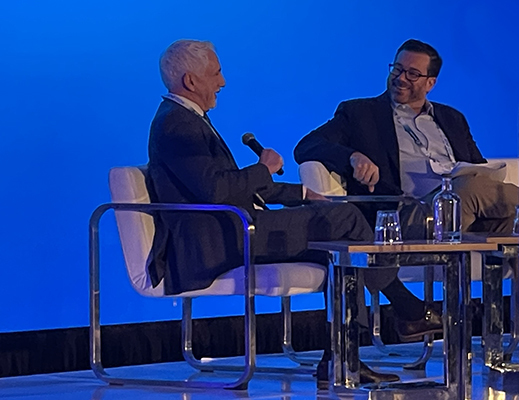
According to Tobacco Reporter, Bret Koplow, acting director of the U.S. Food and Drug Administration’s Center for Tobacco Products, outlined recent agency progress on application review, transparency and enforcement during a fireside chat at the American Tobacco and Nicotine Forum in Leesburg, Virginia.


Koplow said the backlog fell by about 70% over the past year


The report said Koplow stated that FDA has made significant progress in reducing its premarket tobacco application backlog, cutting it by roughly 70% over the past year while also eliminating the acceptance queue.


FDA says it has reviewed about 27 million applications


Koplow said FDA has reviewed approximately 27 million applications, but only a small number of products have been authorized, largely because most submissions lacked the scientific data required to demonstrate public health benefits.


The agency says it will improve transparency and guidance


According to the report, Koplow said FDA is working to improve transparency and guidance for applicants, including plans to share lessons learned from the review process so companies can better meet regulatory standards.


Nicotine pouch pilot was described as helping speed authorizations


Koplow also pointed to efforts to streamline evaluations in certain product categories, such as nicotine pouches. The report said he described a pilot program that enabled faster authorizations and could help shape broader regulatory approaches.


FDA said it is continuing action against illicit products


On enforcement, Koplow highlighted increased action against illicit products, including major seizures of unauthorized e-cigarettes in coordination with federal agencies. He said most of those products originated from China.


Koplow said regulators still face a balance between harm reduction and youth protection


Koplow said FDA continues to face challenges in balancing harm reduction for adult smokers with youth protection. He noted that youth vaping has declined, but said there are still concerns about public understanding of nicotine risks and the need for stronger evidence on the comparative benefits of alternative products.


Image source: Tobacco Reporter

We welcome news tips, article submissions, interview requests, or comments on this piece.

Please contact us at info@2firsts.com, or reach out to Alan Zhao, CEO of 2Firsts, on LinkedIn


Notice

1.  This article is intended solely for professional research purposes related to industry, technology, and policy. Any references to brands or products are made purely for objective description and do not constitute any form of endorsement, recommendation, or promotion by 2Firsts.

2.  The use of nicotine-containing products — including, but not limited to, cigarettes, e-cigarettes, nicotine pouchand heated tobacco products — carries significant health risks. Users are responsible for complying with all applicable laws and regulations in their respective jurisdictions.

3.  This article is not intended to serve as the basis for any investment decisions or financial advice. 2Firsts assumes no direct or indirect liability for any inaccuracies or errors in the content.

4.  Access to this article is strictly prohibited for individuals below the legal age in their jurisdiction.


Copyright


This article is either an original work created by 2Firsts or a reproduction from third-party sources with proper attribution. All copyrights and usage rights belong to 2Firsts or the original content provider. Unauthorized reproduction, distribution, or any other form of unauthorized use by any individual or organization is strictly prohibited. Violators will be held legally accountable.

For copyright-related inquiries, please contact: info@2firsts.com


AI Assistance Disclaimer


This article may have been enhanced using AI tools to improve translation and editorial efficiency. However, due to technical limitations, inaccuracies may occur. Readers are encouraged to refer to the cited sources for the most accurate information.

We welcome any corrections or feedback. Please contact us at: info@2firsts.com

German Tobacco Tax Revenue Falls 10.8% Through August as Tax-Paid Cigarette Volume Drops 12.6%
Germany collected €9.789 billion in total tobacco tax revenue from January through August 2026, down 10.8% from a year earlier, according to the Federal Ministry of Finance. Germany's tobacco tax base covers not only cigarettes and fine-cut tobacco but also heated tobacco and vaping liquids taxed as tobacco substitutes. The German Association of the Tobacco Industry and Novel Products, or BVTE, citing federal statistical data, said tax-paid cigarette volume fell 12.6% to 40.6 billion sticks. BVTE is using the latest figures to argue against further tax increases planned from 2027 through 2030, while Germany's parliament is scheduled to hold a first reading of the bill on September 24.
Sep.23
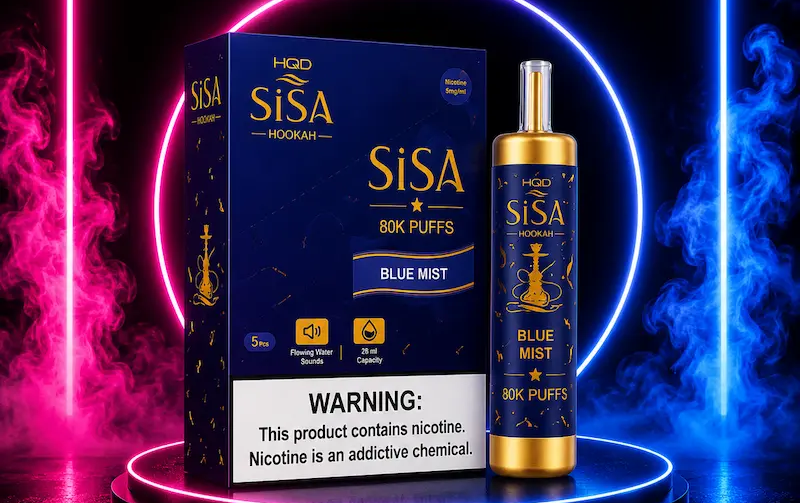
Product | HQD SiSA 80K Enters the U.S. Market With a Hookah-Inspired Approach to the High-Capacity Disposable Segment
The HQD SiSA 80K Hookah Disposable Vape has appeared across U.S. and cross-border online retail channels. The device comes prefilled with 28ml of e-liquid, uses a 5% nicotine salt configuration and carries a brand claim of up to 80,000 puffs. Beyond puff count, the product differentiates itself through hookah-inspired features including adjustable airflow, a flowing-water sound effect and flavor options associated with traditional hookah consumption.
Aug.18
China’s Zhengzhou Tobacco Research Institute develops end-to-end heated tobacco analysis to trace aerosol compound origins
The Zhengzhou Tobacco Research Institute of China National Tobacco Corporation has filed a patent application for an end-to-end method to analyze the migration and transformation of chemical compounds in heated tobacco products. Using GC-Orbitrap/MS non-targeted analysis, the method compares tobacco substrate and aerosol samples to distinguish compounds transferred directly from the substrate from those newly formed during heating, while also calculating transfer rates. In an example involving nine heated tobacco products, the patent identified 17 newly formed thermal decomposition compounds and 38 transferred compounds.
Aug.13
JUUL2 Sued Within a Week of FDA Authorization as AJ Marketing Alleges Infringement of Programmable Vape Patent
Less than a week after JUUL2 received U.S. FDA marketing authorization on August 28, 2026, JUUL Labs was sued for patent infringement in federal court in Delaware. AJ Marketing LLC filed the complaint on September 3, alleging that both JUUL 1 and JUUL2 infringe U.S. Patent No. 8,851,068 B2. The patent covers aspects of programmable electronic vaporization devices, including controls over dose delivery, usage frequency and operating parameters. The plaintiff is seeking reasonable royalties and ongoing royalties tied to the remaining life of the patent. JUUL has not yet publicly responded to the case.
Sep.10
Germany's Four-Year Tobacco Tax Plan Heads to Parliament as BAT, JTI and PMI Push for Changes
Germany's parliament is scheduled to hold a first reading of amendments to the Tobacco Tax Act on September 24. The government plans annual tax increases from 2027 through 2030 covering cigarettes, heated tobacco, vaping liquids and other categories. It expects the reform to generate €756 million in additional revenue in 2027, rising to €3.589 billion in additional annual revenue by 2030. Ahead of the parliamentary debate, the German Association of the Tobacco Industry and Novel Products, or BVTE, launched the "Tabaksteuer mit Augenmaß" campaign backed by BAT, JTI, Philip Morris, Reemtsma and wholesale and retail groups.
Sep.23
From Nicotine Salts to Cocrystals: China’s Shenzhen Huabao institute explores a more stable form for sustained nicotine release
China-based Shenzhen Huabao Collaborative Innovation Technology Research Institute Co., Ltd. has filed a patent application for a nicotine-ascorbic acid cocrystal, exploring a new solid-state form of nicotine. The patent proposes applications across e-liquids, heated tobacco sticks, oral tobacco, chewing tobacco and snuff. In nicotine pouch tests disclosed in the filing, cocrystal formulations showed less than a 6% decline in nicotine content after three months of accelerated storage and a release profile combining early-stage release with sustained delivery over 60 minutes. The filing reflects exploration of nicotine forms beyond conventional nicotine base and nicotine salts.
Aug.13