Key Points
● Unified Form: FDA has merged Forms 3741 and 3741a into a redesigned Form FDA 3741 covering regulated categories including cigarettes, e-cigarettes, heated tobacco products and nicotine pouches.
● Current Scope: Existing establishment registration and product listing requirements remain limited to domestic tobacco product establishments.
● Foreign Manufacturers: FDA proposed in June to extend these requirements to foreign manufacturers, but the rule has not been finalized.
● Manufacturing Compliance: In 2Firsts’ view, recent developments point to greater FDA attention to manufacturing entities and product-level information.
2Firsts
WASHINGTON, Sept. 29, 2026
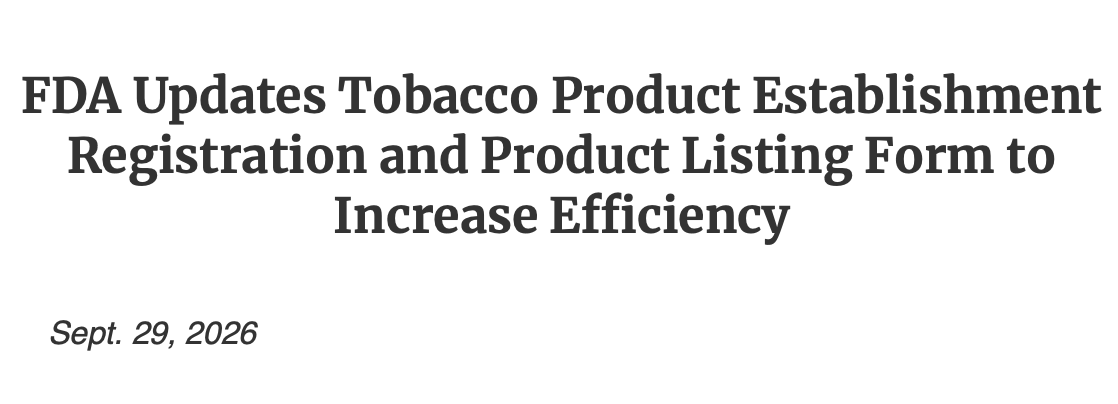
The U.S. Food and Drug Administration has introduced a redesigned tobacco product establishment registration and product listing form, combining two previously separate forms into a single form covering all regulated tobacco product categories.
The updated Form FDA 3741, launched on Sept. 28, covers cigarettes, e-cigarettes, smokeless tobacco, heated tobacco products and oral nicotine products, including nicotine pouches, the FDA said on Tuesday.
FDA combines two registration forms
Manufacturers previously used Form FDA 3741 for certain tobacco products, including cigarettes and smokeless tobacco, while Form FDA 3741a was used for deemed tobacco products such as e-cigarettes and nicotine pouches.
The redesigned Form FDA 3741 replaces both forms. The FDA said the change eliminates the need for manufacturers to determine which form applies or to complete separate submissions for different product categories.
The new form includes a checklist directing users to sections relevant to their filing. Manufacturers updating an existing registration can also revise specific information without resubmitting sections that have not changed.
The FDA is also encouraging use of a new Form FDA 3741b spreadsheet for initial product list submissions or for adding new products to existing lists.
Existing registrations and product listings will remain in the agency’s Tobacco Registration and Listing Module Next Generation, or TRLM NG. Manufacturers are not required to resubmit their full registration because of the change.
The previous versions of Forms FDA 3741 and 3741a have been retired.
Current requirements remain limited to domestic establishments
The current establishment registration and product listing requirements apply to domestic tobacco product establishments. Domestic manufacturers are required to submit annual establishment registrations by Dec. 31 and update product listings by June 30 and Dec. 31 when specified changes have been made.
The FDA strongly encourages electronic submissions through TRLM NG, although paper submissions remain available.
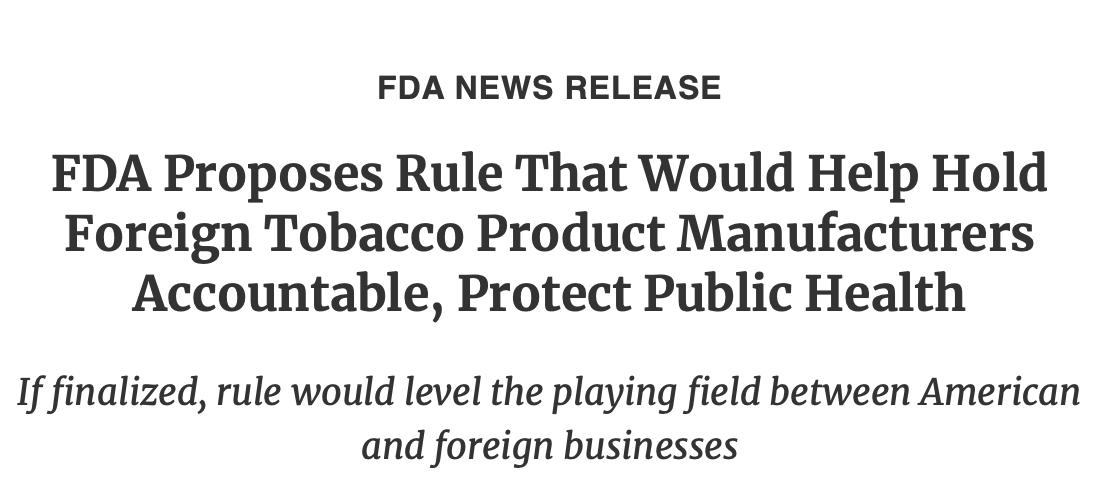
Separately, the FDA in June proposed extending establishment registration and product listing requirements to foreign tobacco manufacturers.
As 2Firsts reported in June, the proposed rule would require foreign manufacturers to register covered manufacturing establishments and list tobacco products before those products are imported or offered for import into the United States.
The proposal would cover foreign establishments that manufacture, prepare, compound or process FDA-regulated tobacco products. It could include overseas contract manufacturers, OEM and ODM factories, specification developers, bulk product manufacturers and companies involved in repackaging or relabeling.
Foreign manufacturers are not currently subject to the same registration and product listing requirements as domestic establishments. The June proposal has not been finalized.
The FDA said the proposed rule would give it more complete information on foreign-made tobacco products entering the U.S. market and the establishments where they are manufactured, helping the agency identify unauthorized imported products and conduct inspections abroad.
2Firsts View: Manufacturing compliance draws greater attention
Taken together, the latest form update and the FDA’s proposal to bring foreign manufacturers into the registration and product listing system point to a broader regulatory focus on manufacturing establishments and product-level information.
For companies supplying tobacco and nicotine products to the U.S. market, compliance requirements are placing greater emphasis on manufacturing entities and product records, in addition to product authorization and market access.
For further coverage of FDA regulation of tobacco and new tobacco and nicotine products, continue to follow 2Firsts.
Cover image: Screenshot from the FDA website.
Disclaimer
This article is provided solely for professional research, industry discussion, and informational purposes. Any references to brands, companies, products, technologies, or policies are made for factual reporting and analytical purposes only, and do not constitute endorsement, recommendation, promotion, or advertising by 2Firsts.
Nicotine-containing products, including but not limited to cigarettes, e-cigarettes, heated tobacco products, and nicotine pouches, carry significant health risks. Readers are responsible for complying with all applicable laws and regulations in their respective jurisdictions, including age restrictions and access limitations.
The information contained in this article should not be regarded as investment, legal, medical, regulatory, or commercial advice. While 2Firsts strives to ensure the accuracy and reliability of its content, it does not assume liability for any direct or indirect loss arising from errors, omissions, inaccuracies, or reliance on the information contained herein.
This article is not intended for individuals below the legal age for accessing tobacco or nicotine-related information in their jurisdiction.
Copyright Notice
This article is either original content produced by 2Firsts or content reproduced, translated, summarized, or adapted from third-party sources with attribution where applicable. The intellectual property rights of the original content remain with 2Firsts or the respective original rights holders.
No individual or organization may copy, reproduce, distribute, republish, modify, translate, or otherwise use this content without prior authorization. Any unauthorized use may result in legal action.
For copyright-related inquiries, corrections, or removal requests, please contact: info@2firsts.com.
AI-Assisted Translation and Editing Notice
Portions of this article may have been translated, edited, or reviewed with the assistance of artificial intelligence tools to improve efficiency and readability. Due to the limitations of AI-assisted translation and editing, discrepancies, omissions, or inaccuracies may exist when compared with the original source.
Where applicable, readers are advised to refer to the original source for the most complete and accurate information. If you identify any errors or believe that any content infringes upon your rights, please contact us at info@2firsts.com, and we will review and address the matter promptly.