Recently, Baysolt Khamzatov, the Deputy Director of the first center in Russia to combat illegal trafficking of industrial products, participated in an online conference organized by the media company Kommersant. The conference focused on the illegal trafficking of tobacco products.
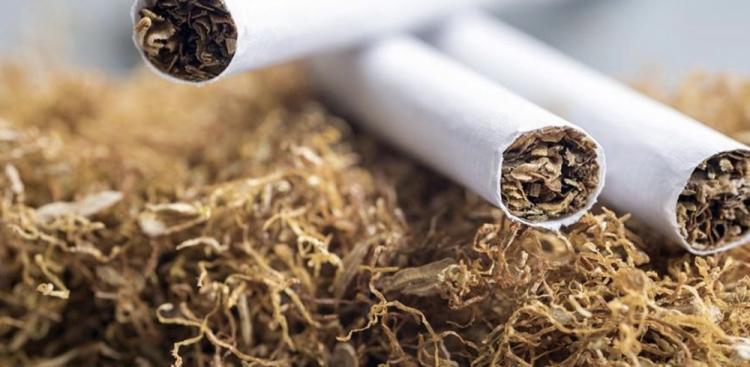
Photo credit: nicalliance.org
An assessment of the budget and law enforcement effectiveness in combating illegal trafficking was carried out in the Voronezh, Oryol, Kursk, Lipetsk, and Tambov regions. The study, conducted in the first half of 2022, focused on the illegal trafficking of tobacco products across 85 constituent entities and 1,073 settlements of the Russian Federation, with a total population of 87 million.
The average sales rate of illegal cigarettes in Russia is 12.1%, with three regions in the black earth area exceeding this average. The Kursk region saw the most significant growth in sales, which was twice that of the central federal district.
According to an assessment by the National Scientific Center for Combating the Illegal Trafficking of Industrial Products (NSCC) in Russia, the second-highest level of illegal tobacco sales in a macro-region is in the Oryol Oblast, accounting for 18.3%. While there has been some improvement under public supervision, the figures remain high. The estimated budget loss caused by this region is 345 million rubles. The Tambov Oblast's illegal sales are only slightly higher than the Russian average of 12.9%, However, the situation in that region has worsened, resulting in a budget loss of 199 million rubles.
According to the results from the first half of 2022, the share of illegal tobacco sales in the Voronezh region is lower than the national average by 7.1%. This region ranks 64th in Russia, and the budget losses resulting from cracking down on illegal trafficking are estimated to be at least 162 million rubles.
In the Lipetsk region, the lowest proportion of black soil areas is 2.5%. The performance in the first quarter was poor but improved in the second quarter. As a result, the losses for the past six months amounted to 243 million rubles.
Illegal sales of tobacco products imported from Eurasian Economic Union countries mainly originate from Belarus within the territory of the Russian Federation.
Illegal smuggling of cigarettes from Belarus is a major problem in the black market. Two-thirds of the cigarettes come from legally operating factories that include Belarusian excise and stamp taxes on the packaging, while the remaining do not have any taxes. Additionally, 4.7% come from Armenia, where cigarettes are more expensive than Belarus, but cheaper than Russia. However, counterfeit goods only make up a small portion of the market. Illegal cigarettes are most common in rural areas.
Disclaimer
This article is provided solely for professional research, industry discussion, and informational purposes. Any references to brands, companies, products, technologies, or policies are made for factual reporting and analytical purposes only, and do not constitute endorsement, recommendation, promotion, or advertising by 2Firsts.
Nicotine-containing products, including but not limited to cigarettes, e-cigarettes, heated tobacco products, and nicotine pouches, carry significant health risks. Readers are responsible for complying with all applicable laws and regulations in their respective jurisdictions, including age restrictions and access limitations.
The information contained in this article should not be regarded as investment, legal, medical, regulatory, or commercial advice. While 2Firsts strives to ensure the accuracy and reliability of its content, it does not assume liability for any direct or indirect loss arising from errors, omissions, inaccuracies, or reliance on the information contained herein.
This article is not intended for individuals below the legal age for accessing tobacco or nicotine-related information in their jurisdiction.
Copyright Notice
This article is either original content produced by 2Firsts or content reproduced, translated, summarized, or adapted from third-party sources with attribution where applicable. The intellectual property rights of the original content remain with 2Firsts or the respective original rights holders.
No individual or organization may copy, reproduce, distribute, republish, modify, translate, or otherwise use this content without prior authorization. Any unauthorized use may result in legal action.
For copyright-related inquiries, corrections, or removal requests, please contact: info@2firsts.com.
AI-Assisted Translation and Editing Notice
Portions of this article may have been translated, edited, or reviewed with the assistance of artificial intelligence tools to improve efficiency and readability. Due to the limitations of AI-assisted translation and editing, discrepancies, omissions, or inaccuracies may exist when compared with the original source.
Where applicable, readers are advised to refer to the original source for the most complete and accurate information. If you identify any errors or believe that any content infringes upon your rights, please contact us at info@2firsts.com, and we will review and address the matter promptly.