Key Points
- Three incidents in two weeks: Within the first three weeks of the new fleet going into service, three refuse-truck compartment fires occurred; the most recent happened on school grounds.
- Suspected trigger: More powerful compaction mechanisms may damage lithium batteries and lead to fires; e-cigarettes were named as a primary source.
- Official guidance: SFRS emphasizes that batteries must never be placed in household waste and should be disposed of at recycling points.
- Municipal response: Glasgow City Council warns that improper disposal of hazardous items causes safety risks and urges residents to follow recycling rules.
- Proposed measures: The union recommends sustained social-media messaging, point-of-sale education, and even dedicated “e-cigarette/battery recycling bins.”
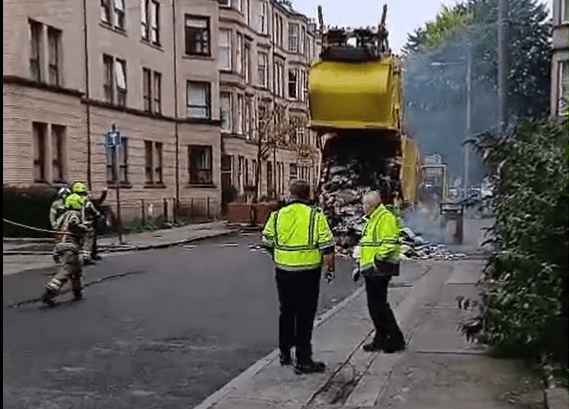
2Firsts, September 23, 2025 — According to The Scotsman, three compartment fires have occurred in the past two weeks in a batch of refuse trucks recently put into service in Glasgow. Subsequent checks indicate the fires were linked to lithium-ion batteries used in e-cigarettes. The latest incident took place in the courtyard of a school; thanks to a timely response, no injuries were reported.
GMB convener Chris Mitchell called the repeated fires “frightening” and said urgent action is needed to prevent a recurrence. He noted that the new fleet’s compaction mechanism is more powerful—“crushing almost everything”—which can damage hidden lithium batteries, cause short circuits, and trigger fires. The union said it is continuing to investigate via multiple avenues.
Lithium-ion batteries are ubiquitous in devices such as mobile phones, laptops, e-scooters, and e-cigarettes. The Scottish Fire and Rescue Service (SFRS) reiterated that batteries must never be disposed of in household waste and should be taken to dedicated recycling points. Incorrect disposal can spark fires in bins, refuse trucks, or waste-management facilities. SFRS also urges the public to purchase vaping devices through reputable channels and to store, charge, and maintain them safely in accordance with instructions, while following local-authority recycling guidance.
A Glasgow City Council spokesperson said that placing hazardous items—including batteries, e-cigarettes, pressurized canisters, and other electronics—into household waste endangers refuse workers and undermines the wider waste-management system. The Council emphasized that residents should recycle household batteries at local recycling centers or take-back points in supermarkets and retail outlets, and not place them in household bins. Regarding the recent incidents, municipal staff followed procedures to minimize impact and will continue monitoring to safeguard staff and facilities.
Mitchell suggested the Council lead sustained public-information efforts, including repeated risk reminders on social media, encouraging retailers to educate customers on disposal methods, and considering the installation of dedicated e-cigarette/battery collection receptacles in public areas. He stressed that Glasgow’s narrow-street operating environment makes it easy for fires to spread to vehicles and pedestrians: “Lives are at stake—we must take preventive action.”
We welcome news tips, article submissions, interview requests, or comments on this piece.
Please contact us at info@2firsts.com, or reach out to Alan Zhao, CEO of 2Firsts, on LinkedIn
Notice
1. This article is intended solely for professional research purposes related to industry, technology, and policy. Any references to brands or products are made purely for objective description and do not constitute any form of endorsement, recommendation, or promotion by 2Firsts.
2. The use of nicotine-containing products — including, but not limited to, cigarettes, e-cigarettes, nicotine pouchand heated tobacco products — carries significant health risks. Users are responsible for complying with all applicable laws and regulations in their respective jurisdictions.
3. This article is not intended to serve as the basis for any investment decisions or financial advice. 2Firsts assumes no direct or indirect liability for any inaccuracies or errors in the content.
4. Access to this article is strictly prohibited for individuals below the legal age in their jurisdiction.
Copyright
This article is either an original work created by 2Firsts or a reproduction from third-party sources with proper attribution. All copyrights and usage rights belong to 2Firsts or the original content provider. Unauthorized reproduction, distribution, or any other form of unauthorized use by any individual or organization is strictly prohibited. Violators will be held legally accountable.
For copyright-related inquiries, please contact: info@2firsts.com
AI Assistance Disclaimer
This article may have been enhanced using AI tools to improve translation and editorial efficiency. However, due to technical limitations, inaccuracies may occur. Readers are encouraged to refer to the cited sources for the most accurate information.
We welcome any corrections or feedback. Please contact us at: info@2firsts.com