HQD: Leading Sales of Pod-System in Russia, to Launch New Screen-Display Vape in 2024

InnovationBusiness by 2FIRSTS
Dec.20.2023
HQD: Leading Sales of Pod-System in Russia, to Launch New Screen-Display Vape in 2024
HQD, a leading e-cigarette brand, showcased its latest product, a screen-display e-cigarette, at the VAPE CLUB SHOW 2023 in Russia.

During the VAPE CLUB SHOW 2023, a Russian e-cigarette exhibition held on December 16th and 17th, 2FIRSTS engaged in a conversation with Mark, the business manager responsible for the distribution of HQD in Russia. The purpose was to gain insights into the current status and future plans of HQD in the Russian market.

HQD: Leading Sales of Pod-System in Russia, to Launch New Screen-Display Vape in 2024
 HQD's new e-cigarette model with a built-in display screen | Image source: 2FIRSTS


HQD showcased multiple new products at the exhibition. One of these products, a screen-display e-cigarette, was introduced by Mark. This latest offering from HQD is expected to be officially released next year. It is worth noting that screen-display e-cigarettes are currently very popular in the Russian market.
 

HQD: Leading Sales of Pod-System in Russia, to Launch New Screen-Display Vape in 2024
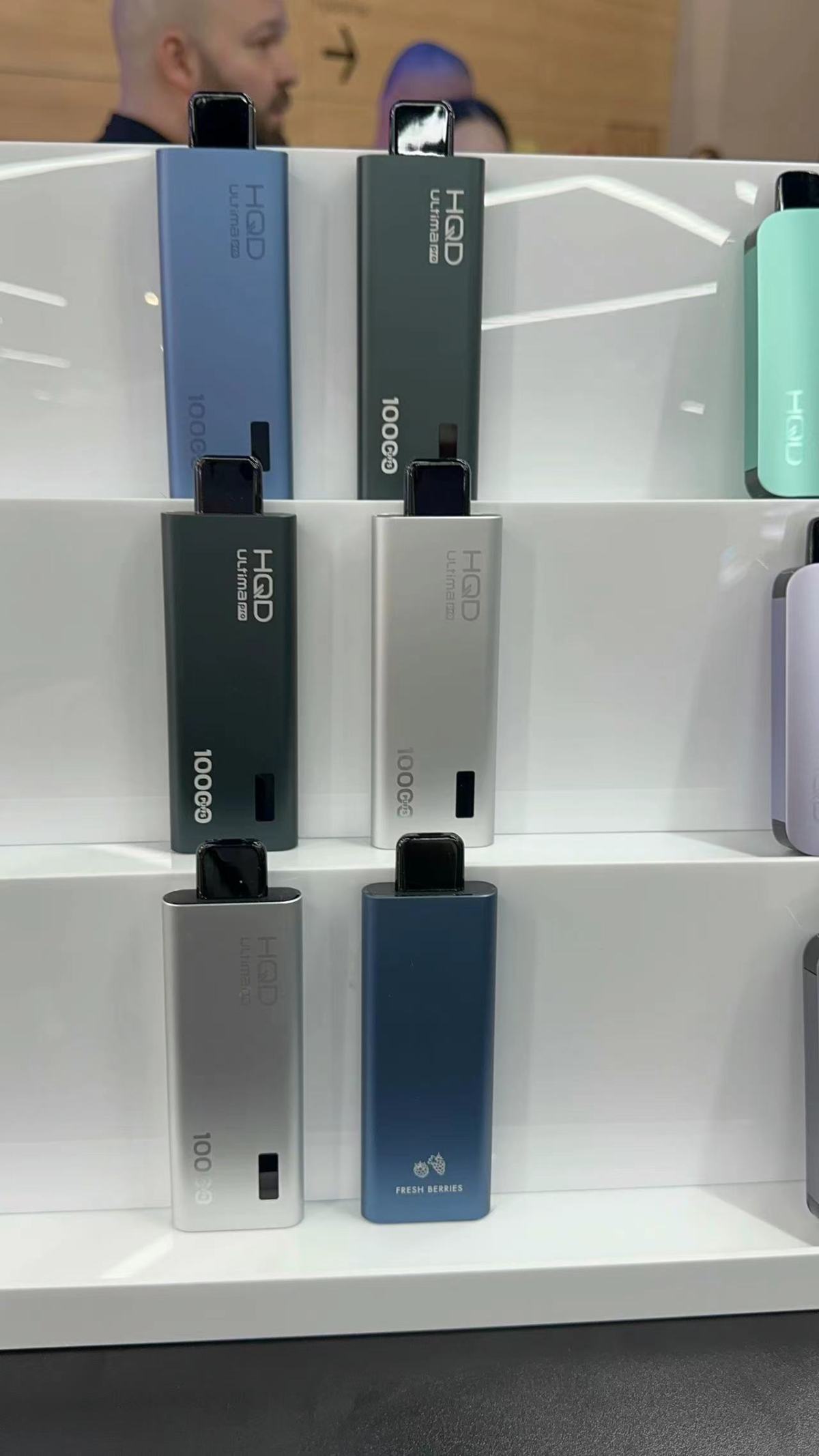
HQD ULTIMA PRO is the best-selling product of HQD in Russia | Image source: 2FIRSTS


Mark, a spokesperson for HQD, recently commented on the company's successful products in the Russian market. According to Mark, HQD has a range of popular products, with the best-selling item being the "HQD ULTIMA PRO." This particular product boasts an impressive 10,000 puffs and offers a smoother smoking experience. Another notable product is the "HQD Click," which is a refillable device and ranks among the top three best-selling items in the HQD product line.


Regarding the e-cigarette market in Russia and the comprehensive e-cigarette regulation policy implemented in the country this year, Mark emphasizes that HQD has always been strictly abiding by the legal requirements. However, he points out that due to the existence of a considerable percentage of the "gray" market in Russia, not only does it violate the principles of fair competition, but it also negatively affects HQD's market share. Mark states that this is a problem commonly seen in the industry, but HQD remains optimistic about the future.


Mark further expressed that although the e-cigarette industry is currently facing a series of challenges, HQD firmly believes that, just like the alcohol industry once did, the e-cigarette industry will also experience improvement in the coming years. This is why HQD started the company's transformation and adaptation process even before the implementation of regulatory policies.


Finally, Mark shared HQD's plans for the Russian market next year. He emphasized that the main task of the coming year is to ensure that all partners' distribution networks can fully adapt to the new regulatory changes. This initiative aims to ensure HQD's sustained growth in the Russian market and create more opportunities for the future.


We welcome news tips, article submissions, interview requests, or comments on this piece.

Please contact us at info@2firsts.com, or reach out to Alan Zhao, CEO of 2Firsts, on LinkedIn


Notice

1.  This article is intended solely for professional research purposes related to industry, technology, and policy. Any references to brands or products are made purely for objective description and do not constitute any form of endorsement, recommendation, or promotion by 2Firsts.

2.  The use of nicotine-containing products — including, but not limited to, cigarettes, e-cigarettes, nicotine pouchand heated tobacco products — carries significant health risks. Users are responsible for complying with all applicable laws and regulations in their respective jurisdictions.

3.  This article is not intended to serve as the basis for any investment decisions or financial advice. 2Firsts assumes no direct or indirect liability for any inaccuracies or errors in the content.

4.  Access to this article is strictly prohibited for individuals below the legal age in their jurisdiction.


Copyright


This article is either an original work created by 2Firsts or a reproduction from third-party sources with proper attribution. All copyrights and usage rights belong to 2Firsts or the original content provider. Unauthorized reproduction, distribution, or any other form of unauthorized use by any individual or organization is strictly prohibited. Violators will be held legally accountable.

For copyright-related inquiries, please contact: info@2firsts.com


AI Assistance Disclaimer


This article may have been enhanced using AI tools to improve translation and editorial efficiency. However, due to technical limitations, inaccuracies may occur. Readers are encouraged to refer to the cited sources for the most accurate information.

We welcome any corrections or feedback. Please contact us at: info@2firsts.com

South Korea Constitutional Court Upholds Volume-Based E-Liquid Tax, With Challenged Rates at KRW 370 and KRW 628 per Milliliter
South Korea's Constitutional Court has upheld fixed taxes on nicotine-containing e-cigarette liquids based on solution volume, ruling that challenged provisions imposing KRW 370 per milliliter in individual consumption tax and KRW 628 per milliliter in tobacco consumption tax do not violate the Constitution. The cases stemmed from historical disputes involving importers that reported nicotine as being extracted from tobacco stems rather than leaves. South Korea has since broadened its tobacco definition to include synthetic nicotine, while current tax laws provide reduced rates for certain products not derived from tobacco.
Sep.18
PMI Pushes Smoke-Free Business in Latin America as Argentina Lifts Heated Tobacco Ban, Mexico City Share Tops 7%
Philip Morris International (PMI) showcased IQOS heated tobacco systems and nicotine pouch products at Technovation 2026 in Buenos Aires on October 7–8, presenting research on consumer attitudes, regulatory developments and illicit cigarette trade across Latin America. PMI Chief Global Growth Officer Stefano Volpetti said smoke-free products accounted for more than 7% of the Mexico City market. Argentina repealed its heated tobacco ban in May 2026 and introduced registration requirements for tobacco and nicotine products, while local media reported nicotine pouch sales in Mendoza. A PMI-commissioned survey found that only 8% of respondents across four Latin American countries were familiar with nicotine pouches. A separate KPMG study estimated illicit cigarette consumption at 77 billion sticks across 11 markets in Latin America and Canada in 2025.
PMI
Oct.13
FDA Revises Import Alert 98-07 Rules, Bringing May Enforcement Priorities Into Unauthorized ENDS Detentions
The U.S. Food and Drug Administration has revised the rules under Import Alert 98-07 to incorporate its May 2026 enforcement-priority policy for certain electronic nicotine delivery systems marketed without premarket authorization. The alert continues to allow detention without physical examination, or DWPE, for ENDS lacking required marketing authorization, while directing field divisions to apply the May risk-based framework. When necessary, detention or refusal decisions must also undergo review by the FDA's Center for Tobacco Products. Products including PACHA and Vuse Pro have already emerged as industry examples of the May policy, although enforcement discretion does not constitute FDA marketing authorization.
News
Sep.28 by 2Firsts Perspectives
Australia Tobacco Tax Debate Spreads Within Labor as NSW Premier Minns Reaffirms Support for a Cut
Australia’s tobacco excise debate is increasingly exposing differences within the governing Labor Party. New South Wales Labor Premier Chris Minns reaffirmed on September 8 that he supports reducing tobacco excise, arguing that current tax settings are pushing consumers toward cheaper black-market cigarettes. Federal Health Minister Mark Butler continues to oppose an excise cut, while Treasurer Jim Chalmers and Assistant Treasurer Daniel Mulino have recently stopped short of ruling out future changes. The divergence follows the opposition Coalition’s proposal to cut tobacco excise by 80%.
Sep.08
JTI Invests ₱2.1 Billion to Upgrade Batangas Manufacturing Hub, Adds First Southeast Asia DIET Facility
JTI Asia Manufacturing Corp. has invested ₱2.1 billion, or about $37 million, in its manufacturing site in Malvar, Batangas, Philippines, to expand tobacco-processing capabilities. About ₱1.9 billion is allocated to JTI's first Dry Ice Expanded Tobacco, or DIET, facility in Southeast Asia, while more than ₱177 million has been spent on expanding its Controlled Atmosphere treatment facility. The Batangas plant supplies the Philippine market and exports to 22 overseas markets, making it one of JTI's key manufacturing hubs in Asia.
Sep.24
Russia’s Vape Device Labeling Regime Enters Force: Registration Starts in September, Mandatory Coding in December
Russia's digital labeling regime for reusable e-cigarettes and similar personal vaping devices entered its first mandatory phase in September 2026. From September 1, manufacturers, importers and other market participants must register with the national Chestny ZNAK tracking system. From December 1, newly manufactured and imported covered devices will be required to carry digital identification codes and be reported as entering circulation. Russia has also issued new operational guidance for imports, marking the transition from a voluntary pilot to phased mandatory implementation.
Sep.15