Philippines DOH reiterates: vaping is not safer than smoking, citing irreversible health risks

Feb.28
Philippines DOH reiterates: vaping is not safer than smoking, citing irreversible health risks
The Philippine Department of Health reiterated Saturday that vaping should not be promoted as an alternative to cigarette smoking, Health Secretary Teodoro “Ted” Herbosa said in a radio interview, according to the Tribune. Herbosa said both vaping and smoking pose irreversible health risks and cited E-cigarette or Vaping Product Use-Associated Lung Injury (EVALI), claiming it led to the death of a 22-year-old male with no smoking history in 2025.


Key Takeaways 


  • DOH says it will continue advising against vaping as an alternative to cigarettes, citing irreversible risks
  • Herbosa cited EVALI and said a 22-year-old male with no smoking history died in 2025
  • Report cites CDC tally of 68 deaths and 2,800+ hospitalizations during a 2019–2020 EVALI outbreak
  • Herbosa said the Philippines is among only three Southeast Asian countries without a full vape ban, citing a health-versus-profitability balance
  • Herbosa said sin taxes reduced smoking prevalence from 27.9% to as low as 19% and that vaping is prevalent among children


2Firsts, February 28, 2026 – 


According to the Tribune, the Department of Health reiterated its stance against vaping on Saturday amid discussions at the House of Representatives about raising excise taxes on tobacco earlier in the week. Health Secretary Teodoro “Ted” Herbosa (Teodoro “Ted” Herbosa) said in a radio interview that the department will continue to advise against using vape as an alternative to cigarette smoking, saying both pose irreversible health risks.


Beyond common respiratory illnesses linked to smoking, Herbosa cited E-cigarette or Vaping Product Use-Associated Lung Injury (EVALI). He said EVALI is a new illness that emerged when most people began using e-cigarettes and vape products, and said it resulted in the death of a 22-year-old male who had no history of smoking in 2025. He said cases vary, citing “popcorn lung” and describing lungs that “blacken” like those of a chronic smoker, adding that lung damage can be permanent.


The report said the U.S. Centers for Disease Control and Prevention tallied 68 total deaths and over 2,800 hospitalizations from an EVALI outbreak between 2019 and 2020.


Herbosa also said the Philippines remains one of only three countries in Southeast Asia that have yet to impose a complete ban on vapes. He attributed this to the Philippines being a tobacco-producing country, saying legislators and regulators are trying to balance health and profitability.


He later said imposing sin taxes on vapes and cigarettes has had a positive effect by reducing smokers and improving the health sector’s budget. Herbosa said smoking prevalence used to be 27.9% and fell “as low as 19%” after the sin tax was passed, adding that prior to implementation nearly 30% of the population smoked.


He also said DOH observations show vaping is prevalent among children, who see it as a “cool” thing to do. He urged children to quit vaping, saying its health risks outweigh its perceived “healthier” factor compared with cigarettes, and warned that vaping can affect the lungs, the heart, and overall health.


Image source: Tribune.


We welcome news tips, article submissions, interview requests, or comments on this piece.

Please contact us at info@2firsts.com, or reach out to Alan Zhao, CEO of 2Firsts, on LinkedIn


Notice

1.  This article is intended solely for professional research purposes related to industry, technology, and policy. Any references to brands or products are made purely for objective description and do not constitute any form of endorsement, recommendation, or promotion by 2Firsts.

2.  The use of nicotine-containing products — including, but not limited to, cigarettes, e-cigarettes, nicotine pouchand heated tobacco products — carries significant health risks. Users are responsible for complying with all applicable laws and regulations in their respective jurisdictions.

3.  This article is not intended to serve as the basis for any investment decisions or financial advice. 2Firsts assumes no direct or indirect liability for any inaccuracies or errors in the content.

4.  Access to this article is strictly prohibited for individuals below the legal age in their jurisdiction.


Copyright


This article is either an original work created by 2Firsts or a reproduction from third-party sources with proper attribution. All copyrights and usage rights belong to 2Firsts or the original content provider. Unauthorized reproduction, distribution, or any other form of unauthorized use by any individual or organization is strictly prohibited. Violators will be held legally accountable.

For copyright-related inquiries, please contact: info@2firsts.com


AI Assistance Disclaimer


This article may have been enhanced using AI tools to improve translation and editorial efficiency. However, due to technical limitations, inaccuracies may occur. Readers are encouraged to refer to the cited sources for the most accurate information.

We welcome any corrections or feedback. Please contact us at: info@2firsts.com

Canada Health Minister Says She Is Not Considering Looser Nicotine Pouch Retail Rules as PMI-Linked Group Pushes for Wider Access
Canadian Health Minister Marjorie Michel says she is not considering loosening retail restrictions on nicotine pouches. Canada regulates pouches containing 4 mg or less of nicotine per unit as non-prescription nicotine replacement therapy and requires newer NRT formats such as pouches to be sold from behind pharmacy counters. Meanwhile, Unsmoke Canada, linked to Philip Morris International's Canadian business, is pushing to allow pouches in convenience stores and other general retail outlets. Health Canada also acknowledges continued unauthorized sales, while recent research shows rising pouch use among Canadian youth aged 16 to 19.
Sep.24
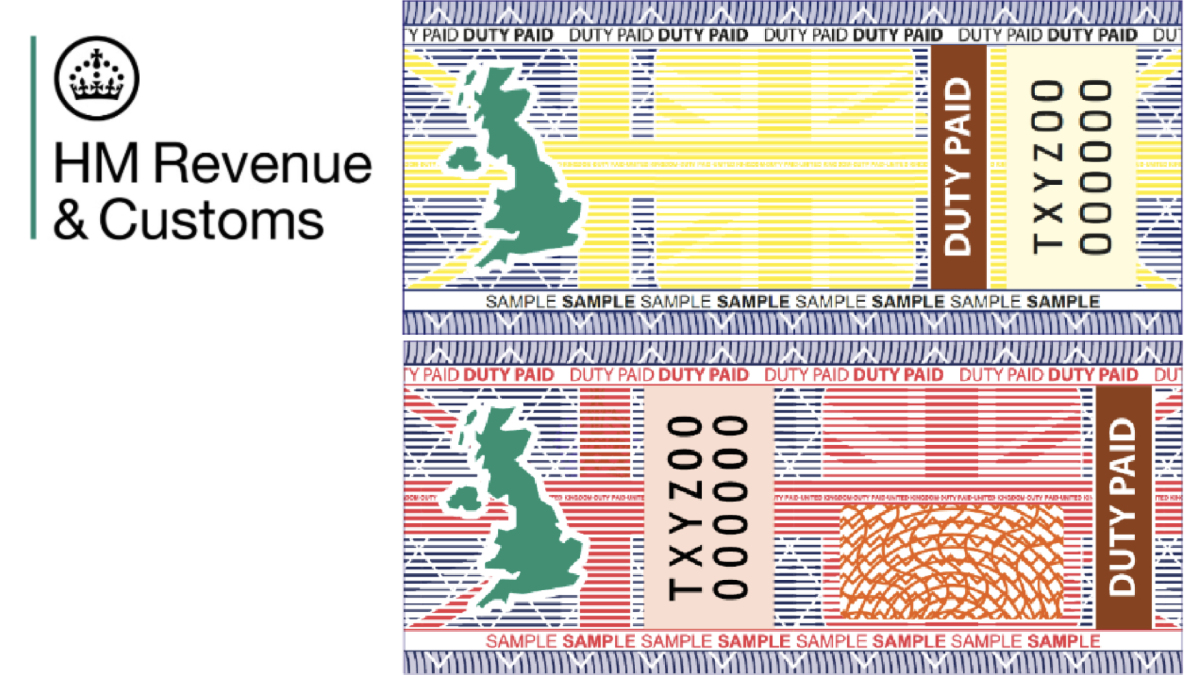
UK HMRC Unveils Red and Yellow Transitional Vape Duty Stamps Ahead of October Tax Launch
HM Revenue & Customs (HMRC) has released sample images of the UK’s transitional vaping duty stamps, showing red and yellow versions ahead of the new Vaping Products Duty and Vaping Duty Stamps Scheme starting on October 1, 2026. Transitional stamps contain physical security features but no digital scanning function. Approved businesses may purchase them through November 30 and affix them through December 31. HMRC has not stated that the red and yellow samples represent different product categories or tax statuses.
Regulations
Sep.02
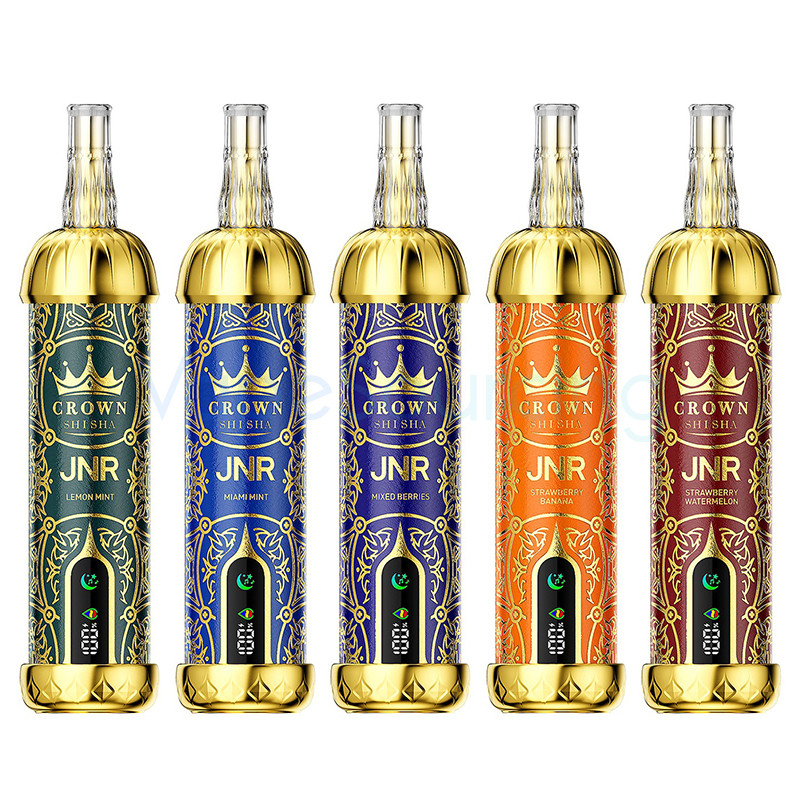
Product | JNR Launches Crown Shisha 100K for International Wholesale, Pairing 58ml Capacity With Triple-Mesh DTL Design
JNR released the Crown Shisha 100K on August 14, 2026, positioning the ultra-high-capacity disposable around a direct-to-lung (DTL) e-shisha experience. The device combines a 58ml e-liquid capacity, triple 1.0Ω mesh coils and a 1,300mAh rechargeable battery, with JNR claiming up to 100,000 puffs. Adjustable airflow, battery and e-liquid status displays, a leather-style exterior and a shisha-inspired sound effect further differentiate the product. JNR is currently promoting the device through international wholesale and distribution channels, while a specific first retail market has not been disclosed.
Aug.31
FDA Revises Import Alert 98-07 Rules, Bringing May Enforcement Priorities Into Unauthorized ENDS Detentions
The U.S. Food and Drug Administration has revised the rules under Import Alert 98-07 to incorporate its May 2026 enforcement-priority policy for certain electronic nicotine delivery systems marketed without premarket authorization. The alert continues to allow detention without physical examination, or DWPE, for ENDS lacking required marketing authorization, while directing field divisions to apply the May risk-based framework. When necessary, detention or refusal decisions must also undergo review by the FDA's Center for Tobacco Products. Products including PACHA and Vuse Pro have already emerged as industry examples of the May policy, although enforcement discretion does not constitute FDA marketing authorization.
News
Sep.28 by 2Firsts Perspectives
Charlie’s Bets on Age-Gating and 678 PMTA Assets as U.S. Vape Enforcement Landscape Shifts
Charlie’s Holdings said in its latest shareholder letter that it is moving to commercialize PACHA products and monetize its PMTA assets as the FDA changes enforcement priorities for unauthorized ENDS products. Thirty PACHA SKUs were previously tentatively identified for a proposed public list of products that the FDA generally does not intend to prioritize for enforcement. Charlie’s is also preparing test-market sales of age-gated flavored disposables and says it currently holds 678 PMTA-related product assets while seeking additional strategic transactions and partnerships.
Sep.11
Special Report | How Capital Is Reassessing the Global Tobacco and Modern Nicotine Industry: Lessons from a New York Forum
Capital is reassessing the global tobacco and modern nicotine industry as heated tobacco, vaping and nicotine pouches reshape demand, profitability and regulation. At the 2026 New Approaches Summit in New York, investors and analysts examined whether smoke-free growth can sustain earnings, how regulation shapes startup value, and whether shareholder engagement can be more effective than divestment. The debate points to a broader shift: tobacco transition is increasingly becoming a capital-allocation, governance and valuation question.
Capital Markets
Oct.05