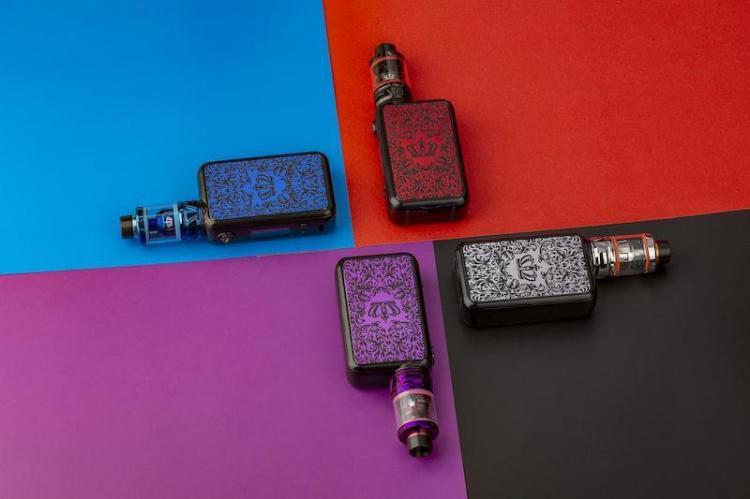
Today, the e-cigarette industry is one of the fastest-growing industries. This is especially true as e-cigarettes have been popular in the market for a long time. Among the different varieties available, disposable e-cigarettes have become the perfect choice for users due to their portability and design. The Hyde Vape brand is one of the best brands that offers disposable e-cigarettes.
The two most popular choices from Hyde vape are the Hyde IQ Disposable Vape Pen 5000 Puffs and the Hyde N-Bar 4500 Puffs Rechargeable. However, these electronic cigarette devices have more or less similar functions, making it difficult to choose the better device.
For your convenience, we will assist you in understanding the difference between the two in this article.
In an attempt to differentiate between Hyde IQ and Hyde N-Bar, we have identified various parameters. We aim to provide a clearer understanding of both product categories.
Number of inhalations/suctions.
Although both of these electronic cigarette devices are among the best and most durable disposable products on the market, they differ in the number of puffs they can provide.
The Hyde IQ can provide an excellent vaping experience with approximately 5000 puffs from a single charge, while the Hyde N-Bar rechargeable vape lasts for about 4500 puffs.
Although Hyde N-Bar boasts a 4500 puff count, which is relatively high compared to other disposable e-cigarettes on the market, it falls behind Hyde IQ.
Therefore, in terms of maximum suction times, the Hyde IQ performs slightly better than the Hyde N-Bar.
Battery indicator light.
Regarding battery capacity and lifespan, both Hyde IQ and Hyde N-Bar have rechargeable batteries and are convenient for USB charging.
However, the Hyde IQ disposable Vape Pen 5000 Puffs comes equipped with a unique battery indicator light.
This innovative battery features indicator lights that display three signals: red when the battery is only at 1-16% capacity, orange when it is at approximately 16-30% capacity, and green when it is at 30-100% capacity.
For vapers, this is very convenient. Therefore, in this aspect, Hyde IQ is stealing the show with its innovation.
Electronic cigarette liquid or e-liquid.
When comparing disposable electronic cigarettes, one important factor to consider is the e-liquid. This type of liquid is contained in various cartridges and contains propylene glycol and nicotine.
The Hyde N Bar 4500 Puffs is a rechargeable vape with a pre-filled electronic liquid capacity of 10 milliliters. The liquid contains approximately 5% nicotine.
Alternatively, the Hyde IQ comes with a vape juice capacity of 8 milliliters. However, its nicotine content is similar to that of the Hyde N-Bar, at 5%.
Therefore, the nominal edge of Hyde N-Bar in terms of e-liquid is approximately 2 milliliters.
However, despite the difference in the amount of e-liquid between the two, Hyde IQ produces more puffs and lasts for 1-2 days longer. Therefore, it is clear that the efficiency of Hyde N-Bar is lower than that of Hyde IQ.
When it comes to popular choices in e-cigarettes, both Hyde IQ and Hyde N Bar offer a variety of flavors.
The Hyde IQ disposable Vape Pen 5000 comes in 20 different flavors including watermelon soda, cranberry orange soda, pink burst, and lemon drop. Each flavor is unique and exciting.
On the other hand, Hyde N-Bar offers over 20 flavors including popular choices such as aloe grape, banana and cream, minty O's, peach mango watermelon, Caribbean cola, and tropical flavors.
Therefore, in terms of taste, both electronic cigarette devices are comparable.
Conclusion
The Hyde IQ disposable Vape Pen with 5000 puffs and the Hyde N-Bar 4500 Puffs Rechargeable Vape are two of the best disposable e-cigarettes available in the market. While we have highlighted some distinguishing parameters, it is ultimately up to you to make the best judgment.
Statement:
This article is compiled from third-party information and is only intended for industry-related communication and learning purposes.
This article does not represent the views of 2FIRSTS and 2FIRSTS cannot confirm the truthfulness and accuracy of the article's content. The translation of this article is intended only for industry-related exchange and research purposes.
Due to limitations in translation ability, the article may not fully express the same meaning as the original. Please refer to the original article for accuracy.
2FIRSTS aligns fully with the Chinese government when it comes to any domestic, Hong Kong, Macau, Taiwan, or foreign related statements and positions.
The compilation of information is the copyright of the original media and author. If there is any infringement, please contact us for removal.
Disclaimer
This article is provided solely for professional research, industry discussion, and informational purposes. Any references to brands, companies, products, technologies, or policies are made for factual reporting and analytical purposes only, and do not constitute endorsement, recommendation, promotion, or advertising by 2Firsts.
Nicotine-containing products, including but not limited to cigarettes, e-cigarettes, heated tobacco products, and nicotine pouches, carry significant health risks. Readers are responsible for complying with all applicable laws and regulations in their respective jurisdictions, including age restrictions and access limitations.
The information contained in this article should not be regarded as investment, legal, medical, regulatory, or commercial advice. While 2Firsts strives to ensure the accuracy and reliability of its content, it does not assume liability for any direct or indirect loss arising from errors, omissions, inaccuracies, or reliance on the information contained herein.
This article is not intended for individuals below the legal age for accessing tobacco or nicotine-related information in their jurisdiction.
Copyright Notice
This article is either original content produced by 2Firsts or content reproduced, translated, summarized, or adapted from third-party sources with attribution where applicable. The intellectual property rights of the original content remain with 2Firsts or the respective original rights holders.
No individual or organization may copy, reproduce, distribute, republish, modify, translate, or otherwise use this content without prior authorization. Any unauthorized use may result in legal action.
For copyright-related inquiries, corrections, or removal requests, please contact: info@2firsts.com.
AI-Assisted Translation and Editing Notice
Portions of this article may have been translated, edited, or reviewed with the assistance of artificial intelligence tools to improve efficiency and readability. Due to the limitations of AI-assisted translation and editing, discrepancies, omissions, or inaccuracies may exist when compared with the original source.
Where applicable, readers are advised to refer to the original source for the most complete and accurate information. If you identify any errors or believe that any content infringes upon your rights, please contact us at info@2firsts.com, and we will review and address the matter promptly.