Illegal Sale of THC E-Cigarette Pods in Georgetown, Massachusetts

Jul.17.2024
Illegal Sale of THC E-Cigarette Pods in Georgetown, Massachusetts
Georgetown Police Department partners with Massachusetts tax officials, busting illegal THC e-cigarette sales at local store.

According to a report from JGPR on July 16, David Sedgwick, Chief of Police of the Georgetown Police Department in Massachusetts, reported that the department has partnered with the Massachusetts Department of Revenue and the North Shore/Cape Ann Tobacco Control Program to charge two men with illegally selling THC e-cigarette pods.


The two men are 30-year-old Ram Gupta and 29-year-old Dinesh Kumar Yadav, residents of Haverhill.


On July 16th, the two agencies executed a search warrant on the e-cigarette store located at 7 W. Main St. The Georgetown Police Department had been informed previously that the store was selling THC marijuana products without a license or zoning approval.


As part of the investigation, an undercover agent purchased eight THC e-cigarette pods from the store. Additionally, a teenager was able to buy two packs of flavored nicotine products.


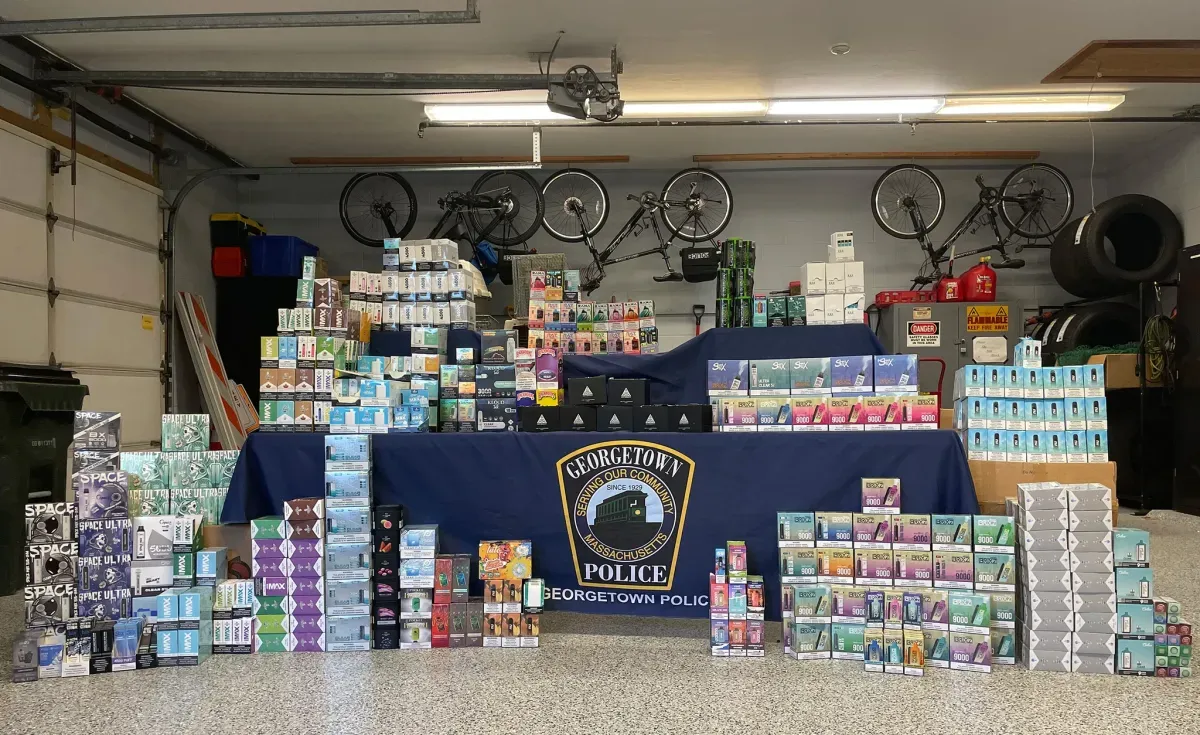
Subsequently, authorities seized hundreds of THC cannabis e-cigarette pods and several boxes of illegal flavored tobacco products in Massachusetts while executing a search warrant. The seized products included well-known e-cigarette brands such as RAMA, RAZ, and JUUL.


The store owner and employees were both released on $5000 cash bail and are scheduled to appear in Haverhill District Court on Wednesday, the 17th.


We welcome news tips, article submissions, interview requests, or comments on this piece.

Please contact us at info@2firsts.com, or reach out to Alan Zhao, CEO of 2Firsts, on LinkedIn


Notice

1.  This article is intended solely for professional research purposes related to industry, technology, and policy. Any references to brands or products are made purely for objective description and do not constitute any form of endorsement, recommendation, or promotion by 2Firsts.

2.  The use of nicotine-containing products — including, but not limited to, cigarettes, e-cigarettes, nicotine pouchand heated tobacco products — carries significant health risks. Users are responsible for complying with all applicable laws and regulations in their respective jurisdictions.

3.  This article is not intended to serve as the basis for any investment decisions or financial advice. 2Firsts assumes no direct or indirect liability for any inaccuracies or errors in the content.

4.  Access to this article is strictly prohibited for individuals below the legal age in their jurisdiction.


Copyright


This article is either an original work created by 2Firsts or a reproduction from third-party sources with proper attribution. All copyrights and usage rights belong to 2Firsts or the original content provider. Unauthorized reproduction, distribution, or any other form of unauthorized use by any individual or organization is strictly prohibited. Violators will be held legally accountable.

For copyright-related inquiries, please contact: info@2firsts.com


AI Assistance Disclaimer


This article may have been enhanced using AI tools to improve translation and editorial efficiency. However, due to technical limitations, inaccuracies may occur. Readers are encouraged to refer to the cited sources for the most accurate information.

We welcome any corrections or feedback. Please contact us at: info@2firsts.com

NielsenIQ and Goldman Sachs Data Show Smokeless Was the Only Growing Major U.S. Nicotine Category
NielsenIQ and Goldman Sachs data show U.S. smokeless nicotine product sales rose more than 8% year over year in the 52 weeks ended May 30, making it the only major nicotine category to record growth.
Market
Jun.23
South Korea’s Cigarette Smoking Rate Falls to 17.9%, E-Cigarette Use Continues to Rise
Data released by the Korea Disease Control and Prevention Agency (KDCA) showed South Korea’s conventional cigarette smoking rate fell to 17.9% in 2025, while heated tobacco and liquid e-cigarette use continued to rise, particularly among young adults and women.
Jun.01
Maine Approves Vape Stewardship Bill Requiring Producers to Manage End-of-Life Devices
The Maine Legislature has passed LD 1519, a bill that would establish a producer-funded stewardship program for electronic smoking devices, requiring manufacturers and importers to manage the collection, transportation, recycling and disposal of end-of-life products, particularly disposable vapes containing lithium-ion batteries.
Jun.12
U.S. Military Nicotine Policy Sparks Debate as Nicotine Pouches Enter Discussion
An opinion article published by Stars and Stripes argued that the Pentagon’s January nicotine clinical guidelines overemphasize abstinence, fail to reflect the reality that about 30% of active-duty personnel use nicotine, and do not address nicotine pouches as potential harm-reduction products.
Industry Insight
Jun.08
Sweden Becomes First EU Country to Reach Smoke-Free Status as Daily Smoking Falls to 4.8%
According to the latest CAN report and multiple media reports, Sweden’s daily smoking rate fell to 4.8% in 2025, below the commonly used 5% smoke-free threshold, making it the first EU country to reach that benchmark.
News
Jun.05
Global Tobacco Control Faces Regional Adaptation Test as Nicotine Markets Evolve, Asian Specialist Says
As e-cigarettes, heated tobacco products and nicotine pouches expand across global markets, a central question is gaining urgency: can tobacco control rely on a universal policy model? In an interview with 2Firsts, Asian public health and addiction medicine specialist Dr. Rashidi Mohamed bin Pakri Mohamed says Western experience remains relevant, but policies must be adapted to local culture, healthcare systems, enforcement capacity, illicit markets and clinical evidence.
Jul.08