Illegal Vape Sales in Florida Reach $355 Million, Involving ELFBAR, Fume, and HQD

Market by 2FIRSTS, edited by Sophia
May.10.2024
Illegal Vape Sales in Florida Reach $355 Million, Involving ELFBAR, Fume, and HQD
Florida Retail Federation warns of $355 million illegal e-cigarette sales in Florida market, urges stronger enforcement to combat issue.

According to The Capitolist's report on May 9th, the Florida Retail Federation (FRF) has issued a warning about illegal e-cigarette sales in the Florida market. The total sales of e-cigarettes in the state reached $410 million, with illegal e-cigarettes accounting for $355 million of that total.


FRF President Scott Shalley is calling on federal and state governments to strengthen law enforcement efforts to address this increasingly serious issue.


Unfortunately, most people do not know the difference between illegal products and those that have been approved by the FDA, and Florida seems to be greatly impacted in this regard.


The e-cigarette sales in Florida surged to $410 million in 2023, with over $355 million in sales coming from three e-cigarette companies: ELFBAR, Fume, and HQD. Fume contributed $162 million in sales, HQD contributed $127 million, and ELFBAR contributed $66 million. Compared to other states, Florida's disposable e-cigarette sales are 9 times higher than New York, which only had $43 million in sales.


Shalley said that often these illegal e-cigarettes are labeled as toys or other items to pass through customs inspections. Therefore, increasing federal agencies' inspection and punishment of these illegal e-cigarettes is imperative.


The state recently passed legislation granting the state government the authority to require e-cigarette products to hold FDA compliance certification and registration. The FDA has also issued warning letters to retail and online sellers. However, despite these measures, FRF believes that more work needs to be done. Shalley is calling for a comprehensive list of approved and banned products to help retailers and consumers.


I believe the idea of creating a clear list of approved and banned products is ideal, but there are complexities in the roles of the FDA and the federal government. In the meantime, we will continue to urge the FDA to strengthen enforcement, enhance evaluation processes, and address this issue.


We welcome news tips, article submissions, interview requests, or comments on this piece.

Please contact us at info@2firsts.com, or reach out to Alan Zhao, CEO of 2Firsts, on LinkedIn


Notice

1.  This article is intended solely for professional research purposes related to industry, technology, and policy. Any references to brands or products are made purely for objective description and do not constitute any form of endorsement, recommendation, or promotion by 2Firsts.

2.  The use of nicotine-containing products — including, but not limited to, cigarettes, e-cigarettes, nicotine pouchand heated tobacco products — carries significant health risks. Users are responsible for complying with all applicable laws and regulations in their respective jurisdictions.

3.  This article is not intended to serve as the basis for any investment decisions or financial advice. 2Firsts assumes no direct or indirect liability for any inaccuracies or errors in the content.

4.  Access to this article is strictly prohibited for individuals below the legal age in their jurisdiction.


Copyright


This article is either an original work created by 2Firsts or a reproduction from third-party sources with proper attribution. All copyrights and usage rights belong to 2Firsts or the original content provider. Unauthorized reproduction, distribution, or any other form of unauthorized use by any individual or organization is strictly prohibited. Violators will be held legally accountable.

For copyright-related inquiries, please contact: info@2firsts.com


AI Assistance Disclaimer


This article may have been enhanced using AI tools to improve translation and editorial efficiency. However, due to technical limitations, inaccuracies may occur. Readers are encouraged to refer to the cited sources for the most accurate information.

We welcome any corrections or feedback. Please contact us at: info@2firsts.com

FDA Unifies Tobacco Registration and Product Listing Form Across Product Categories
The U.S. FDA has consolidated two tobacco establishment registration and product listing forms into a redesigned Form FDA 3741 covering all regulated product categories, including e-cigarettes, heated tobacco products and nicotine pouches. The current requirements remain limited to domestic establishments. Separately, the FDA has proposed extending registration and product listing requirements to foreign manufacturers, signaling greater regulatory attention to manufacturing entities and product-level information across the tobacco and nicotine supply chain.
FDA
Sep.30
South Korea Imports 12,126 Kg of Nicotine Analogues From April to August After Bringing Synthetic Nicotine Under Tobacco Law
South Korea's liquid-vape market is showing changes across raw-material imports, product types and sales channels after synthetic nicotine came under the Tobacco Business Act on April 24. Customs data show nicotine-analogue imports totaled 12,126 kilograms from April through August, while synthetic-nicotine imports over the same five months totaled 231,663 kilograms, just 39.3% of the amount imported in March alone. Physical liquid-vape stores tracked in Seoul and Gyeonggi Province fell 9.9%, unmanned outlets edged higher and online sales listings increased from 27,774 to 42,437. Government testing of 105 liquid inhalation products promoted as nicotine-free separately found nicotine in 13 and 6-methylnicotine in 12.
Sep.22
IKE Tech Launches IKE 2.0 Compliance Platform for Nicotine Products
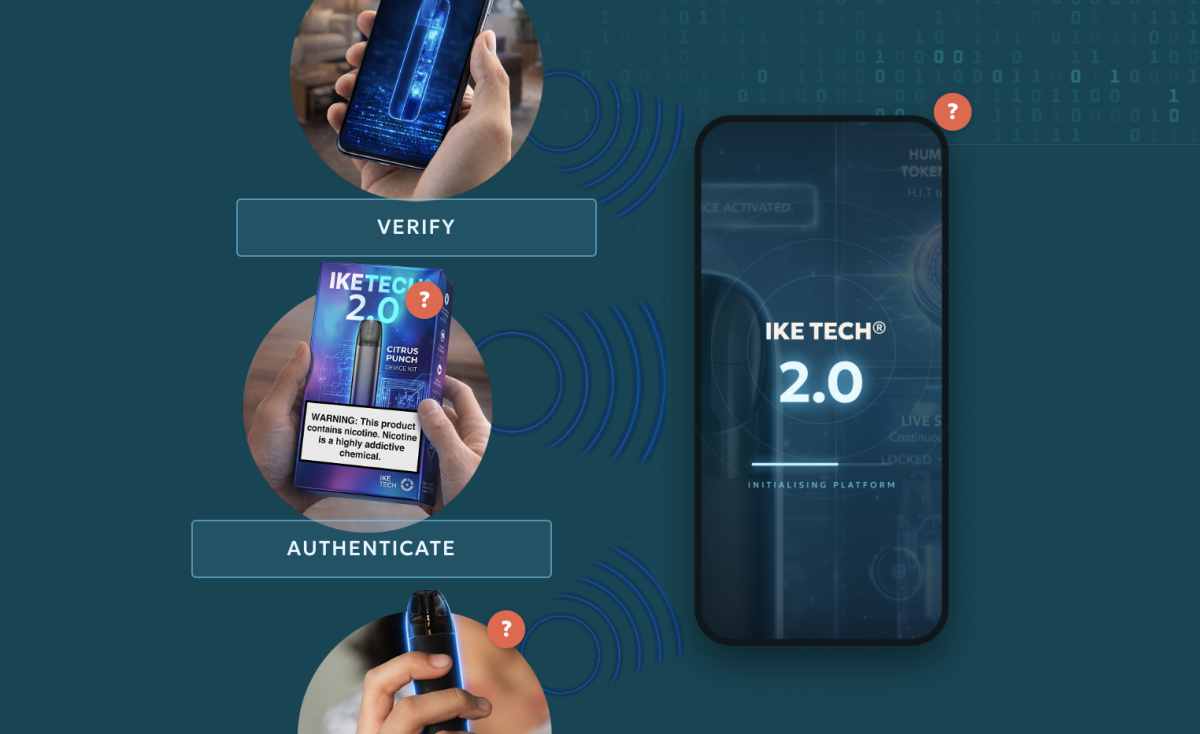
IKE Tech launched IKE 2.0 on September 28, initially targeting nicotine products with a platform that combines user identity verification, product authentication, configurable policy controls and data analytics. Products can be authenticated through direct device integration or NFC smart tags. IKE Tech was formed with participation from Ispire's Aspire North America, Berify and Chemular, with Ispire currently holding a 40% interest. Its age-verification component PMTA was accepted by the FDA in 2025 and remains under review. The company did not disclose customer names, commercial deployment volumes, pricing or revenue tied to IKE 2.0.
News
Sep.29 by 2Firsts Perspectives
Special Report | From Oversupply to Supply Gaps: Global Tobacco Leaf Markets Diverge Ahead of 2027
Global tobacco leaf markets diverged sharply in 2026, with India cutting authorised FCV production amid oversupply while Malawi faced a supply shortfall. U.S. demand improved in some leaf categories, but growers in Brazil, Colombia, Tanzania and Zimbabwe faced pressure from prices, buyer access, costs and weather. With nicotine consumption patterns also shifting, 2027 will test whether supply, demand and grower profitability can move back toward balance.
Oct.26
South Korea Constitutional Court Upholds Volume-Based E-Liquid Tax, With Challenged Rates at KRW 370 and KRW 628 per Milliliter
South Korea's Constitutional Court has upheld fixed taxes on nicotine-containing e-cigarette liquids based on solution volume, ruling that challenged provisions imposing KRW 370 per milliliter in individual consumption tax and KRW 628 per milliliter in tobacco consumption tax do not violate the Constitution. The cases stemmed from historical disputes involving importers that reported nicotine as being extracted from tobacco stems rather than leaves. South Korea has since broadened its tobacco definition to include synthetic nicotine, while current tax laws provide reduced rates for certain products not derived from tobacco.
Sep.18
2Firsts Hosts China Market Forum at InterTabac as Global Industry Attention to China’s Tobacco Sector Deepens
On September 16, 2Firsts hosted a China-focused industry forum during InterTabac in Dortmund, bringing together more than 30 participants from North America, Europe, India, South Korea and other markets. The session covered traditional tobacco, next-generation products, exports, technology, regulation and supply chains, while examining how China’s tobacco sector operates, where its transformation may be heading, and why its growing role matters increasingly to companies across the global tobacco and nicotine industry.
Sep.21