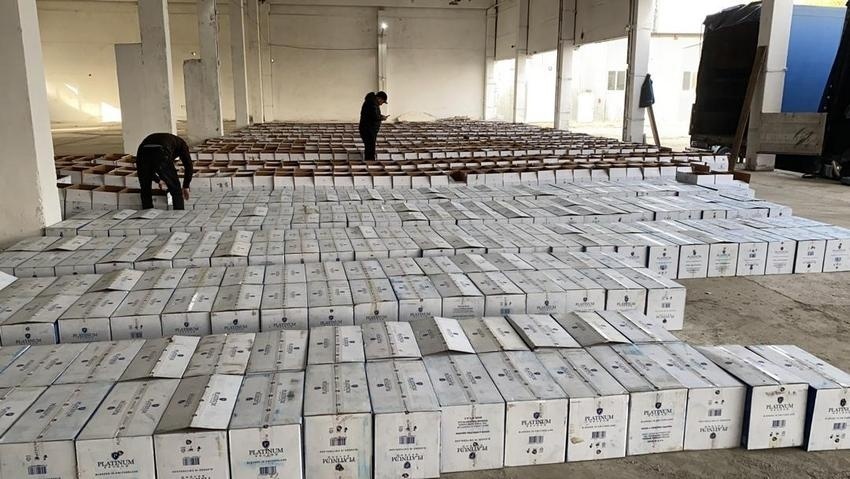
According to Russian media RGRU on May 9th, TRACIT data shows that the issue of illicit tobacco smuggling is impacting all Central Asian countries to varying degrees, but particularly Kyrgyzstan. It is estimated that the republic is suffering significant budget losses due to lack of tax revenue. The report also indicates that Kyrgyzstan is a transit point for smuggled tobacco products entering other countries, including Russia.
Tobacco industry expert Ulukbek Turdubekov said that the majority of illegal tobacco flows into Tajikistan. In an interview with a reporter from the Russian newspaper, he explained that most of the tobacco markets in neighboring countries are operating illegally. Due to ineffective control measures, major tobacco companies have left Tajikistan. Illegal tobacco products are rampant in areas bordering the republic with Uzbekistan and Kyrgyzstan.
Unlike the situation with Uzbekistan, Kyrgyzstan and Uzbekistan are engaged in mutual smuggling. Price differences and diversity of products are driving this issue. The Kyrgyzstan market has more brands than the Uzbekistan market, and unscrupulous businessmen are taking advantage of this.
According to Ulukbek Turgunbayev, another illegal tobacco supply chain runs from Kyrgyzstan to countries in the Arab world, where the prices of tobacco and heated tobacco (vaporized tobacco) are on average three times higher than in Kyrgyzstan. This makes such a business very attractive to suppliers, even if it is illegal.
According to data from NielsenIQ, a company that provides global consumer market information, illegal tobacco products in Kyrgyzstan accounted for 7.5% in 2022, which has risen to 17.7% by 2023. Due to the increasing threat of smuggling, the government established a cross-departmental task force within the Chamber of Commerce last November to combat illegal tobacco products. The task force is comprised of representatives from 13 government agencies, including tax officials, customs officers, and law enforcement personnel. Currently, they are in the process of developing an action plan.
We welcome news tips, article submissions, interview requests, or comments on this piece.
Please contact us at info@2firsts.com, or reach out to Alan Zhao, CEO of 2Firsts, on LinkedIn
Notice
1. This article is intended solely for professional research purposes related to industry, technology, and policy. Any references to brands or products are made purely for objective description and do not constitute any form of endorsement, recommendation, or promotion by 2Firsts.
2. The use of nicotine-containing products — including, but not limited to, cigarettes, e-cigarettes, nicotine pouchand heated tobacco products — carries significant health risks. Users are responsible for complying with all applicable laws and regulations in their respective jurisdictions.
3. This article is not intended to serve as the basis for any investment decisions or financial advice. 2Firsts assumes no direct or indirect liability for any inaccuracies or errors in the content.
4. Access to this article is strictly prohibited for individuals below the legal age in their jurisdiction.
Copyright
This article is either an original work created by 2Firsts or a reproduction from third-party sources with proper attribution. All copyrights and usage rights belong to 2Firsts or the original content provider. Unauthorized reproduction, distribution, or any other form of unauthorized use by any individual or organization is strictly prohibited. Violators will be held legally accountable.
For copyright-related inquiries, please contact: info@2firsts.com
AI Assistance Disclaimer
This article may have been enhanced using AI tools to improve translation and editorial efficiency. However, due to technical limitations, inaccuracies may occur. Readers are encouraged to refer to the cited sources for the most accurate information.
We welcome any corrections or feedback. Please contact us at: info@2firsts.com