Polish Government Plans Ban on Flavoured Nicotine Pouches and Disposable E-Cigarettes

Dec.05.2025
Polish Government Plans Ban on Flavoured Nicotine Pouches and Disposable E-Cigarettes
Poland’s government is preparing to amend the Act on Protection of Health from the Consequences of Tobacco Use to ban the sale of flavoured nicotine pouches and disposable e-cigarettes. The Health Ministry says the goal is to protect youth from nicotine addiction, citing World Health Organization data on the risks of such products. However, industry representatives and legal experts argue the proposal is abrupt and could expand the illicit market.

Key points


  • Poland’s Cabinet is set to discuss a new bill restricting nicotine product sales.
  • The proposal bans flavoured nicotine pouches and disposable e-cigarettes to protect youth.
  • The Health Ministry cites WHO data showing increased e-cigarette use among minors.
  • Business groups warn of policy instability and potential black-market expansion.
  • Legal experts urge education and enforcement rather than new prohibitions.


2Firsts, December 5, 2025 – According to Rzeczpospolita, the Polish government is preparing to amend the Act on Protection of Health from the Consequences of Tobacco Use to prohibit the sale of flavoured nicotine pouches and disposable e-cigarettes. The draft will be debated at Thursday’s Standing Committee of the Council of Ministers meeting.


The Health Ministry, which authored the bill, argues the changes aim to protect young people from nicotine addiction. The ministry cites World Health Organization (WHO) reports highlighting the health risks of nicotine pouches and the increasing popularity of e-cigarettes among adolescents. Data from the 2022 Global Youth Tobacco Survey show that 22.3% of Polish children aged 12–15 use e-cigarettes (21.2% of boys and 23.4% of girls).


However, the proposal sparked backlash during public consultations. Numerous organizations—including medical associations—said the plan misrepresents concern for public health and could surprise the tobacco sector. Many warned of a black-market surge, typical of overly restrictive policies.


Jakub Bińkowski, board member of the Union of Entrepreneurs and Employers (ZPP), said:


“Every business expects stability and predictability from the state. Unfortunately, the tobacco sector has not enjoyed that in recent years, with unexpected tax hikes and sudden bans. A ban will likely expand the shadow market, introducing products of unknown origin and potentially higher toxicity.”


Legal expert Dr. Anna Partyka-Opiela of the Rymarz Zdort Maruta law firm added that the ban may not meet constitutional standards of usefulness, necessity, and proportionality, and might fail to achieve its intended health goals.


Experts further note that nicotine pouches are primarily used by former smokers trying to quit. They argue that better enforcement of existing age-restriction laws and education campaigns would yield healthier outcomes.


Critics also pointed out that Poland has already imposed an excise tax on nicotine pouches since July 1, 2025, and the May 2025 amendment to the anti-tobacco law set strict limits: a ban on sales to minors, a ban on online sales, and a nicotine cap of 20 mg/g.


Image source: Rzeczpospolita


We welcome news tips, article submissions, interview requests, or comments on this piece.

Please contact us at info@2firsts.com, or reach out to Alan Zhao, CEO of 2Firsts, on LinkedIn


Notice

1.  This article is intended solely for professional research purposes related to industry, technology, and policy. Any references to brands or products are made purely for objective description and do not constitute any form of endorsement, recommendation, or promotion by 2Firsts.

2.  The use of nicotine-containing products — including, but not limited to, cigarettes, e-cigarettes, nicotine pouchand heated tobacco products — carries significant health risks. Users are responsible for complying with all applicable laws and regulations in their respective jurisdictions.

3.  This article is not intended to serve as the basis for any investment decisions or financial advice. 2Firsts assumes no direct or indirect liability for any inaccuracies or errors in the content.

4.  Access to this article is strictly prohibited for individuals below the legal age in their jurisdiction.


Copyright


This article is either an original work created by 2Firsts or a reproduction from third-party sources with proper attribution. All copyrights and usage rights belong to 2Firsts or the original content provider. Unauthorized reproduction, distribution, or any other form of unauthorized use by any individual or organization is strictly prohibited. Violators will be held legally accountable.

For copyright-related inquiries, please contact: info@2firsts.com


AI Assistance Disclaimer


This article may have been enhanced using AI tools to improve translation and editorial efficiency. However, due to technical limitations, inaccuracies may occur. Readers are encouraged to refer to the cited sources for the most accurate information.

We welcome any corrections or feedback. Please contact us at: info@2firsts.com

CCPIT Says Trade Friction Index for China-Related Electronics Sector Remains High, With Vape Products Among Areas of Focus
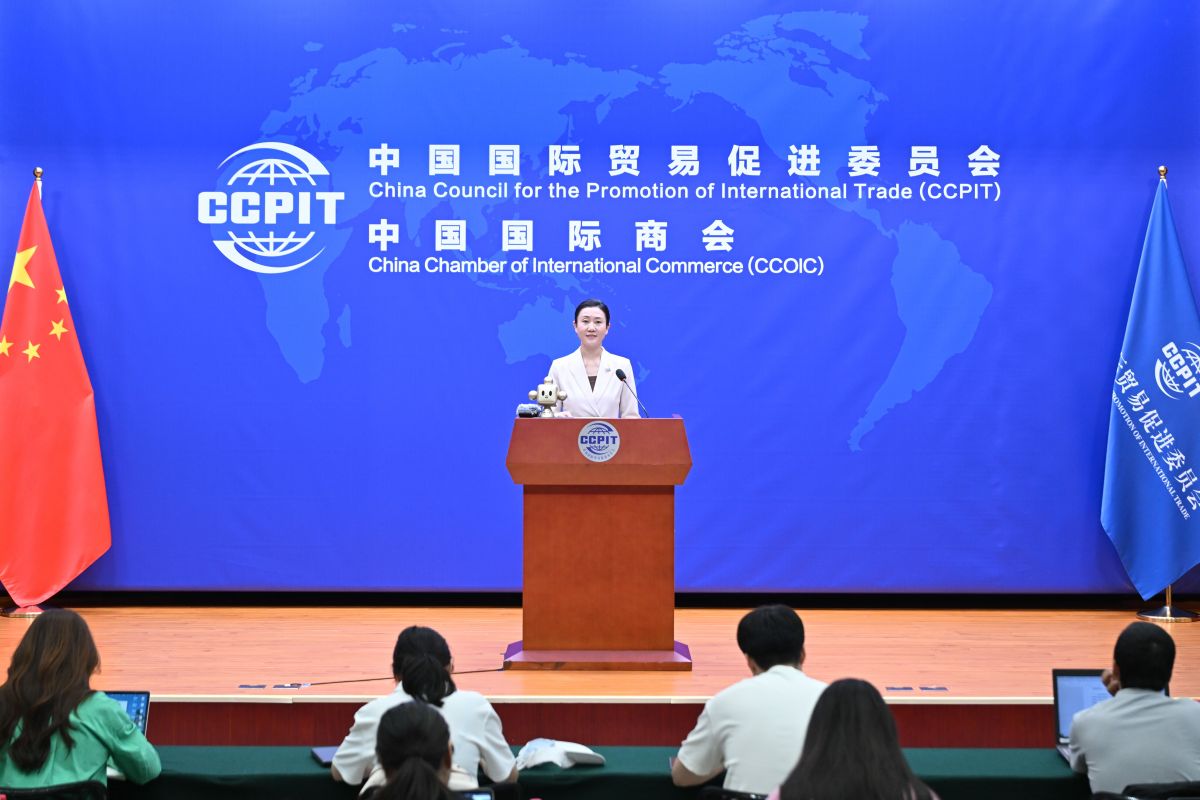
China Council for the Promotion of International Trade (CCPIT) held its July regular press conference on July 31, 2026, releasing the May 2026 Global Economic and Trade Friction Index. CCPIT spokesperson Yang Fan said the global trade friction index stood at 95 in May, remaining at a medium-to-high level. By industry, the electronics sector recorded the highest trade friction index among 13 monitored industries. In China-related trade frictions, the index stood at 93, with electronics products including drones, chips and vape products among areas where friction remained elevated.
Aug.03
Australia’s Daily Smoking Rate Falls to Record Low of 5.8% as Nicotine Use Patterns Shift
According to the Australian Institute of Health and Welfare’s National Drug Strategy Household Survey, daily smoking among Australians aged 18 and over fell to a record low of 5.8% in 2025. Health Minister Mark Butler said Australia now has around 500,000 fewer daily smokers than three years ago and credited the government’s vaping reforms as part of broader progress. Among people aged 14 and over, daily smoking declined from 8.3% in 2022-23 to 5.6% in 2025. Daily vaping rates stabilised at 3.6%, while the government also moved to further restrict access to nicotine pouches through unapproved therapeutic import pathways.
Jul.21
Australian Coalition Taskforce Calls for 80% Tobacco Tax Cut to Combat Illicit Market
According to SGST on August 26, 2026, Australia’s Coalition Illegal Tobacco Taskforce released a report recommending an up to 80% cut in tobacco excise to reduce the appeal of the illicit tobacco market. The report claimed organised crime groups now control about 80% of Australia’s tobacco market and argued that high excise rates have widened the price gap between legal and illegal products. The recommendation remains a policy proposal and has not been adopted by the Australian government, which said its focus remains on enforcement, compliance and additional resources.
Aug.27
2Firsts Data | China’s Vape-Related Exports Rise 16.5% in July 2026 as U.S.-Bound Shipments Jump 53.5%
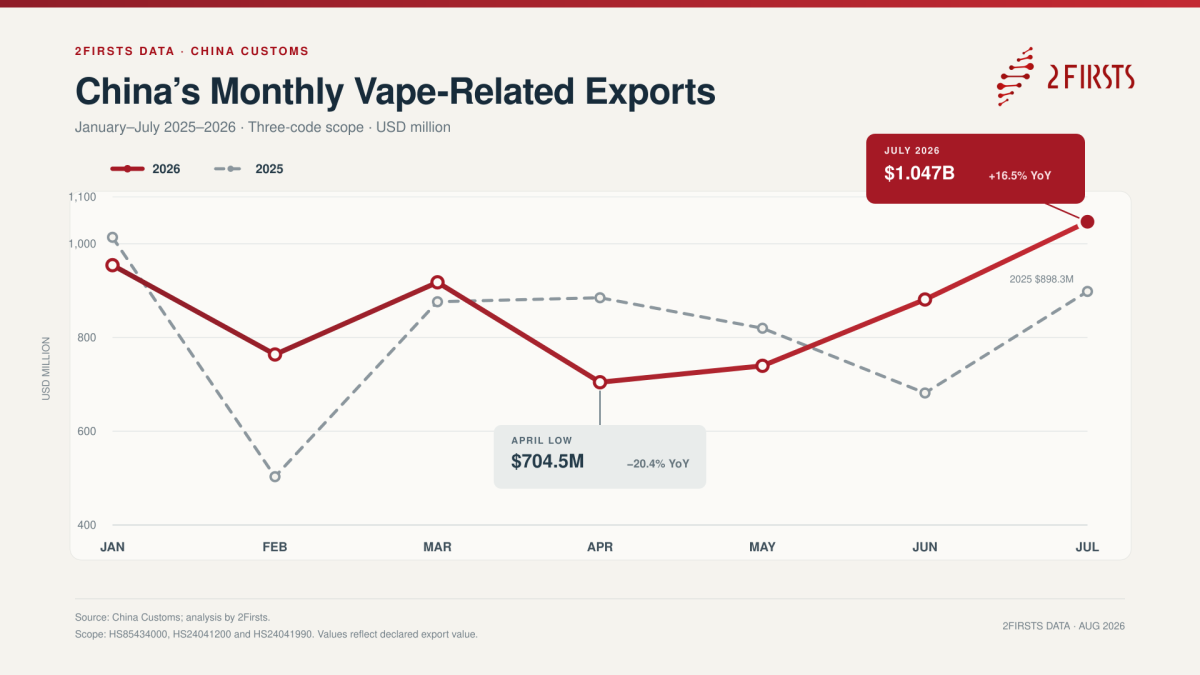
China’s vape-related exports reached $1.047 billion in July 2026, up 16.5% year on year and the highest monthly total of the year. Growth was heavily concentrated in the U.S., where exports jumped 53.5% to $404 million and accounted for 94.9% of the overall increase. Exports to all other markets rose just 1.2%. By category, nicotine-containing non-combustible products—primarily vapes—under HS24041200 rose 24.7% and generated 95.5% of the total increase. Vape-device exports under HS85434000 fell 0.4%, while other nicotine-substitute products under HS24041990 grew 88.9% but remained comparatively small.
DATA
Aug.24
2Firsts On-Site | CTIHK Showcases Nicotine Pouches, Heated Tobacco and Chinese Cigars at InterTabac 2026
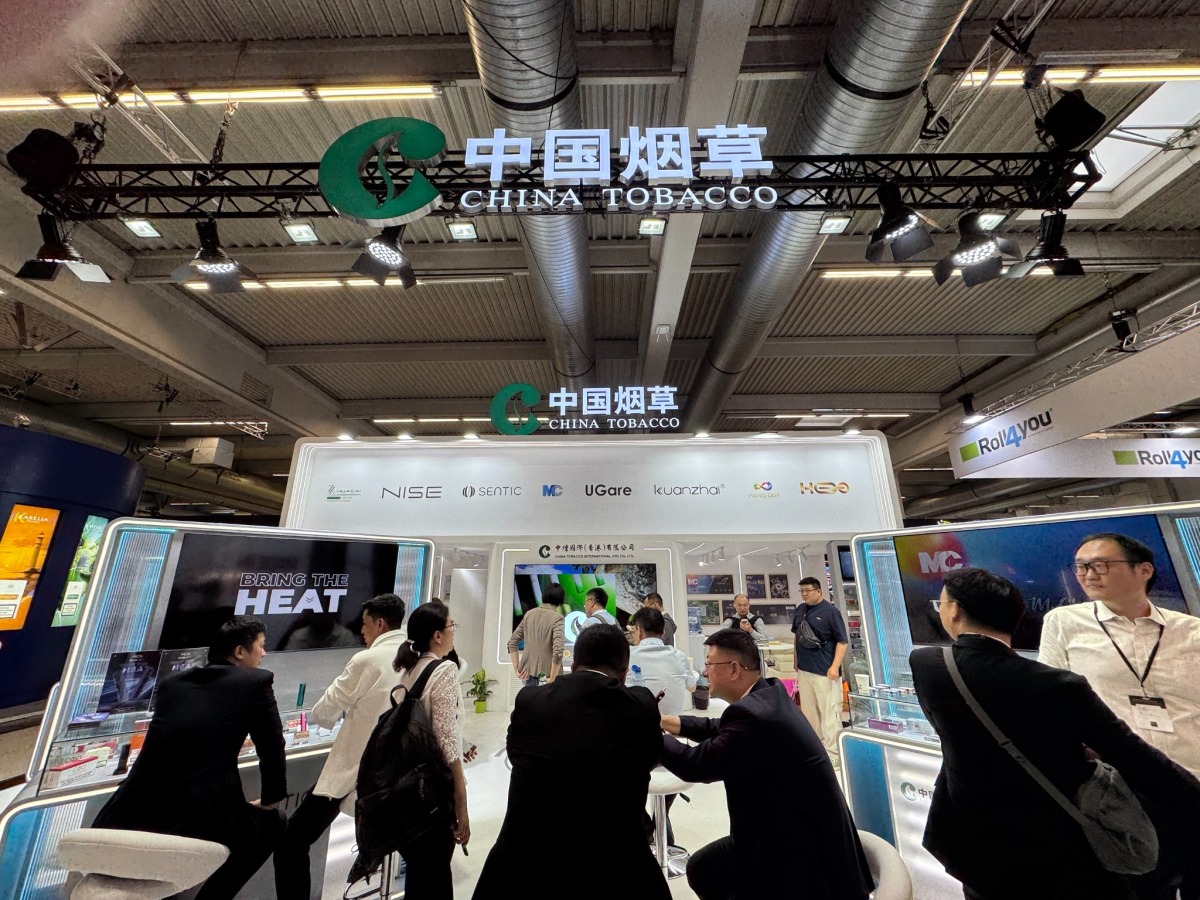
At InterTabac 2026 in Dortmund, China Tobacco International (HK) Company Limited (CTIHK) is exhibiting across two separate booths in Hall 5 and Hall 4. Products observed by 2Firsts include heated tobacco products, nicotine pouches, Chinese cigars and tobacco leaf. Nicotine pouch products on display include TOOP, Shuangxi and Ashima.
Market
Sep.16
Retail Case Study | Wisconsin Vape Market One Year After New Regulations: Johnny Vapes Reports 80% Sales Decline as Consumers Shift Online and Across State Lines
According to WNCY on August 24, 2026, some independent vape retailers in Wisconsin say they have faced significant business pressure one year after new vape regulations took effect. Johnny Vapes, a retailer operating in northeast Wisconsin, said its store count fell from seven locations to four, sales declined by about 80%, and roughly 90% of its inventory was affected. Retailers said some consumers have shifted to online purchases or traveled to neighboring Michigan to buy vape products. The case highlights how local regulations can reshape retail operations, inventory management and consumer purchasing patterns.
Aug.28