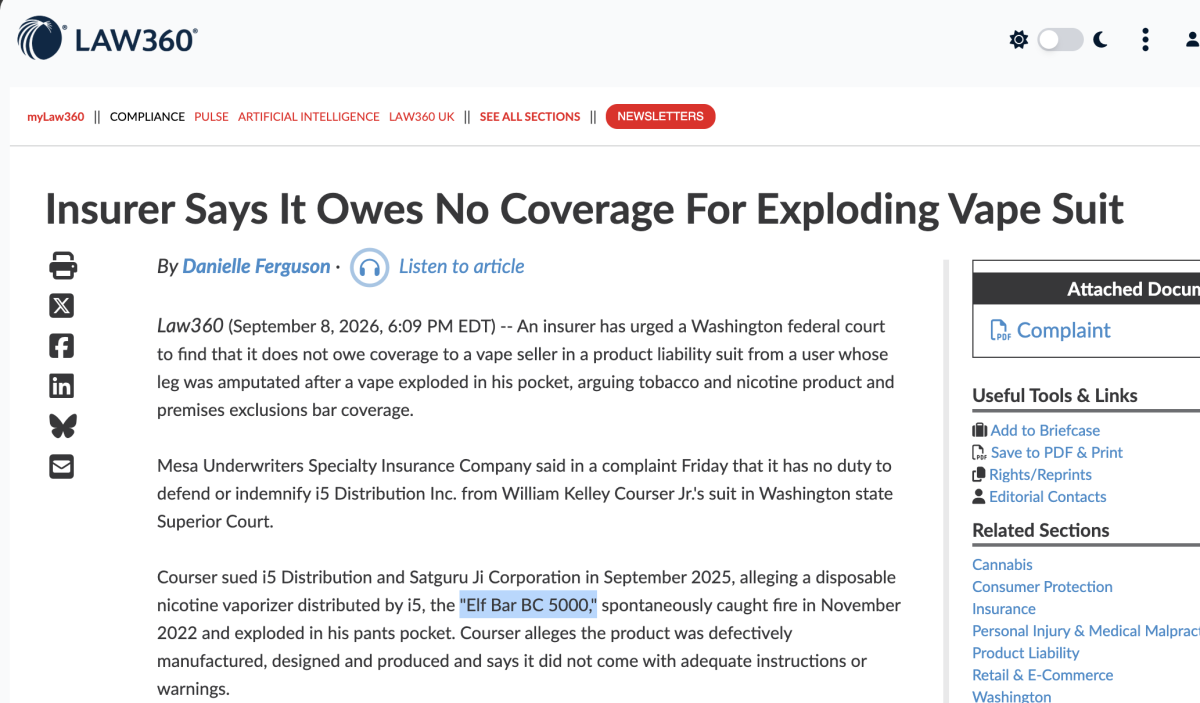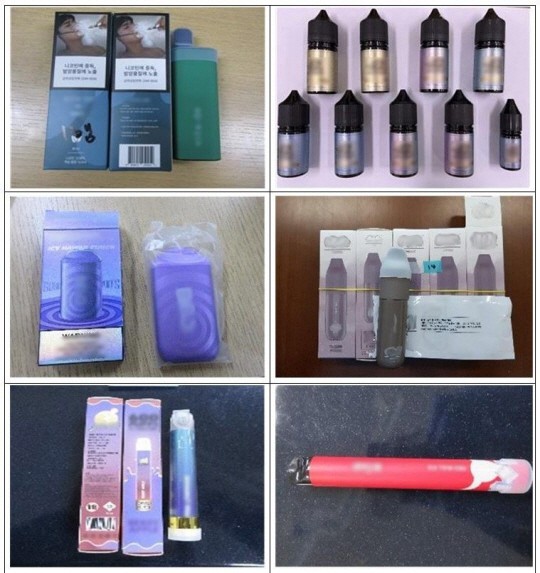
According to a report from South Korean media outlet Naver on October 19th, the problem of using synthetic nicotine as natural nicotine to evade taxes is becoming increasingly serious. Within the past nine months, a total of approximately 800 million Korean won has been evaded in taxes.
According to data provided by Kim Young-joo, a member of the Health and Welfare Committee of the South Korean National Assembly, a total of 110 cases of tax evasion were discovered from November last year to July this year by falsely declaring natural nicotine as synthetic nicotine. The scale of domestic tax losses amounted to 870 million Korean won.
E-cigarette liquid, which is made from natural nicotine extracted from tobacco leaves, falls under the "cigarette" category according to tax laws. Each milliliter of this liquid is subject to a domestic tax of 1,799 Korean won imposed on manufacturers. However, synthetic nicotine liquid, which is prepared using chemical substances, is classified as an "industrial product" under tax laws and is not subject to any taxes. This discrepancy in tax treatment has led numerous manufacturers to use synthetic nicotine in order to evade taxes. Last year, the total value of imported e-cigarettes using synthetic nicotine liquid amounted to approximately 9.9 billion Korean won, yet no domestic taxes were collected on these imports.
In addition, the import volume of synthetic nicotine liquid used in e-cigarettes has been steadily increasing. In 2020, it was 56 tons, and it rose to 119 tons last year, more than doubling. It is expected that the import volume for the first half of this year will reach 91 tons, which is expected to exceed 180 tons by the end of the year. Especially for e-cigarettes that use synthetic nicotine liquid, they are not considered cigarettes under current laws, so they can be sold in physical stores without being subject to various restrictions such as warning labels. This has been criticized for accelerating the increase in smokers.
Member of Parliament Kim Young-Joo emphasized the need to revise laws to impose equal taxes on synthetic nicotine and natural nicotine e-cigarettes, as the current lack of definition for synthetic nicotine has resulted in various drawbacks. He also urged for measures to be taken to prohibit online marketing tactics targeting minors, which are being employed by certain e-cigarette manufacturers.
We welcome news tips, article submissions, interview requests, or comments on this piece.
Please contact us at info@2firsts.com, or reach out to Alan Zhao, CEO of 2Firsts, on LinkedIn
Notice
1. This article is intended solely for professional research purposes related to industry, technology, and policy. Any references to brands or products are made purely for objective description and do not constitute any form of endorsement, recommendation, or promotion by 2Firsts.
2. The use of nicotine-containing products — including, but not limited to, cigarettes, e-cigarettes, nicotine pouchand heated tobacco products — carries significant health risks. Users are responsible for complying with all applicable laws and regulations in their respective jurisdictions.
3. This article is not intended to serve as the basis for any investment decisions or financial advice. 2Firsts assumes no direct or indirect liability for any inaccuracies or errors in the content.
4. Access to this article is strictly prohibited for individuals below the legal age in their jurisdiction.
Copyright
This article is either an original work created by 2Firsts or a reproduction from third-party sources with proper attribution. All copyrights and usage rights belong to 2Firsts or the original content provider. Unauthorized reproduction, distribution, or any other form of unauthorized use by any individual or organization is strictly prohibited. Violators will be held legally accountable.
For copyright-related inquiries, please contact: info@2firsts.com
AI Assistance Disclaimer
This article may have been enhanced using AI tools to improve translation and editorial efficiency. However, due to technical limitations, inaccuracies may occur. Readers are encouraged to refer to the cited sources for the most accurate information.
We welcome any corrections or feedback. Please contact us at: info@2firsts.com