The Ministry of Industry in Jakarta, Indonesia (Kemenperin), is continuing efforts to support the investment environment for innovative tobacco processing products. As a part of the tobacco products industry (IHT), this industry plays an important role in improving the Indonesian economy.
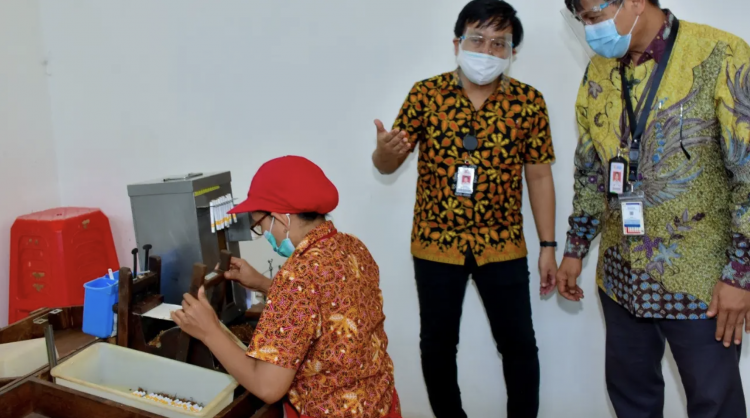
Recently, Indonesian cigarette company PT HM Sampoerna Tbk started operating an innovative smoke-free tobacco product factory in Karawang, West Java.
The factory produces IQOS and HEETS branded products to meet the demands of both the Asia-Pacific export market and the domestic market. Investment is encouraged, with a priority on increasing finished product exports.
As Indonesian economic coordinating minister Airlangga Hartarto unveiled and announced the first export of innovative tobacco products factory PT HM Sampoerna Tbk on December 1st, he stated that the investment is expected to have a positive impact on encouraging innovation and creating economic value in various sectors, including the MSME sector, traditional retail, partnerships with farmers, and research and development.
At the beginning of 2023, PT HM Sampoerna Tbk has started exporting its innovative tobacco product IQOS-Heets to meet the export demand in the Asia-Pacific region. The Philippines and Malaysia are the first export destinations. This is positive news for the development of our national industry and can serve as a model for other industries looking to increase their export contributions. These remarks were made by Putu Juli Ardika, the Ministry of Industry's Directorate General of Agriculture and Industry on January 15, 2023 in Jakarta.
The Ministry of Industry has praised PT HM Sampoerna Tbk for committing $166.1 million (approximately RMB 1.11 billion) to innovate tobacco products under the IQOS and Heets brands. This investment will support an annual production capacity of 15.45 billion sticks and will involve around 500 skilled workers.
In a fiercely competitive industry and regulatory environment, the development of such outward-oriented products can certainly increase the country's foreign exchange income and become a source of pride for the national tobacco industry.
Putu added that in 2021, IHT earned a total of US$934.05 million (approximately RMB 6.26 billion) in foreign exchange through the export of IHT products. Out of this amount, 8.41% came from other tobacco processing products (HPTL) and electronic cigarettes (REL).
In 2021, Indonesia's consumption tax revenue increased by 10.24% compared to the previous year, reaching 188.81 trillion rupiah (approximately 75.52 billion yuan) as opposed to 170.24 trillion rupiah (approximately 68.1 billion yuan) in 2020.
The Ministry of Industry in Indonesia is supporting investment in innovative tobacco processing while maintaining product quality to protect consumers, through the creation of national standards for heated tobacco products in 2020 and for e-cigarette liquids in 2021. In addition, Indonesian tobacco company PT HM Sampoerna Tbk has opened an innovative smokeless tobacco product factory in Karawang, West Java.
Disclaimer
This article is provided solely for professional research, industry discussion, and informational purposes. Any references to brands, companies, products, technologies, or policies are made for factual reporting and analytical purposes only, and do not constitute endorsement, recommendation, promotion, or advertising by 2Firsts.
Nicotine-containing products, including but not limited to cigarettes, e-cigarettes, heated tobacco products, and nicotine pouches, carry significant health risks. Readers are responsible for complying with all applicable laws and regulations in their respective jurisdictions, including age restrictions and access limitations.
The information contained in this article should not be regarded as investment, legal, medical, regulatory, or commercial advice. While 2Firsts strives to ensure the accuracy and reliability of its content, it does not assume liability for any direct or indirect loss arising from errors, omissions, inaccuracies, or reliance on the information contained herein.
This article is not intended for individuals below the legal age for accessing tobacco or nicotine-related information in their jurisdiction.
Copyright Notice
This article is either original content produced by 2Firsts or content reproduced, translated, summarized, or adapted from third-party sources with attribution where applicable. The intellectual property rights of the original content remain with 2Firsts or the respective original rights holders.
No individual or organization may copy, reproduce, distribute, republish, modify, translate, or otherwise use this content without prior authorization. Any unauthorized use may result in legal action.
For copyright-related inquiries, corrections, or removal requests, please contact: info@2firsts.com.
AI-Assisted Translation and Editing Notice
Portions of this article may have been translated, edited, or reviewed with the assistance of artificial intelligence tools to improve efficiency and readability. Due to the limitations of AI-assisted translation and editing, discrepancies, omissions, or inaccuracies may exist when compared with the original source.
Where applicable, readers are advised to refer to the original source for the most complete and accurate information. If you identify any errors or believe that any content infringes upon your rights, please contact us at info@2firsts.com, and we will review and address the matter promptly.