[Interview] ICCPP Group: “Five Sense” Vaporization Technology, The Lifeline is Innovation

Innovation
Jun.22.2022
[Interview] ICCPP Group: “Five Sense” Vaporization Technology, The Lifeline is Innovation
2FIRSTS interviewed Jane Lu, the Brand Director of ICCPP Group to reveal the answer.

 Just like the story "other family’s child", ICCPP is the gifted student who has never been partial to subjects, and had handed over full marks all the way on the road of enterprise development. Where does ICCPP’s strong strength come from? What's special about the philosophy of ICCPP’s operators? 2FIRSTS interviewed Jane Lu, the Brand Director of ICCPP Group to reveal the answer.


Bringing a Multi-Dimensional Experience to the "Five Senses"


In 2014, ICCPP founder Zhao Guanyun, founded ICCPP Technology Co., Ltd. in Shenzhen, focusing on the development of electronic vaporization chips. In 2017, through in-depth market research, the founder team of ICCPP realized that only self-operated brands can get closer to users and better meet customer needs. In that year, the founder team established its own brand, and successfully entered the international market.


The transformation of the company is a major event. Of course, it has experienced doubts, but the founder team has a firm strategic direction of its own brand, and started ICCPP’s new story on path.


ICCPP brand director, Jane Lu, interprets their products with a unique perspective. She said: "Many people will not see it as high-tech, but as the opposite. Electronic vaporization uses the 'five senses' (taste, vision, hearing, smell, touch) as the starting point to bring consumers a multi-dimensional product experience. The design and development of a product contains cutting-edge technologies in different fields such as basic materials, electronic chips, and life sciences. Consumer may not see it, but technology is in every fiber and process.”


ICCPP’s "customer-centered" business philosophy, as well as its comprehensive layout in technological innovation, product development, intelligent manufacturing, and independent brand management, are the key factors to maintaining their high growth. Jane Lu said: "Every company that makes products and serves users down-to-earth will have a place to stand. Only in this way can our doubts be cleared, and our future gradually become brighter."


Eight years after its establishment, ICCPP products have been sold in more than 70 countries and regions around the world. The group has 6 branches each in United States, Canada, Germany, the United Kingdom, France, and Indonesia. At present, it has formed a global headcount of more than 6,000 people, and has an independent R&D team of more than 500 people, including more than ten doctors. They have the basic pre-research capabilities with 4 research institutes. Their operations network stretch over 7 major branches and 6 manufacturing centers. Recently, a scientific paper by ICCPP was also published in the Journal of Advanced Research in Fluid Mechanics and Thermal Sciences.


Innovation is the Lifeline


In 2017, ICCPP created the ignition speed record of 0.0025 second suction at that time with their innovative R&D. Later, each generation of their products had distinctive highlights, and directly or indirectly led the innovation and change of the industry. In this regard, ICCPP’s founder team once said modestly: "Innovation is not simply the product of competition, but the inevitable result of the positive development of the industry."


In 2020, ICCPP developed into a TOP tier enterprise in the industry. In the past few years, ICCPP had closely carried out innovative materials research in cooperation with many well-known domestic universities. They built a forward-looking R&D system integrating production, learning and research, and built a global compliance team as well as four major research institutions at crazy speeds. Presently, ICCPP has applied for more than 1,000 patents in total and now has the capabilities of the whole industry chain structure.


Product innovation has always been the lifeline of ICCPP Technology. Jane Lu introduced: "We built the world's fastest ignition equipment and introduced 'second suction' to the industry as a key indicator. We pioneered a common standard interface for products, redefining the industry's interface manufacturing standards. We developed Gene Tree micro-crystalline Ceramic core, with 0 friction and 0 dust to satisfy users' pure suction experience." ICCPP ultimate goal is to realize "vaporization core standardization, vaporization interface standardization, and vapor equipment integration". As one of the leaders in the field of vapor technology and new material technology, ICCPP will continue to deepen the field of electronic vapor technology in the future, and continue to play a benchmarking role in the industry.

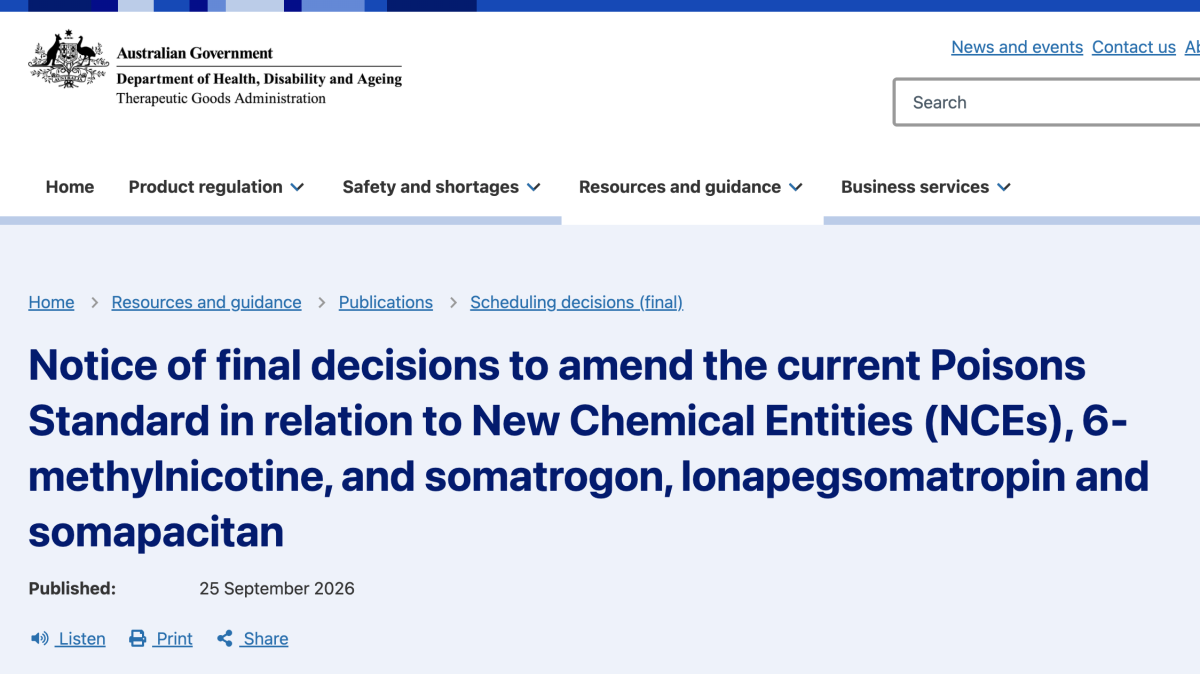
Australia Adds 6-Methylnicotine to Schedule 9 Prohibited Substances, Effective October 1
Australia's Therapeutic Goods Administration published a final decision on September 25 to classify 6-methylnicotine as a Schedule 9 prohibited substance under the Poisons Standard, effective October 1, 2026. TGA said the chemical has been reported in e-cigarette liquids sold in Australia and marketed as nicotine-free or nicotine alternatives, while evidence also indicates its use in preparations such as oral pouches. The government originally proposed a Schedule 7 classification but ultimately adopted the stricter Schedule 9 designation, citing acute toxicity, dependence risk, use in unapproved consumer products and misleading marketing.
News
Sep.29 by 2Firsts Perspectives
South Korea's Tobacco Plan Excludes 6-Methyl Nicotine as Customs Tightens Import Controls and Analog Liquid Imports Fall 83%
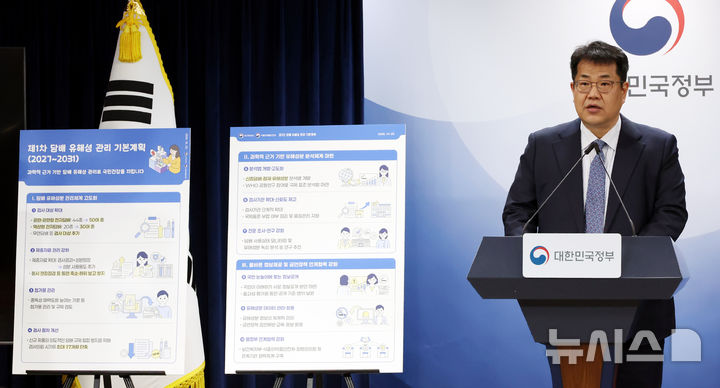
South Korea's government unveiled its first Tobacco Harm Management Basic Plan for 2027–2031 on October 29, 2026, proposing broader testing of vaping and heated tobacco products while excluding nicotine analogs such as 6-methyl nicotine. Synthetic nicotine came under tobacco regulation on April 24, and a June investigation found 6-methyl nicotine in 12 liquid inhalation products marketed as nicotine-free. Customs data released in September showed that imports of nicotine analog solutions fell 83.3%, from 12 metric tons in January–April to 2 metric tons in May–August. By September 20, imports had reached approximately 15 metric tons for the year, with 99.99% originating from China. Customs authorities have tightened pre-clearance testing and supply-chain documentation requirements, while the MFDS expects to complete its assessment of nicotine analog hazards by the end of 2026.
Regulations
Nov.04
Global Nicotine-Pouch E-Commerce Group Haypp Shuts Sweden’s Snusnetto Over Age Verification as Identity Checks Become Industry Infrastructure for New Nicotine Products
Sweden's Supreme Administrative Court has declined to hear an appeal over age verification for tobacco and nicotine products collected from parcel lockers, leaving in place a lower-court ruling that geo-located BankID verification is insufficient to securely verify the actual recipient. Haypp Group has stopped tobacco and nicotine sales through Snusnetto and is deploying a new system across its other Swedish e-commerce sites to verify the age of the person who actually opens the locker and receives the shipment. The change comes as age verification across next-generation nicotine products expands from purchase checks into retail, delivery and, for some e-cigarettes, device access itself.
Regulations
Oct.20
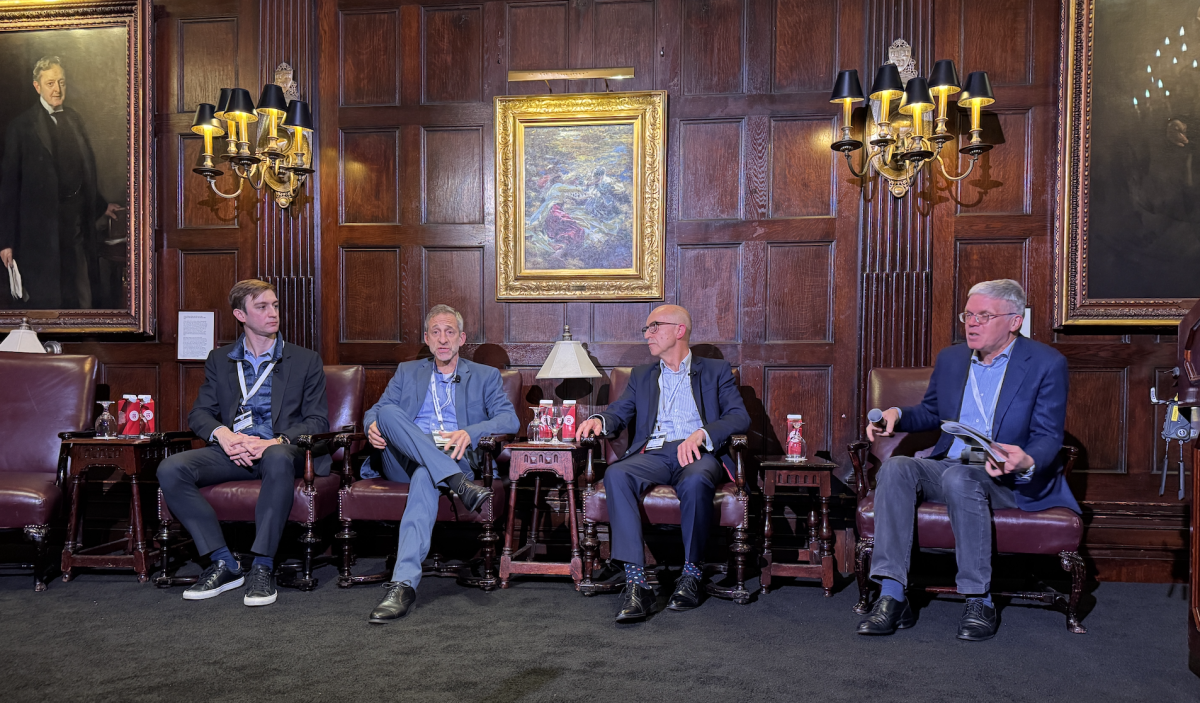
Special Report | How Capital Is Reassessing the Global Tobacco and Modern Nicotine Industry: Lessons from a New York Forum
Capital is reassessing the global tobacco and modern nicotine industry as heated tobacco, vaping and nicotine pouches reshape demand, profitability and regulation. At the 2026 New Approaches Summit in New York, investors and analysts examined whether smoke-free growth can sustain earnings, how regulation shapes startup value, and whether shareholder engagement can be more effective than divestment. The debate points to a broader shift: tobacco transition is increasingly becoming a capital-allocation, governance and valuation question.
Capital Markets
Oct.05
Turning Point Brands Q3 Modern Oral Net Sales Rise 103% to $74.4 Million as Attributable Profit Falls 81%
Turning Point Brands (TPB) reported third-quarter 2026 Modern Oral net sales of $74.4 million on November 9, up 102.9% year over year and representing 49.2% of consolidated net sales. Total company net sales rose 27.0% to $151.1 million, while net income attributable to TPB declined 81.4% to $3.93 million. The company is expanding the US retail presence of its FRE and ALP nicotine pouch brands and expects its Modern Oral chain-store footprint to grow by more than 70% during 2026. Selling, general and administrative expenses increased 69.1% to $75.3 million, while PMTA-related expenses reached approximately $3.15 million and manufacturing start-up costs totaled about $593,000. ALP plans to open a branded pop-up in New York City's SoHo neighborhood on November 13, alongside a marketing campaign extending into January 2027. TPB owns 50% of ALP but consolidates the venture in its financial statements.
company
Nov.11
Russia Expands Temporary Administration of JTI Assets in Second Round: From Four to All Seven Russian Entities, With Approximately $9.5 Billion in Related Assets
Japan Tobacco Inc. (JT) confirmed on November 9, 2026, that all seven of its Russian entities had been placed under temporary administration after a second presidential decree added three companies to the four designated a day earlier. The additional entities are associated with importing, management, holdings and the former supply of Ploom heated-tobacco devices. JT disclosed approximately ¥1.5 trillion in Russian business-related assets as of September 30, including ¥360 billion in cash and deposits, and approximately ¥200 billion in liabilities. Under its revised FY2026 forecast, Russia accounts for about 25% of adjusted operating profit. JT said operations in Russia were continuing, while the financial impact remained under assessment.
company
Nov.09