Photo credit: Seth Wenig, The Associated Press.
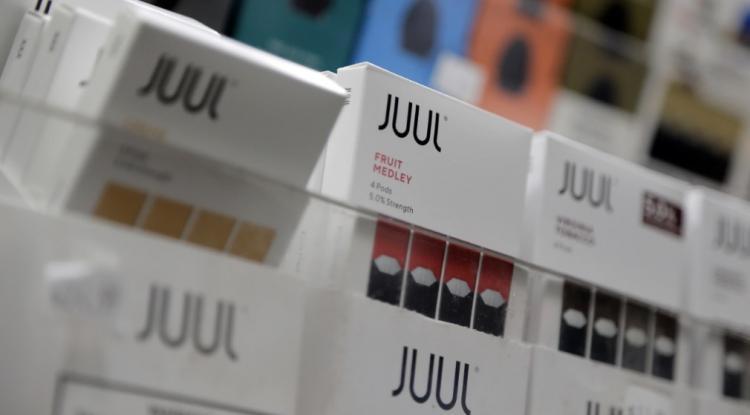
Portland, Oregon (KOIN) - On September 6th, Oregon Attorney General Ellen Rosenblum announced a multi-state settlement agreement worth $438.5 million with e-cigarette company Juul Labs.
This settlement is the result of a two-year investigation by both parties into the marketing and sales practices of the company. Officials claimed that these practices mercilessly targeted children. In addition to paying billions of dollars, JUUL has also agreed to comply with strict prohibitions on company marketing and sales practices.
Both the pilot and passengers have been confirmed to have died in the crash of a seaplane in Phuket Bay. In a recent announcement, multi-state investigations have shown that JUUL intentionally participated in an advertising campaign that targeted young people, despite their e-cigarettes being illegal and unhealthy for children. The investigation found that JUUL mercilessly marketed to underage users through party promotions, the use of young and fashionable models in ads, social media posts, and free samples.
An investigation has confirmed that JUUL has been targeting children by releasing parties, using young and trendy models, social media posts, and free samples. Reports claim that the e-cigarette models are "stylish" and "easy to hide", with attractive flavors for children. It has also been reported that the company manipulated the chemical composition of their products to make them less harsh for inexperienced e-cigarette users.
An investigation has concluded that JUUL has misled consumers of all ages regarding the nicotine content of the product and its effectiveness as a smoking cessation tool, all without approval from the FDA.
According to Rosenblum, "the actions that led to this settlement should be condemned and clearly demonstrate pure corporate greed to the maximum extent." "Just as we were making significant progress in reducing tobacco use among young people, JUUL appeared and attracted another generation. They intentionally targeted children with flashy and misleading advertising to lure them into using their nicotine products. The social costs and public health consequences are immense and devastating.
Oregon, which is jointly leading an investigation with Connecticut and Texas, will receive a settlement of $18.8 million, but could potentially receive up to $20.5 million if JUUL extends its payment schedule.
The states of Alabama, Arkansas, Delaware, Georgia, Hawaii, Idaho, Indiana, Kansas, Kentucky, Maryland, Maine, Mississippi, Montana, North Dakota, Nebraska, New Hampshire, New Jersey, Nevada, Ohio, Oklahoma, Puerto Rico, Rhode Island, South Carolina, South Dakota, Tennessee, Utah, Virginia, Vermont, Wisconsin, and Wyoming are also assisting in the investigation.
States are currently finalizing a settlement agreement which is expected to be completed within a month. As part of the agreement, Juul will be prohibited from participating.
The Youth Marketing Sponsorship Education Program outlines the use of paid product placements, such as cartoons depicting individuals under 35, in any marketing campaign. The program allows for the sale of unapproved fragrances and promotional products without FDA approval on landing pages of websites without age verification. The program also addresses misleading statements regarding nicotine content and allows for sponsorship or naming rights, provided that at least 85% of the audience is over 18 years old. Advertising is not permitted on billboards, public transportation, or social media unless it is targeted towards individuals over 35 years of age and does not contain health claims. The use of paid influencers to market directly to consumers is allowed only after age verification, and free samples are not permitted.
Statement
This article is compiled based on third-party information and is intended for industry communication and learning purposes only.
This article does not represent the stance of 2FIRSTS, and 2FIRSTS cannot confirm the truthfulness or accuracy of the article's content. The translation of this article is solely intended for communication and research purposes within the industry.
Due to limitations in our ability to accurately translate, this article may not fully convey the same meaning as the original. Please refer to the original text for accuracy.
2FIRSTS maintains complete alignment with the Chinese government regarding any domestic, cross-border issues involving Hong Kong, Macau, Taiwan, or foreign relations.
The compilation of information is copyrighted to the original media outlet and author. If there is infringement, please contact us for removal.
Disclaimer
This article is provided solely for professional research, industry discussion, and informational purposes. Any references to brands, companies, products, technologies, or policies are made for factual reporting and analytical purposes only, and do not constitute endorsement, recommendation, promotion, or advertising by 2Firsts.
Nicotine-containing products, including but not limited to cigarettes, e-cigarettes, heated tobacco products, and nicotine pouches, carry significant health risks. Readers are responsible for complying with all applicable laws and regulations in their respective jurisdictions, including age restrictions and access limitations.
The information contained in this article should not be regarded as investment, legal, medical, regulatory, or commercial advice. While 2Firsts strives to ensure the accuracy and reliability of its content, it does not assume liability for any direct or indirect loss arising from errors, omissions, inaccuracies, or reliance on the information contained herein.
This article is not intended for individuals below the legal age for accessing tobacco or nicotine-related information in their jurisdiction.
Copyright Notice
This article is either original content produced by 2Firsts or content reproduced, translated, summarized, or adapted from third-party sources with attribution where applicable. The intellectual property rights of the original content remain with 2Firsts or the respective original rights holders.
No individual or organization may copy, reproduce, distribute, republish, modify, translate, or otherwise use this content without prior authorization. Any unauthorized use may result in legal action.
For copyright-related inquiries, corrections, or removal requests, please contact: info@2firsts.com.
AI-Assisted Translation and Editing Notice
Portions of this article may have been translated, edited, or reviewed with the assistance of artificial intelligence tools to improve efficiency and readability. Due to the limitations of AI-assisted translation and editing, discrepancies, omissions, or inaccuracies may exist when compared with the original source.
Where applicable, readers are advised to refer to the original source for the most complete and accurate information. If you identify any errors or believe that any content infringes upon your rights, please contact us at info@2firsts.com, and we will review and address the matter promptly.