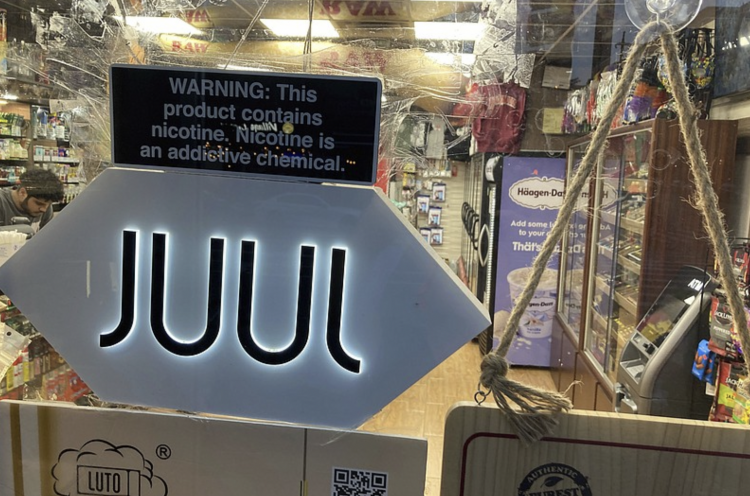
Juul Labs, an electronic cigarette company, has reached a settlement in thousands of lawsuits involving their products.
The financial terms of the settlement agreement were not disclosed, however, Juul indicated that they have obtained equity investments to provide funding for the resolution. As a result of the litigation, Juul announced layoffs last month on a large scale, and as it continues to secure financing for ongoing operations, the possibility of bankruptcy appears to be increasing.
This e-cigarette manufacturer is facing over 8,000 lawsuits brought by individuals and families affected by Juul use, school districts, local governments, and Native American tribes. Most of these cases were resolved through settlements this week, with the cases being consolidated into a California federal court pending several lead trials.
The company spokesperson stated in a release that these settlements are an important step towards enhancing Juul's operations and ensuring the company's progress moving forward.
The plaintiff's lawyer stated in a declaration that the settlement would "deliver meaningful compensation to the victims and their families" and provide funding for anti-e-cigarette education programs for schools and local governments. It is expected that the judge will review and approve the settlement soon.
Five years ago, due to the popularity of flavors such as mango, mint, and crème brûlée, Juul rose to the top of the electronic cigarette market in the United States.
With this flavor, parents, school administrators, and politicians largely attributed the surge in underage e-cigarette use to the company. In the face of strong opposition through lawsuits and government sanctions, Juul abandoned all U.S. ads and discontinued most of its flavors in 2019.
In June, the US Food and Drug Administration (FDA) rejected Juul's application to keep their products on the market as a smoking alternative for adults, causing uncertainty for their future. The FDA stated that Juul had not adequately addressed key concerns about the potential for chemicals to be extracted from their devices through water. When Juul appealed the decision, the FDA temporarily suspended their initial ruling.
In September, this San Francisco-based company agreed to pay nearly $440 million to settle a two-year investigation into the marketing of its high-nicotine e-cigarette products by 33 states. Arkansas received $13.5 million within five years.
In the same month, the biggest investor of the company, tobacco giant Altria, announced plans to resume competition in the e-cigarette field. After acquiring a stake in Juul for nearly $13 billion, Altria removed its own e-cigarette from the market in 2018.
As Juul's prospects have dimmed, the investment has lost over 95% of its value, allowing Altria the option to exit its non-competition agreement.
This may mean that Juul will soon be forced to compete with long-time rivals such as the makers of Marlboro, Altria, and Reynolds American's Vuse for retail shelf space. The latter has recently surpassed Juul to become the leading electronic cigarette brand in America.
Anti-tobacco advocates said on Wednesday that the terms of any potential settlement cannot be assessed without knowing how much Juul will pay.
Meredith Berkman, a member of Parents Against Vaping E-cigarettes, expressed concern over the lack of settlement details and the apparent control of the story by Juul.
2FIRSTS will continue to track and report on this topic, with updates available on the "2FIRSTS APP". Scan the QR code below to download the app.
Disclaimer
This article is provided solely for professional research, industry discussion, and informational purposes. Any references to brands, companies, products, technologies, or policies are made for factual reporting and analytical purposes only, and do not constitute endorsement, recommendation, promotion, or advertising by 2Firsts.
Nicotine-containing products, including but not limited to cigarettes, e-cigarettes, heated tobacco products, and nicotine pouches, carry significant health risks. Readers are responsible for complying with all applicable laws and regulations in their respective jurisdictions, including age restrictions and access limitations.
The information contained in this article should not be regarded as investment, legal, medical, regulatory, or commercial advice. While 2Firsts strives to ensure the accuracy and reliability of its content, it does not assume liability for any direct or indirect loss arising from errors, omissions, inaccuracies, or reliance on the information contained herein.
This article is not intended for individuals below the legal age for accessing tobacco or nicotine-related information in their jurisdiction.
Copyright Notice
This article is either original content produced by 2Firsts or content reproduced, translated, summarized, or adapted from third-party sources with attribution where applicable. The intellectual property rights of the original content remain with 2Firsts or the respective original rights holders.
No individual or organization may copy, reproduce, distribute, republish, modify, translate, or otherwise use this content without prior authorization. Any unauthorized use may result in legal action.
For copyright-related inquiries, corrections, or removal requests, please contact: info@2firsts.com.
AI-Assisted Translation and Editing Notice
Portions of this article may have been translated, edited, or reviewed with the assistance of artificial intelligence tools to improve efficiency and readability. Due to the limitations of AI-assisted translation and editing, discrepancies, omissions, or inaccuracies may exist when compared with the original source.
Where applicable, readers are advised to refer to the original source for the most complete and accurate information. If you identify any errors or believe that any content infringes upon your rights, please contact us at info@2firsts.com, and we will review and address the matter promptly.