Kentucky Public Schools Move Closer to Smoking Ban Implementation

Regulations by 2FIRSTS.ai
Feb.14.2024
Kentucky Public Schools Move Closer to Smoking Ban Implementation
Kentucky State Legislature moves closer to banning smoking in public schools, as House Education Committee approves bill.

The ban on smoking in public schools in Kentucky moved one step closer on Tuesday after the unanimous approval by the state's House Education Committee.


In accordance with House Bill 142, all tobacco, alternative nicotine, and vaping products in public schools within the state will be prohibited. Each district will be required to implement disciplinary procedures to punish violators. The bill also mandates the collection of data to assess the effectiveness of the ban.


The information gathering will enable us to track progress and assess the effectiveness of this initiative in the future," said Mark Hart, representative of the city of Falmouth in the state.


Hart stated that the ordinance aims to empower various regions to enforce smoking policies more rigorously. Under the ordinance, schools will be required to confiscate any tobacco, alternative nicotine, or vapor products brought by students. Upon a student's second or third violation, they will be required to face either in-school or out-of-school suspension.


Representative Tina Bojanowski supports the ban, but believes that suspending students will not deter them from smoking.


Hart expressed his expectation that there would be a floor amendment involving alternative school and other program options.


Brian Melton, an instructor from the Naval Reserve Officer Training Corps at Pendleton County High School, testified about the gravity of the vaping issue in public schools.


According to the CDC's estimation, over 5.6 million youth are believed to have died prematurely due to the use of aerosolized nicotine products," Melton stated. "This is clearly a public health issue that Kentucky state needs to address seriously."


Hart also stated that legislation is being developed to address penalties for retailers selling vaping and other nicotine or tobacco products to minors.


"We do not want to enact a bill that seems to punish children, but rather one that aims to prevent children from being exposed to harmful substances," Hart added.


We welcome news tips, article submissions, interview requests, or comments on this piece.

Please contact us at info@2firsts.com, or reach out to Alan Zhao, CEO of 2Firsts, on LinkedIn


Notice

1.  This article is intended solely for professional research purposes related to industry, technology, and policy. Any references to brands or products are made purely for objective description and do not constitute any form of endorsement, recommendation, or promotion by 2Firsts.

2.  The use of nicotine-containing products — including, but not limited to, cigarettes, e-cigarettes, nicotine pouchand heated tobacco products — carries significant health risks. Users are responsible for complying with all applicable laws and regulations in their respective jurisdictions.

3.  This article is not intended to serve as the basis for any investment decisions or financial advice. 2Firsts assumes no direct or indirect liability for any inaccuracies or errors in the content.

4.  Access to this article is strictly prohibited for individuals below the legal age in their jurisdiction.


Copyright


This article is either an original work created by 2Firsts or a reproduction from third-party sources with proper attribution. All copyrights and usage rights belong to 2Firsts or the original content provider. Unauthorized reproduction, distribution, or any other form of unauthorized use by any individual or organization is strictly prohibited. Violators will be held legally accountable.

For copyright-related inquiries, please contact: info@2firsts.com


AI Assistance Disclaimer


This article may have been enhanced using AI tools to improve translation and editorial efficiency. However, due to technical limitations, inaccuracies may occur. Readers are encouraged to refer to the cited sources for the most accurate information.

We welcome any corrections or feedback. Please contact us at: info@2firsts.com

Smoore Seeks to Toss CCELL Price-Fixing Claim as Court Weighs Vertical Distribution Versus Horizontal Conspiracy
Smoore and four authorized U.S. CCELL distributors are asking a California federal court to permanently dismiss a core antitrust claim brought by direct purchasers. Plaintiffs allege that Smoore coordinated minimum wholesale prices, customer allocation and limits on price competition among distributors, amounting to a per se unlawful horizontal conspiracy. The defendants say the alleged conduct reflects ordinary vertical relationships between a manufacturer and its distributors. The court previously dismissed a similar claim, and the latest dispute centers on whether the second amended complaint adds sufficient facts to establish a horizontal agreement.
Sep.14
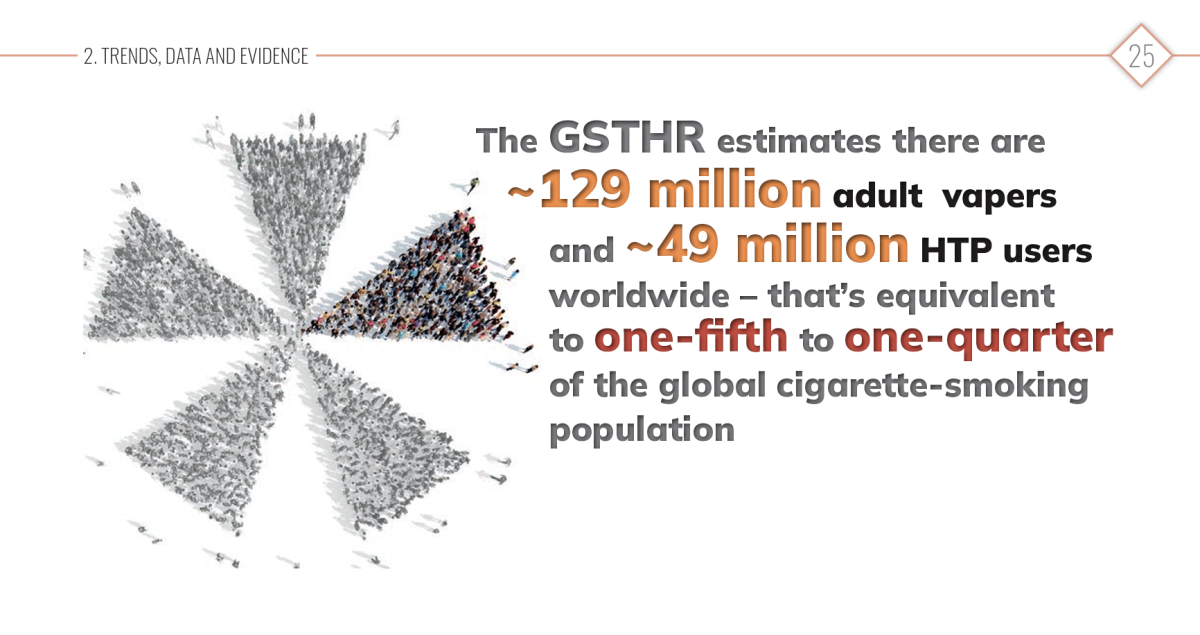
GSTHR Estimates 200 Million People Use Non-Combustible Nicotine Products as 28 Countries Show Rising Use Alongside Falling Smoking Rates
The Global State of Tobacco Harm Reduction, a project operated by Knowledge·Action·Change, estimates that about 200 million people worldwide use non-combustible nicotine products including vapes, heated tobacco, nicotine pouches and snus. Its 2026 report says use of these products rose alongside declining smoking rates in 28 countries it analyzed. The data do not establish that all 200 million users have quit smoking, nor do they prove a direct causal relationship. GSTHR also says regulatory restrictions on the products continue to expand in many markets.
Sep.10
Australia Adds 6-Methylnicotine to Schedule 9 Prohibited Substances, Effective October 1
Australia's Therapeutic Goods Administration published a final decision on September 25 to classify 6-methylnicotine as a Schedule 9 prohibited substance under the Poisons Standard, effective October 1, 2026. TGA said the chemical has been reported in e-cigarette liquids sold in Australia and marketed as nicotine-free or nicotine alternatives, while evidence also indicates its use in preparations such as oral pouches. The government originally proposed a Schedule 7 classification but ultimately adopted the stricter Schedule 9 designation, citing acute toxicity, dependence risk, use in unapproved consumer products and misleading marketing.
News
Sep.29 by 2Firsts Perspectives
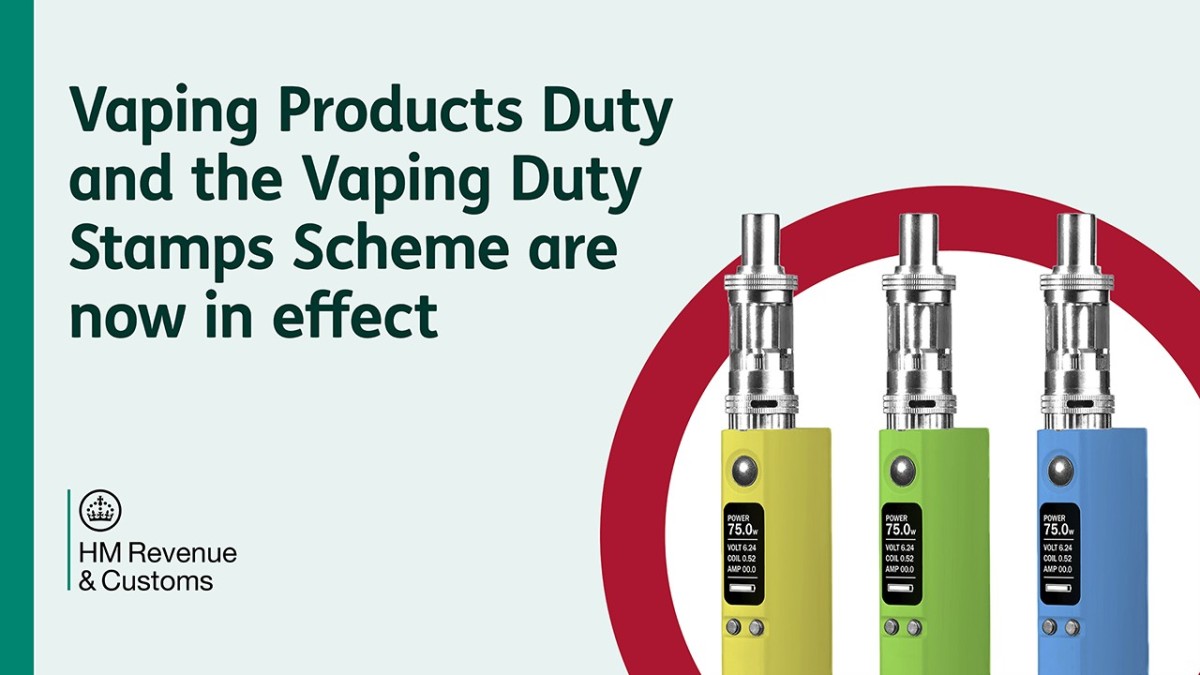
UK HMRC Launches Vape Duty Stamps on October 1, Ushering in Supply-Chain Traceability as Chinese Exporters Face New Compliance Hurdles
HM Revenue & Customs put the UK's Vaping Products Duty and Vaping Duty Stamps Scheme into effect on October 1. All vaping liquids manufactured in or imported into the UK are now subject to duty at £2.20 per 10ml, regardless of nicotine content. The stamp regime will introduce digital functionality designed to provide traceability throughout the supply chain, with approved manufacturers, importers and warehousekeepers required to report product movements and retailers and consumers eventually able to scan stamps to verify authenticity. China exported $177 million of vape-related products to the UK in August, up 51.4% year over year, increasing the significance of the new compliance regime for China's Shenzhen-centered vape supply chain.
Regulations
Oct.04
Product | Philip Morris Korea Launches Two TEREA ONYX Capsule Tobacco Sticks, Expanding Portfolio to Five Lines
Philip Morris Korea launched TEREA ONYX, a new tobacco stick line for IQOS ILUMA devices, on October 15, 2026. The initial products, AMANG PEARL and CALI PEARL, feature tropical-inspired flavors, Fresh Filters and capsules designed to deliver different flavor experiences before and after activation. Both are priced at KRW 4,800 per pack and are available at convenience stores nationwide and IQOS-operated stores in South Korea. The launch expands the Korean TEREA portfolio from four product lines to five, following earlier capsule tobacco stick additions in 2026.
product
Oct.23
PMI Pushes Smoke-Free Business in Latin America as Argentina Lifts Heated Tobacco Ban, Mexico City Share Tops 7%
Philip Morris International (PMI) showcased IQOS heated tobacco systems and nicotine pouch products at Technovation 2026 in Buenos Aires on October 7–8, presenting research on consumer attitudes, regulatory developments and illicit cigarette trade across Latin America. PMI Chief Global Growth Officer Stefano Volpetti said smoke-free products accounted for more than 7% of the Mexico City market. Argentina repealed its heated tobacco ban in May 2026 and introduced registration requirements for tobacco and nicotine products, while local media reported nicotine pouch sales in Mendoza. A PMI-commissioned survey found that only 8% of respondents across four Latin American countries were familiar with nicotine pouches. A separate KPMG study estimated illicit cigarette consumption at 77 billion sticks across 11 markets in Latin America and Canada in 2025.
PMI
Oct.13