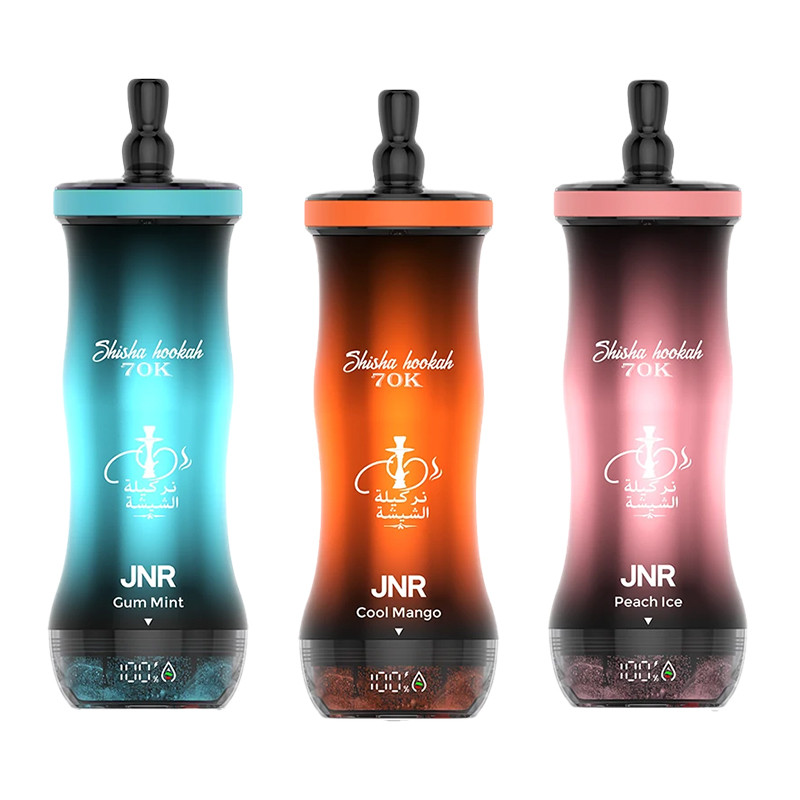
The local government recently announced a 200% increase in taxes on electronic cigarettes, with a raise of 1.20 Malaysian Ringgit per milliliter (ml) for both nicotine and non-nicotine e-liquids. Most industry players, particularly manufacturers, feel the tax is too high and will have a significant impact on their businesses. This, in turn, will negatively affect consumers as prices will inevitably increase.
Manufacturers have no other choice but to increase product prices due to the imposed tax rates which are equivalent to the current retail prices of electronic cigarettes. For example, a 30ml bottle of e-liquid will be taxed at RM36. According to Ashraf Rozali, spokesperson for MVCC, at this rate, the estimated retail price for vape e-liquids will double the current price per 30ml bottle. He added that while the industry supports reasonable regulations for e-cigarettes, these regulations should differentiate it from tobacco products. Additionally, industry stakeholders including manufacturers, retailers, and end-users must speak up and participate in this process.
It is time for industry members, including manufacturers and consumers, to express their support and participate in our efforts to advocate for the electronic cigarette industry, particularly in supporting tax and regulatory measures. We know that many people hesitate to speak out in support of this industry, but we must acknowledge its impact. This industry is composed of thousands of indigenous entrepreneurs who generate millions of ringgit annually. Now is the time for us to stand up, not hide behind the scenes," said Rozali.
Data from 2021 indicates that 80% of Malaysians support government regulation of the local e-cigarette industry. Earlier this year, the Malaysian Vape Chamber of Commerce (MVCC) called for appropriate regulations on nicotine-containing e-liquids by the government. The MVCC stated that this would positively impact the local economy by creating more employment opportunities and attracting foreign direct investment (FDI), among other benefits. "Survey results show that there are over 3,300 businesses directly related to the e-cigarette industry, employing more than 15,000 people," the MVCC stated in its report on the Malaysian e-cigarette industry.
According to Syed Azaudin Syed Ahmad, the President of MVCC, the report shows that the electronic cigarette industry is a feasible and continuously growing industry in Malaysia, which promotes the growth of local entrepreneurs. "In addition, the electronic cigarette industry in Malaysia currently has a mature ecosystem consisting of manufacturers, importers, and retailers, as well as a growing distribution and logistics network," he said. "The report on Malaysia's perception and views on Vape emphasizes public opinion." A survey commissioned by the Malaysian Vape Industry Advocacy Organization (MVIA) shows that 76% of respondents agree that electronic cigarette regulations would benefit the local economy.
This article is compiled from third-party information and is intended solely for industry professionals for the purpose of communication and learning.
This article does not represent the views of 2FIRSTS, and 2FIRSTS cannot confirm the authenticity and accuracy of the article's content. The translation of this article is only for communication and research purposes within the industry.
As the level of translation may be limited, the compiled article may not express the same meaning as the original. Please refer to the original text for accuracy.
2FIRSTS fully aligns with the Chinese government on any domestic, Hong Kong, Macau, Taiwan, and foreign-related expression and stance.
The copyright of the compiled information belongs to the original media and author. If there is any infringement, please contact us for deletion.
Disclaimer
This article is provided solely for professional research, industry discussion, and informational purposes. Any references to brands, companies, products, technologies, or policies are made for factual reporting and analytical purposes only, and do not constitute endorsement, recommendation, promotion, or advertising by 2Firsts.
Nicotine-containing products, including but not limited to cigarettes, e-cigarettes, heated tobacco products, and nicotine pouches, carry significant health risks. Readers are responsible for complying with all applicable laws and regulations in their respective jurisdictions, including age restrictions and access limitations.
The information contained in this article should not be regarded as investment, legal, medical, regulatory, or commercial advice. While 2Firsts strives to ensure the accuracy and reliability of its content, it does not assume liability for any direct or indirect loss arising from errors, omissions, inaccuracies, or reliance on the information contained herein.
This article is not intended for individuals below the legal age for accessing tobacco or nicotine-related information in their jurisdiction.
Copyright Notice
This article is either original content produced by 2Firsts or content reproduced, translated, summarized, or adapted from third-party sources with attribution where applicable. The intellectual property rights of the original content remain with 2Firsts or the respective original rights holders.
No individual or organization may copy, reproduce, distribute, republish, modify, translate, or otherwise use this content without prior authorization. Any unauthorized use may result in legal action.
For copyright-related inquiries, corrections, or removal requests, please contact: info@2firsts.com.
AI-Assisted Translation and Editing Notice
Portions of this article may have been translated, edited, or reviewed with the assistance of artificial intelligence tools to improve efficiency and readability. Due to the limitations of AI-assisted translation and editing, discrepancies, omissions, or inaccuracies may exist when compared with the original source.
Where applicable, readers are advised to refer to the original source for the most complete and accurate information. If you identify any errors or believe that any content infringes upon your rights, please contact us at info@2firsts.com, and we will review and address the matter promptly.