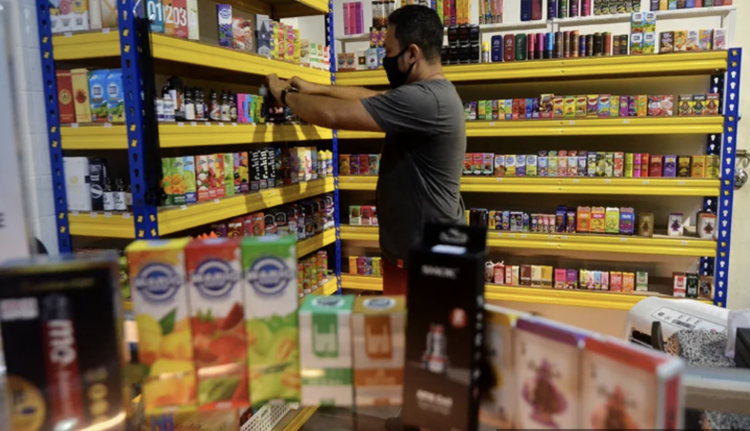
On April 10th, Malaysian media outlet The Edge Markets reported that the Malaysian Vape Chamber of Commerce (MVCC) expressed concerns over upcoming legislation relating to the regulation of the e-cigarette industry. The MVCC stated that they were not familiar with the upcoming laws and regulations, and urged the Ministry of Health (MOH) to engage in discussions with industry stakeholders on the matter.
Industry association has no knowledge about the content of the legislation.
Ridhwan Rosli | Photo source: The Edge Markets
Ridhwan Rosli, the Secretary-General of the Malaysian Vape Chamber of Commerce (MVCC), stated that they have no knowledge of the upcoming legislation and regulations, and emphasized the importance of the government obtaining their input.
He stated:
The government is hoping to remove e-cigarette liquid containing nicotine from the Poisons Act and introduce a consumer tax on the product, which we support. However, there is little information available about the details of the bill, which has surprised industry experts.
Redzuan recounted that the last discussion took place in 2022 with former Health Minister Khairy Jamaluddin.
The content of the bill will be discussed with the industry.
He believes that it is crucial for industry participants to join the discussion before making any suggestions on the bill.
He cited the Philippines as an example of proper regulation for e-cigarettes and praised the "thorough" process of introducing regulations, which involved multiple meetings with all stakeholders.
In a statement, Redman said, "We have not yet discussed this issue with the Health Department.
The Malaysian Tobacco Control Council has accused Health Minister Zaliha Mustafa of abusing her ministerial power to overturn the Poison Board's decision to vote against removing nicotine from the Poison Act.
According to reports, the Malaysian Ministry of Health announced that nicotine (in liquid and gel form) used in electronic cigarettes has been cleared from poison control regulations.
This amendment to the legislation clears the way for the sale of electronic cigarettes and nicotine patches. Without this exemption, products containing nicotine could only be obtained through a prescription from a physician or pharmacy.
Related Reading:
The Malaysia Tobacco Control Committee has called on the government to tackle the problem of nicotine addiction.
The Malaysian electronic cigarette regulation bill will be presented to parliament in May.
Malaysia's electronic cigarette regulations may boost Vuse's market share.
Malaysia imposes a consumption tax of RM0.4 per milliliter on e-cigarette liquid, and manufacturers are required to register before April 30th.
References:
The vaping industry lacks crucial information about an impending law.
Disclaimer
This article is provided solely for professional research, industry discussion, and informational purposes. Any references to brands, companies, products, technologies, or policies are made for factual reporting and analytical purposes only, and do not constitute endorsement, recommendation, promotion, or advertising by 2Firsts.
Nicotine-containing products, including but not limited to cigarettes, e-cigarettes, heated tobacco products, and nicotine pouches, carry significant health risks. Readers are responsible for complying with all applicable laws and regulations in their respective jurisdictions, including age restrictions and access limitations.
The information contained in this article should not be regarded as investment, legal, medical, regulatory, or commercial advice. While 2Firsts strives to ensure the accuracy and reliability of its content, it does not assume liability for any direct or indirect loss arising from errors, omissions, inaccuracies, or reliance on the information contained herein.
This article is not intended for individuals below the legal age for accessing tobacco or nicotine-related information in their jurisdiction.
Copyright Notice
This article is either original content produced by 2Firsts or content reproduced, translated, summarized, or adapted from third-party sources with attribution where applicable. The intellectual property rights of the original content remain with 2Firsts or the respective original rights holders.
No individual or organization may copy, reproduce, distribute, republish, modify, translate, or otherwise use this content without prior authorization. Any unauthorized use may result in legal action.
For copyright-related inquiries, corrections, or removal requests, please contact: info@2firsts.com.
AI-Assisted Translation and Editing Notice
Portions of this article may have been translated, edited, or reviewed with the assistance of artificial intelligence tools to improve efficiency and readability. Due to the limitations of AI-assisted translation and editing, discrepancies, omissions, or inaccuracies may exist when compared with the original source.
Where applicable, readers are advised to refer to the original source for the most complete and accurate information. If you identify any errors or believe that any content infringes upon your rights, please contact us at info@2firsts.com, and we will review and address the matter promptly.