Maryland Updates Indoor Air Cleanliness Law to Include E-Cigarettes

Regulations by 2FIRSTS.ai
May.30.2024
Maryland Updates Indoor Air Cleanliness Law to Include E-Cigarettes
Maryland revises indoor air clean law, prohibiting e-cigarette in workplaces starting July 1, all employers must post no-smoking signs.

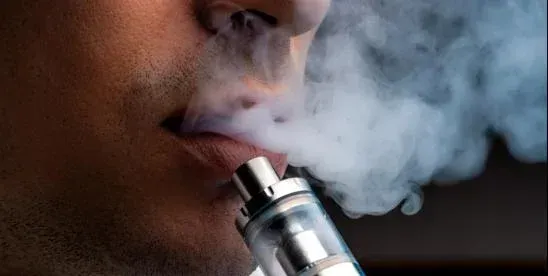
According to a report in Natlawreview on May 29th, Maryland has amended its Clean Indoor Air Act to prohibit the use of e-cigarettes in indoor workplaces. The amendment will officially take effect on July 1st.


The legislation defines e-cigarettes as devices that deliver tobacco, cannabis, or narcotics through an electronic device or any device that the user inhales from. Under the revised law, employers are required to post "No Smoking/E-cigarette Use" signs at each entrance to all areas of their workplace that are accessible to the public.


In order to ensure that all workplaces prohibit the use of e-cigarettes, employers should review their policies and identify where "No Smoking/E-Cigarettes" signs should be posted.


We welcome news tips, article submissions, interview requests, or comments on this piece.

Please contact us at info@2firsts.com, or reach out to Alan Zhao, CEO of 2Firsts, on LinkedIn


Notice

1.  This article is intended solely for professional research purposes related to industry, technology, and policy. Any references to brands or products are made purely for objective description and do not constitute any form of endorsement, recommendation, or promotion by 2Firsts.

2.  The use of nicotine-containing products — including, but not limited to, cigarettes, e-cigarettes, nicotine pouchand heated tobacco products — carries significant health risks. Users are responsible for complying with all applicable laws and regulations in their respective jurisdictions.

3.  This article is not intended to serve as the basis for any investment decisions or financial advice. 2Firsts assumes no direct or indirect liability for any inaccuracies or errors in the content.

4.  Access to this article is strictly prohibited for individuals below the legal age in their jurisdiction.


Copyright


This article is either an original work created by 2Firsts or a reproduction from third-party sources with proper attribution. All copyrights and usage rights belong to 2Firsts or the original content provider. Unauthorized reproduction, distribution, or any other form of unauthorized use by any individual or organization is strictly prohibited. Violators will be held legally accountable.

For copyright-related inquiries, please contact: info@2firsts.com


AI Assistance Disclaimer


This article may have been enhanced using AI tools to improve translation and editorial efficiency. However, due to technical limitations, inaccuracies may occur. Readers are encouraged to refer to the cited sources for the most accurate information.

We welcome any corrections or feedback. Please contact us at: info@2firsts.com

FDA Grants PMTA Authorization to 11 ZYN ULTRA Nicotine Pouches, Bringing Total Authorized Pouches to 43
The U.S. Food and Drug Administration authorized 11 ZYN ULTRA nicotine pouch products made by Swedish Match USA through the premarket tobacco product application pathway on August 21, 2026. Ten of the authorized products have a labeled nicotine content of 9 mg, while ZYN ULTRA Smooth was authorized at 11 mg. The reviews were conducted through FDA’s nicotine pouch PMTA pilot program. FDA has now authorized 43 nicotine pouch products, including 23 through the pilot.
Aug.24
From Nicotine Salts to Cocrystals: China’s Shenzhen Huabao institute explores a more stable form for sustained nicotine release
China-based Shenzhen Huabao Collaborative Innovation Technology Research Institute Co., Ltd. has filed a patent application for a nicotine-ascorbic acid cocrystal, exploring a new solid-state form of nicotine. The patent proposes applications across e-liquids, heated tobacco sticks, oral tobacco, chewing tobacco and snuff. In nicotine pouch tests disclosed in the filing, cocrystal formulations showed less than a 6% decline in nicotine content after three months of accelerated storage and a release profile combining early-stage release with sustained delivery over 60 minutes. The filing reflects exploration of nicotine forms beyond conventional nicotine base and nicotine salts.
Aug.13
BAT Expands ITC Infotech Partnership Across Poland, Romania and India to Advance AI
ITC Infotech has expanded its multi-year strategic technology partnership with British American Tobacco (BAT), providing technology services across Poland, Romania and India while continuing to support BAT's newly launched Future Capabilities Centre in India and existing technology hubs in Malaysia and Mexico. The companies said the agreement will focus on AI-enabled innovation, technology capability building and greater operational efficiency. The partnership also aligns with BAT's broader Fit2Win transformation programme, under which the group is expanding the use of external technology and business-services partners to simplify its global operating model.
Aug.13
Australian Coalition Unveils Illicit Tobacco Plan With 80% Excise Cut and Legal, Taxed Vapes and Nicotine Pouches
Australia’s Coalition has unveiled a national illicit-tobacco policy that would cut tobacco excise by 80% and create legal, regulated and taxed adult markets for vaping products and nicotine pouches if it wins government. The plan proposes an excise of A$0.50 per millilitre of e-liquid and A$0.025 per milligram of nicotine in pouches, alongside A$200 million in additional enforcement and a A$60 million three-year public-awareness campaign. The Coalition says the package would narrow the price advantage of illicit products and undermine organised crime, while Labor and public-health groups warn that dramatically cheaper cigarettes could reverse long-term declines in smoking.
Sep.03
South Korean Lawmaker Jeong Jin-wook Pushes Synthetic Nicotine Vape Probe, Highlighting Supply Chain and Tax Concerns
South Korean lawmaker Jeong Jin-wook has again called for stronger government action against liquid synthetic nicotine vape manufacturers and sellers, alleging that some businesses may have avoided regulation through product labeling changes and corporate restructuring. According to Newsworks, JNILBO and other Korean reports, Jeong has held his third press conference on the issue, calling for a government-wide investigation. The dispute involves whether synthetic nicotine products should fall under tobacco regulations, tax implications and supply-chain transparency. South Korean government agencies have previously said some estimates of potential tax losses cannot be verified due to limited sales data.
Jul.27
California Lawmakers Pass Disposable Nicotine Vape Ban, With Sales Prohibition Set for 2028
According to CBS Los Angeles on August 27, 2026, California lawmakers have passed Assembly Bill 762, which would phase out disposable, battery-embedded nicotine vapes in the state. If signed by Governor Gavin Newsom, manufacturing and importation of the covered products would be prohibited beginning January 1, 2027, followed by a sales ban on January 1, 2028. Driven primarily by concerns over electronic waste, lithium-battery fires and environmental pollution, the legislation would further shift California’s legal vape market toward rechargeable, refillable or replaceable-pod devices.
Aug.28