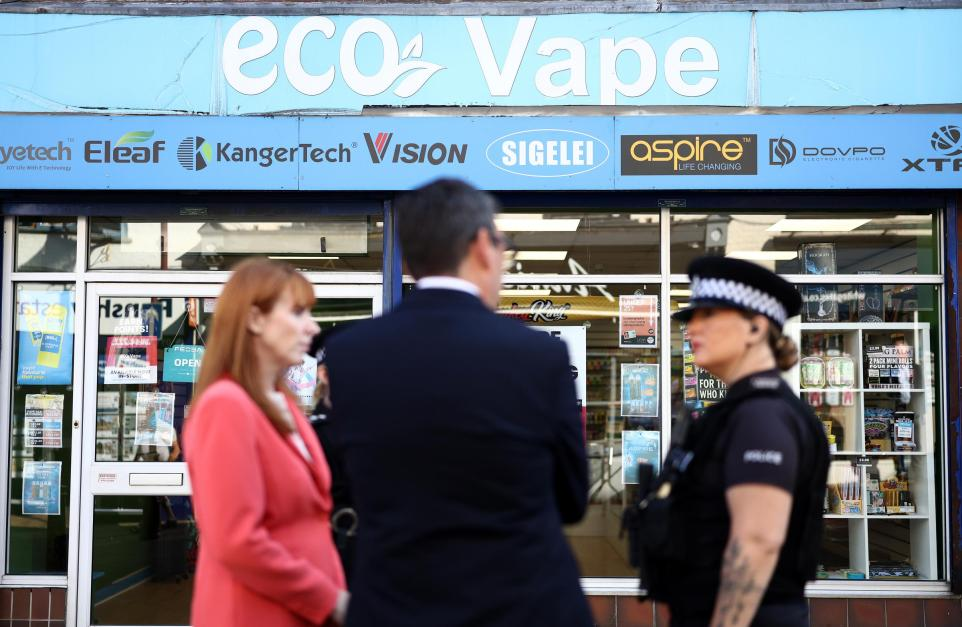
On September 28th, the Dutch government's public consultation period regarding the possible ban on flavored electronic cigarette products is coming to a close.
Michal Soukup - no translation needed, as this is already in standard journalistic English. It is simply a name.
A new regulation will prohibit all e-cigarette flavorings except tobacco and is set to take effect on January 1, 2023. However, products already on the market by December 31 can be sold until July 1, 2023.
The Dutch National Institute for Public Health and the Environment (RIVM) and the Ministry of Health have released a list of 16 ingredients allowable in legally marketed tobacco-flavored e-liquids.
Many advocates in the Dutch e-cigarette industry argue that ingredient restrictions will force all e-liquid manufacturers in the Netherlands to shut down.
Dutch e-cigarette advocates are seeking feedback from consumers and interested supporters around the world, even outside the European Union.
Previous efforts to ban flavored e-cigarettes in the Netherlands have all been unsuccessful.
Statement:
This article is compiled from third-party information and is intended for industry communication and learning purposes only.
This article does not represent the views of 2FIRSTS, and 2FIRSTS cannot confirm the authenticity or accuracy of its content. The translation of this article is only for exchange and research within the industry.
Please note that due to limitations in translation ability, this article may not entirely reflect the intended meaning of the original text. Therefore, we suggest reading the original article for the most accurate information.
2FIRSTS maintains full alignment with the Chinese government on any domestic, Hong Kong, Macau, Taiwan, and foreign-related statements and positions.
The copyright of compiled information belongs to the original media and author. If there is any violation, please contact us to delete it.
Disclaimer
This article is provided solely for professional research, industry discussion, and informational purposes. Any references to brands, companies, products, technologies, or policies are made for factual reporting and analytical purposes only, and do not constitute endorsement, recommendation, promotion, or advertising by 2Firsts.
Nicotine-containing products, including but not limited to cigarettes, e-cigarettes, heated tobacco products, and nicotine pouches, carry significant health risks. Readers are responsible for complying with all applicable laws and regulations in their respective jurisdictions, including age restrictions and access limitations.
The information contained in this article should not be regarded as investment, legal, medical, regulatory, or commercial advice. While 2Firsts strives to ensure the accuracy and reliability of its content, it does not assume liability for any direct or indirect loss arising from errors, omissions, inaccuracies, or reliance on the information contained herein.
This article is not intended for individuals below the legal age for accessing tobacco or nicotine-related information in their jurisdiction.
Copyright Notice
This article is either original content produced by 2Firsts or content reproduced, translated, summarized, or adapted from third-party sources with attribution where applicable. The intellectual property rights of the original content remain with 2Firsts or the respective original rights holders.
No individual or organization may copy, reproduce, distribute, republish, modify, translate, or otherwise use this content without prior authorization. Any unauthorized use may result in legal action.
For copyright-related inquiries, corrections, or removal requests, please contact: info@2firsts.com.
AI-Assisted Translation and Editing Notice
Portions of this article may have been translated, edited, or reviewed with the assistance of artificial intelligence tools to improve efficiency and readability. Due to the limitations of AI-assisted translation and editing, discrepancies, omissions, or inaccuracies may exist when compared with the original source.
Where applicable, readers are advised to refer to the original source for the most complete and accurate information. If you identify any errors or believe that any content infringes upon your rights, please contact us at info@2firsts.com, and we will review and address the matter promptly.