Key Takeaways
- Cyprus, during its presidency of the Council of the EU, has tabled a new compromise draft on the Tobacco Excise Directive, discussed on 21 January.
- According to the report, the draft would lower the overall minimum excise duty requirement on cigarettes from 63.00% to 60.00% of the weighted average retail selling price.
- A Cypriot official said technical work is continuing with the aim of achieving substantial progress and, if possible, political agreement by June 2026.
- The planned revision covers higher minimum rates, inclusion of e-cigarettes, heated tobacco and nicotine pouches, and stronger controls on raw tobacco.
- Some Southern and Eastern European governments have opposed the proposals, warning that higher taxes could damage domestic industries and fuel illicit trade.
2Firsts, April 21, 2026
According to the report, the long-running deadlock over the European Union’s Tobacco Excise Directive may be moving toward resolution under the Cypriot presidency of the Council of the EU.
Cyprus has put forward a new compromise draft
The report said that after months of division and failed proposals, Cyprus has reportedly introduced a “compromise” that appears to be gaining support among member states. Because tax matters require unanimous approval from all member states, the negotiations are described as delicate, with pressure to secure a political agreement by June 2026.
According to Agence Europe, the Cypriot presidency drafted a new compromise text that was discussed on 21 January. The report said the text “in particular, proposes lowering the minimum rate of excise duty and granting a transitional period.” Agence Europe also said the Cypriot presidency has reportedly proposed lowering the overall excise duty requirement from 63.00% to 60.00% “of the weighted average retail selling price of cigarettes offered for consumption.”
Cyprus says it is working to build consensus
A Cypriot official said that, in its role as Presidency of the Council of the EU, Cyprus has been facilitating an open, transparent, inclusive and constructive dialogue with all member states on the tobacco taxation directive. The official said Cyprus has worked to move discussions forward by taking into account the different positions and concerns expressed by member states during consultations. The official added that Cyprus intends to advance technical work in pursuit of substantial progress and, if possible, political agreement by June 2026, and said that any result would be reached by consensus.
The revision covers tax rates, new products and raw tobacco
The report said the Tobacco Excise Directive was first established in 2011 to set minimum excise duties on tobacco products across the EU. It argued that the framework has failed to keep pace with the rapid evolution of nicotine products and changing market dynamics, which is why the European Commission proposed a revision last July.
According to the report, the revision has three objectives: first, increasing minimum tax rates to reduce disparities between member states; second, extending the scope of the directive to new products such as e-cigarettes, heated tobacco and nicotine pouches, with new minimum taxes; and third, improving controls on raw tobacco to reduce diversion into illicit supply chains.
The EU says the current framework needs updating
The report said tobacco taxation is harmonised at EU level, but the latest update to the directive dates back to 2010. The EU acknowledges that the framework needs updating in several respects.
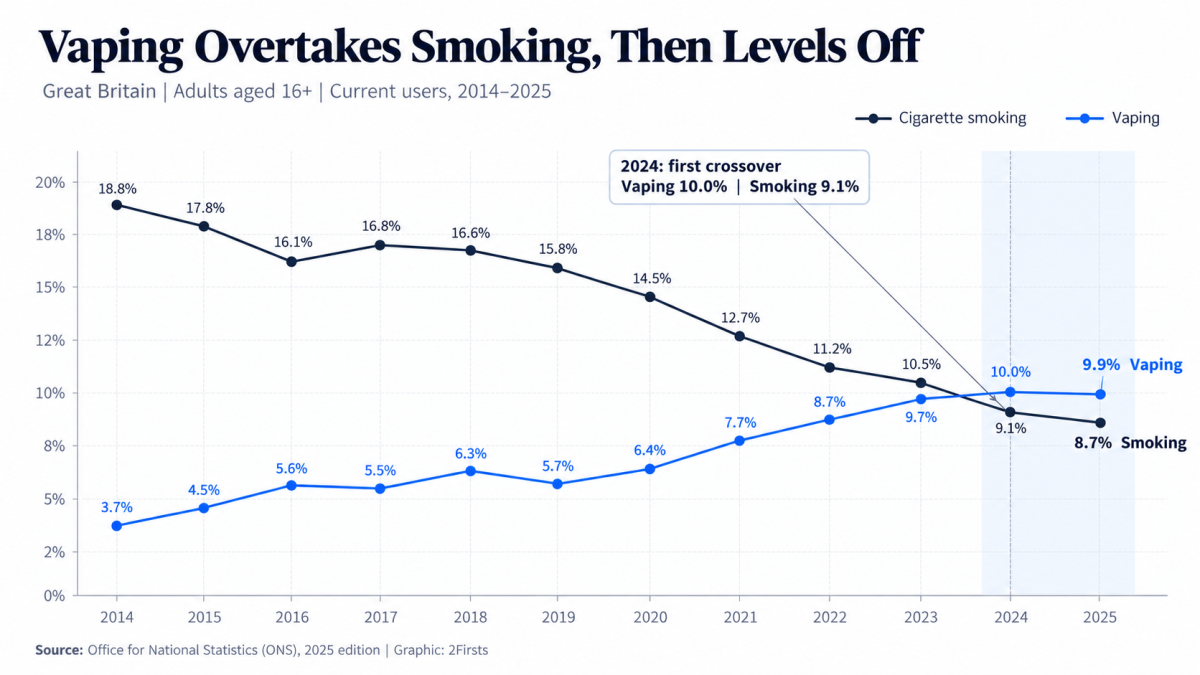
The article said average national tax rates in member states are already well above the current EU minimum, meaning the minimum rates have lost traction as a tool for reducing tobacco consumption. It also said the EU believes smoking prevalence is not declining fast enough to meet the Europe’s Beating Cancer Plan goal of reducing tobacco use to below 5.00% of the population by 2040, with current smoking prevalence still at 24.00%.
The report further said that products such as heated tobacco, e-cigarettes and nicotine pouches have entered the market. The EU argues that harmonising tax rules and introducing minimum rates for such products would improve control while allowing member states flexibility to adapt their rules to national market developments.
Some countries warn higher taxes could fuel illicit trade
The report said the plan to raise minimum cigarette taxes and extend the directive to newer products such as nicotine pouches has met resistance in some quarters. Governments across Southern and Eastern Europe have warned that such increases could harm domestic industries and fuel illicit trade.
The article said that with billions already lost each year to the tobacco black market, critics argue the Commission’s approach is out of step with economic realities and could backfire on EU consumers. It added that a subsequent attempt to revise the proposal did little to reduce tensions.
Cyprus is trying to advance a more moderate path
According to the report, since assuming the Council presidency in January 2026, Cyprus has adopted a different approach. Rather than insisting on more ambitious tax increases, it has focused on finding common ground. The compromise reportedly keeps the overall structure of the Commission proposal while recalibrating its most contentious elements.
The report said Cyprus is essentially seeking lower minimum excise duty rates for cigarettes than originally proposed and phased implementation periods that would allow member states to adjust gradually.
It also said the proposal would reportedly replace automatic inflation-linked tax escalators with a more controlled mechanism, giving national governments greater flexibility and oversight. Newer nicotine products are said to remain within scope, creating a clearer regulatory framework and reducing grey areas.
Illicit trade concerns form part of the background
A Brussels-based expert on EU-wide tax policy said the Cypriot compromise addresses concerns that overly aggressive taxation could backfire by recognising the economic diversity of member states and the practical limits of enforcement.
The report also said recent evidence appears to support the argument that excessive excise increases can push consumers toward illicit markets. It cited the dismantling in February of a major cross-border smuggling network spanning several European countries, with more than 40 tonnes of illicit tobacco seized.
According to the article, more than one-third of cigarette consumption in France is now reportedly illicit, while the Netherlands and Luxembourg are also seeing significant black-market penetration, especially in newer products. It said these developments reinforce the case for a more calibrated approach.
Photo credit: Brussels Morning
We welcome news tips, article submissions, interview requests, or comments on this piece.
Please contact us at info@2firsts.com, or reach out to Alan Zhao, CEO of 2Firsts, on LinkedIn
Notice
1. This article is intended solely for professional research purposes related to industry, technology, and policy. Any references to brands or products are made purely for objective description and do not constitute any form of endorsement, recommendation, or promotion by 2Firsts.
2. The use of nicotine-containing products — including, but not limited to, cigarettes, e-cigarettes, nicotine pouchand heated tobacco products — carries significant health risks. Users are responsible for complying with all applicable laws and regulations in their respective jurisdictions.
3. This article is not intended to serve as the basis for any investment decisions or financial advice. 2Firsts assumes no direct or indirect liability for any inaccuracies or errors in the content.
4. Access to this article is strictly prohibited for individuals below the legal age in their jurisdiction.
Copyright
This article is either an original work created by 2Firsts or a reproduction from third-party sources with proper attribution. All copyrights and usage rights belong to 2Firsts or the original content provider. Unauthorized reproduction, distribution, or any other form of unauthorized use by any individual or organization is strictly prohibited. Violators will be held legally accountable.
For copyright-related inquiries, please contact: info@2firsts.com
AI Assistance Disclaimer
This article may have been enhanced using AI tools to improve translation and editorial efficiency. However, due to technical limitations, inaccuracies may occur. Readers are encouraged to refer to the cited sources for the most accurate information.
We welcome any corrections or feedback. Please contact us at: info@2firsts.com