New Nicotine Products Added to Tax List in Delaware Budget Proposal

Feb.17
New Nicotine Products Added to Tax List in Delaware Budget Proposal
Delaware Governor Matt Meyer’s proposed FY2027 budget would significantly raise cigarette and nicotine product taxes to help close a $500 million budget gap and generate new revenue. The cigarette tax would rise from $2.10 to $3.60 per pack, with increases on moist snuff, e-liquids and other tobacco products. Supporters say the move is justified, while small businesses warn of potential sales losses.

Key Points


  • Cigarette tax would increase from $2.10 to $3.60 per pack if approved, as part of Gov. Matt Meyer’s fiscal year 2027 budget proposal. Taxes on moist snuff would rise from 92 cents to $1.23 per ounce, while e-cigarette liquid tax would double from 5 cents to 10 cents per milliliter. Other wholesale tobacco products would increase by 10%.


  • The proposal would also expand the definition of taxable tobacco products to include newer nicotine products such as pouches, bringing them under the state’s tobacco tax framework.


  • The tax increases are part of a broader effort to close a more than $500 million state budget gap and generate about $160 million in new revenue. Nearly $19 million of that amount is expected to come specifically from tobacco-related changes.


  • Some residents support the tax hike, arguing tobacco use remains harmful and should be taxed accordingly. Others, particularly small business owners, say higher prices could significantly reduce sales and hurt lower-income customers.


2Firsts, February 17, 2026


According to WBOC, Tobacco products in Delaware could soon carry higher price tags under Gov. Matt Meyer’s proposed fiscal year 2027 budget.


If approved, the cigarette tax would increase from $2.10 to $3.60 per pack. Other nicotine products would also see higher taxes. Moist snuff would rise from 92 cents to $1.23 per ounce. The tax on e-cigarette liquid would double from five cents to 10 cents per milliliter. Other wholesale tobacco products would face a 10% increase.


The proposal would also broaden what qualifies as a taxable tobacco product, adding newer nicotine items such as pouches.


The plan is part of a broader strategy to close a budget shortfall exceeding $500 million and generate about $160 million in new state revenue. Nearly $19 million is expected to come from tobacco-related tax changes alone.


Public reaction has been mixed.


Terry Yingling, a Kent County resident, said he supports the tax increase.


“It’s still an awful habit. So I say tax it. Let the tobacco users pay for it.”


However, some small business owners in Kent County expressed concern about the impact on customers and sales.


Ty Shaw of Cheswold Tobacco said additional taxes could significantly affect his clientele, many of whom are lower income.


“Well, any tax is not great for business. Most of our clientele here tends to be lower income, so that’s really going to hit them hard.”


Shaw added that the industry has already experienced multiple price increases recently.


“I think six times last year there were price increases. And just since January of this year, I think we’ve had two or three. It just seems like it’s not stopping.”


At Lynch Heights Convenience Store, cashier Megan Breedlove said steep increases could drive customers away.


“When they come to see that the price has changed that much, they’re like, ‘Hey, well, what do I do with that? What do I do now? — We’ll lose half of our customers because that’s what most people come to convenience stores for.’”


Breedlove said the impact would go beyond smokers.


“I just think it’s unfair and that people should vote against it. It doesn’t really matter if you’re a smoker or not. It still affects businesses.”


The proposed budget was unveiled last month, and hearings before the Joint Finance Committee are underway. Lawmakers must approve a final spending plan before July 1.


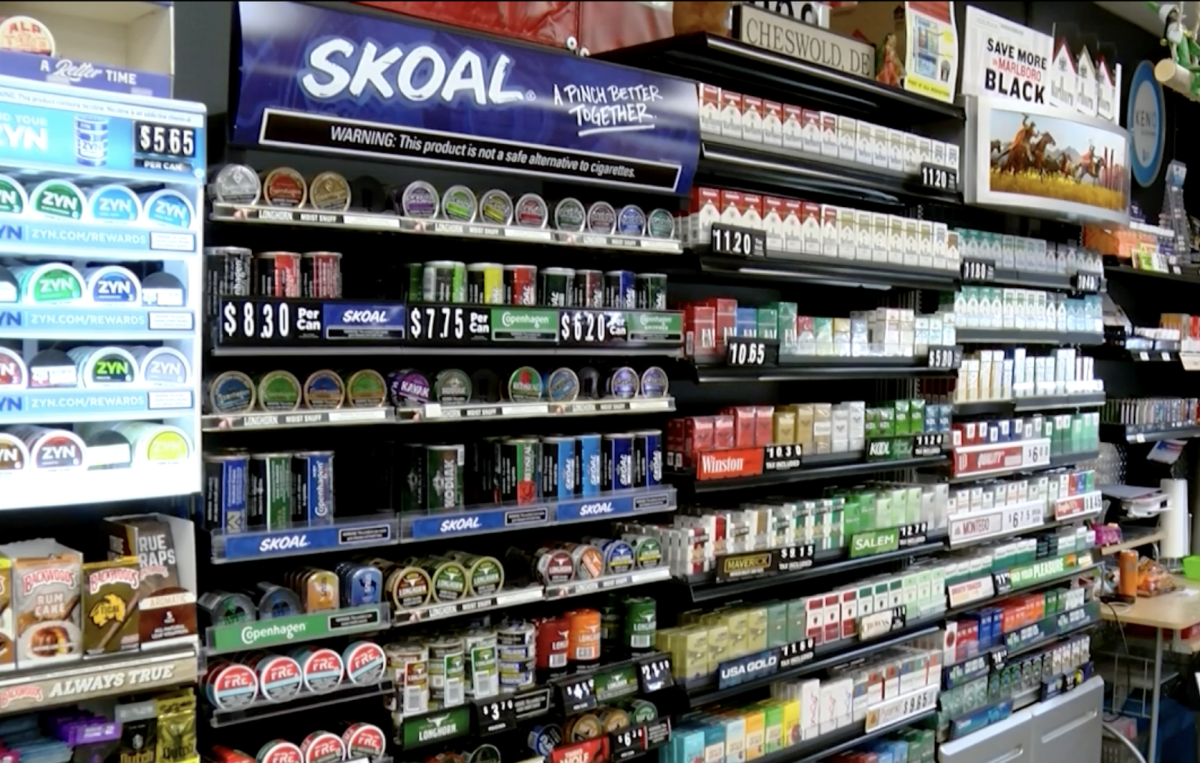
(Cover image source:WBOC)

Small ENDS Manufacturers Press FDA on Abuse Liability Standards as Agency Defines Pharmacological Review Framework
At the third session of its PMTA roundtable, the FDA outlined its framework for assessing abuse liability in ENDS products, emphasizing the role of nicotine pharmacokinetics and product-specific data in APPH determinations. Small manufacturers questioned the high cost of clinical PK studies and the absence of defined numeric thresholds, while raising bridging strategies and PBPK modeling as potential alternatives.
Feb.11
FDA Details Carcinogenicity Tiering and ELCR Framework as Small Manufacturers Press for Predictability
During the “Toxicological Profile” session at FDA’s Feb 10 PMTA roundtable, officials outlined the carcinogenicity tiering system and Excess Lifetime Cancer Risk (ELCR) framework used in ENDS reviews under the APPH standard. Small manufacturers questioned database transparency, exposure assumptions, and the existence of clear compliance benchmarks. FDA reiterated toxicological risk is assessed case by case within a broader population-level determination.
Feb.11
FDA Commissioner Stresses “Predictability” as Science Chief Addresses Industry Uncertainty
FDA Commissioner Marty Makary briefly appeared at the February 10 PMTA roundtable, underscoring the importance of regulatory predictability. At the close of the session, Office of Science Director Matthew Farrelly responded to industry concerns over review uncertainty, stating the agency will issue a written summary of feedback, while reiterating that no fixed quantitative risk benchmark governs authorization decisions.
Feb.11
PMTA Roundtable Opens with Industry Questioning Product Characterization Standards, FDA Defends Regulatory Boundaries
At the opening of FDA’s PMTA roundtable, small ENDS manufacturers warned that unclear product characterization standards are limiting their ability to invest and raise capital. FDA officials acknowledged industry concerns but said regulatory flexibility is constrained by statutory and procedural boundaries.
Feb.11
PMTA Manufacturing Panel Sees Small Firms Warn “Unknown Is Death” as FDA Defends Review Boundaries
During FDA’s Feb 10 PMTA roundtable (manufacturing controls panel), small ENDS manufacturers warned that uncertainty in manufacturing expectations creates existential financial risk. FDA officials reiterated review flexibility is constrained by statutory and scientific boundaries. The panel debated testing standards, documentation requirements, open-system responsibility, supply chain changes, and software updates—highlighting unresolved PMTA challenges for small manufacturers.
Feb.11