Over 900 Illegal Websites Banned for Selling E-Liquid

Dec.11.2024
Over 900 Illegal Websites Banned for Selling E-Liquid
Over 900 websites in Italy were shut down by customs and monopoly authorities for illegal e-liquid sales.

According to a report by Sigmagazine on December 10th, the number of websites shut down by the Italian customs and antitrust authority for illegally selling e-liquid and monopolizing goods has exceeded 900.


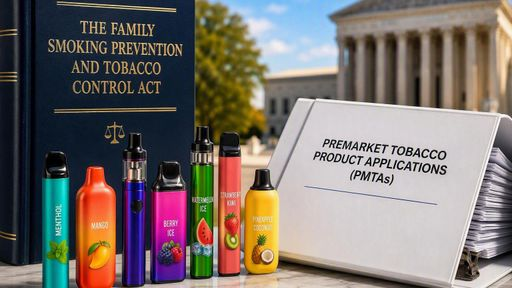
These newly reported websites must complete rectification by December 18, which includes removing elements or products from the website that should not be open to individuals, such as disposable e-cigarettes and pre-filled e-liquids.


In addition, the Turin court recently ruled that e-cigarette products cannot be promoted through commercial discounts, nor can they be advertised in-store through leaflets or posters. Websites can highlight the technical features of the devices or the flavors of the e-liquid blends, but cannot add any subjective comments or language to attract or engage consumers. Even potential misinformation can result in the website being banned and subsequently blocked.


We welcome news tips, article submissions, interview requests, or comments on this piece.

Please contact us at info@2firsts.com, or reach out to Alan Zhao, CEO of 2Firsts, on LinkedIn


Notice

1.  This article is intended solely for professional research purposes related to industry, technology, and policy. Any references to brands or products are made purely for objective description and do not constitute any form of endorsement, recommendation, or promotion by 2Firsts.

2.  The use of nicotine-containing products — including, but not limited to, cigarettes, e-cigarettes, nicotine pouchand heated tobacco products — carries significant health risks. Users are responsible for complying with all applicable laws and regulations in their respective jurisdictions.

3.  This article is not intended to serve as the basis for any investment decisions or financial advice. 2Firsts assumes no direct or indirect liability for any inaccuracies or errors in the content.

4.  Access to this article is strictly prohibited for individuals below the legal age in their jurisdiction.


Copyright


This article is either an original work created by 2Firsts or a reproduction from third-party sources with proper attribution. All copyrights and usage rights belong to 2Firsts or the original content provider. Unauthorized reproduction, distribution, or any other form of unauthorized use by any individual or organization is strictly prohibited. Violators will be held legally accountable.

For copyright-related inquiries, please contact: info@2firsts.com


AI Assistance Disclaimer


This article may have been enhanced using AI tools to improve translation and editorial efficiency. However, due to technical limitations, inaccuracies may occur. Readers are encouraged to refer to the cited sources for the most accurate information.

We welcome any corrections or feedback. Please contact us at: info@2firsts.com

BAT New Zealand Says Illicit Tobacco Trade Drove Nearly 29% Revenue Decline in 2025
British American Tobacco New Zealand said the illicit tobacco trade is responsible for its profit halving and revenue falling between the 2024 and 2025 financial years. Financial results filed with the Companies Office show that BAT Holdings (New Zealand) recorded 2025 revenue of NZ$180.7 million, or about US$106.95 million based on the European Central Bank’s April 27, 2026 reference rates, down from NZ$254 million, or about US$150.33 million, in 2024.
Apr.28 by 2FIRSTS.ai
Tobacco Farming in the New Nicotine Era: Why Indian Farmers Struggle to Transition — Contributed by Samrat Chowdhery
In this contributed article to 2Firsts, Mumbai-based journalist and harm reduction advocate Samrat Chowdhery examines India’s tobacco transition from the perspective of agriculture, supply chains and regulation. As noted by 2Firsts, India offers a relevant case for understanding how new nicotine technologies may affect not only consumption, trade and policy, but also tobacco farming.
Special Report
May.29
South Korea’s Cigarette Smoking Rate Falls to 17.9%, E-Cigarette Use Continues to Rise
Data released by the Korea Disease Control and Prevention Agency (KDCA) showed South Korea’s conventional cigarette smoking rate fell to 17.9% in 2025, while heated tobacco and liquid e-cigarette use continued to rise, particularly among young adults and women.
Jun.01
Philip Morris Says Its Smoke-Free Transition in Spain Now Has Economic Impact Above EUR 3.3 Billion
Philip Morris said it is accelerating its transition toward smoke-free products in Spain and claimed that the related economic impact now exceeds EUR 3.3 billion. Philip Morris also said that more than 90% of nicotine consumption in Spain still comes from conventional cigarettes, leaving room for growth in smoke-free categories, while regulation and taxation remain major obstacles in its view.
Apr.21 by 2FIRSTS.ai
Revised Tobacco Business Act to Take Effect in South Korea, Banning Online Sales of Liquid Vapes
South Korea’s Ministry of Health and Welfare will implement a partial revision of the Tobacco Business Act on April 24. The scope will expand from products made with “tobacco leaves” to all products manufactured with natural or synthetic nicotine. Synthetic nicotine liquid e-cigarettes, which had previously been treated as industrial products and were freely sold and advertised online, will from April 24 be subject to the same regulations as ordinary tobacco products.
Apr.23 by 2FIRSTS.ai
Disposable Vape Ban Shifts Purchasing Formats as UK Vape Volume Falls 10.3%
Data from convenience insight agency Talysis shows that the value of tobacco, vapes and smoking alternatives in the independent convenience sector fell by 4.4% in the first quarter of 2026, while volume fell by 7.8%. The vaping subcategory declined by 3.9% in value and 10.3% in volume over the same period. Talysis said the impact of the disposable vape ban continues to pressure turnover and footfall.
May.08 by 2FIRSTS.ai