California: Stiiizy hit with another lawsuit alleging high-THC vapes marketed to teens

Feb.06
California: Stiiizy hit with another lawsuit alleging high-THC vapes marketed to teens
A new lawsuit in California state court accuses Stiiizy Inc. of steering high-THC vape products toward teens through youth-appealing branding and weak age verification, alleging the plaintiff’s underage use was followed by cannabis-induced psychosis-related symptoms and significant personal harm.

Key Points


  • A new California state-court lawsuit targets cannabis vape company Stiiizy Inc., alleging teen-focused marketing of high-THC products.
  • Plaintiff “John Doe RC” (anonymous) says he began using Stiiizy products at 17 in 2024 and later experienced symptoms described as cannabis-induced psychosis (CIP), including a suicide attempt.
  • The complaint points to bright branding, flavor names, and advertising imagery as youth-appealing tactics.
  • It alleges the company’s website age gate is minimal, requiring only a “Yes” click to confirm being over 21.
  • The suit cites THC potency claims (pods alleged at 92%) and argues warnings about CIP risk are inadequate.
  • Reported as the ninth similar case filed by the same counsel group (eight in Los Angeles County, one in Marin County).


2Firsts, Feb 6, 2026


According to Law360, cannabis vape company Stiiizy Inc. is facing another California state-court lawsuit alleging it markets high-THC vape products to teens, contributing to what the complaint calls a nationwide “cannabis-induced psychosis” (CIP) “epidemic.”


The plaintiff, suing anonymously as John Doe RC, says he was a 17-year-old high school senior in 2024 when he began using Stiiizy products, drawn by the company’s marketing and the products’ standing among his peers. He alleges he later suffered CIP-related effects, including mood swings, depression, aggressive behavior and a suicide attempt.


The complaint alleges Stiiizy uses flashy colors, flavor-style names such as “Purple Punch,” “Dreamsicle,” and “Gelato,” and advertising featuring young, attractive women to appeal to teenagers. It also claims the company’s website uses a weak age-gate system that requires only a “Yes” click when users are asked whether they are over 21.


The lawsuit further highlights potency, alleging Stiiizy vape pods reach THC concentrations as high as 92%, and argues that high-potency THC products are linked to CIP risk while the company fails to adequately warn consumers. The complaint also references figures asserting CIP-related emergency room visits rose to 1,053 in 2019 from 682 in 2016, and contends teens face heightened risk due to ongoing brain development.


Law360 reports this is the ninth similar lawsuit filed against Stiiizy by the same group of attorneys, with eight in Los Angeles County and one in Marin County. The claims include negligence, failure to warn, defective design, negligent misrepresentation, fraudulent concealment and fraud, seeking damages for past and future economic and noneconomic losses.


Image source: Law360


We welcome news tips, article submissions, interview requests, or comments on this piece.

Please contact us at info@2firsts.com, or reach out to Alan Zhao, CEO of 2Firsts, on LinkedIn


Notice

1.  This article is intended solely for professional research purposes related to industry, technology, and policy. Any references to brands or products are made purely for objective description and do not constitute any form of endorsement, recommendation, or promotion by 2Firsts.

2.  The use of nicotine-containing products — including, but not limited to, cigarettes, e-cigarettes, nicotine pouchand heated tobacco products — carries significant health risks. Users are responsible for complying with all applicable laws and regulations in their respective jurisdictions.

3.  This article is not intended to serve as the basis for any investment decisions or financial advice. 2Firsts assumes no direct or indirect liability for any inaccuracies or errors in the content.

4.  Access to this article is strictly prohibited for individuals below the legal age in their jurisdiction.


Copyright


This article is either an original work created by 2Firsts or a reproduction from third-party sources with proper attribution. All copyrights and usage rights belong to 2Firsts or the original content provider. Unauthorized reproduction, distribution, or any other form of unauthorized use by any individual or organization is strictly prohibited. Violators will be held legally accountable.

For copyright-related inquiries, please contact: info@2firsts.com


AI Assistance Disclaimer


This article may have been enhanced using AI tools to improve translation and editorial efficiency. However, due to technical limitations, inaccuracies may occur. Readers are encouraged to refer to the cited sources for the most accurate information.

We welcome any corrections or feedback. Please contact us at: info@2firsts.com

2Firsts First Look|China to End VAT Export Rebates on Vape Devices and Nicotine in April 2027, Following Earlier Removal for HTP Devices and Nicotine Vapes
China's Ministry of Finance and State Taxation Administration announced on October 12, 2026, that value-added tax (VAT) export rebates for vape devices, nicotine and its salts, and certain non-combustible inhalation products will be eliminated from April 1, 2027. The measure adds four tobacco- and nicotine-related customs codes, including 8543400010, which covers vape devices and qualifying empty pods. China previously eliminated rebates for nicotine-containing vaping products and devices under code 8543400090 in April 2026. According to industry classification information held by 2Firsts, the latter currently corresponds to heated tobacco devices. Export excise tax refund and exemption arrangements will remain unchanged.
Special Report
Oct.12
Malaysia Liquid Nicotine Returns to Poisons List, Leaving Vape Retail and RM354 Million Tax Collection in Legal Uncertainty
Malaysia’s withdrawal of its appeal in a landmark liquid-nicotine case has left a High Court ruling that struck down the 2023 nicotine exemption in force, bringing liquid and gel nicotine used in vaping products back under the Poisons Act 1952. At the same time, the Control of Smoking Products for Public Health Act 2024 continues to provide a regulatory framework for vaping products, creating uncertainty over retail sales, taxation and existing inventory. MPs are calling for nicotine vape sales and excise collection to stop, including refunds of more than RM354 million collected since 2023, while industry and consumer groups are asking the government to clarify the current legal position.
Sep.04
New York’s 75% Wholesale Tax on Nicotine Pouches Takes Effect Sept. 1, With Aug. 31 Inventory Subject to Floor Tax
New York State will extend its tobacco products tax to “alternative nicotine products,” including tobacco-free nicotine pouches, from September 1, 2026, at a rate of 75% of the wholesale price. Distributors, wholesalers and retailers must also inventory products held as of 11:59 p.m. on August 31 and pay a floor tax. Vapor products are excluded from the new category and remain subject to New York's separate 20% supplemental sales tax on the retail price.
Aug.26
2Firsts Interview | Cigarette Sales Fall as Smokeless Alternatives Gain in U.S. Convenience Stores, NACS Says
Ahead of the 2026 NACS Show, 2Firsts interviewed Chris Rapanick, NACS managing director of research, on changes reshaping the U.S. convenience-store tobacco and nicotine market. NACS data show cigarette sales declining while smokeless alternatives, including nicotine pouches, continue to grow. The interview also examines higher OTP margins, shifting backbar space, weaker store traffic, regulatory uncertainty and NACS’ outlook for 2027, offering a retailer-side view of one of the world’s largest nicotine markets.
Interview
Oct.03
Product | JNR Launches Shisha Hookah 70K E-Hookah With 60ml E-Liquid and 0.6% Nicotine
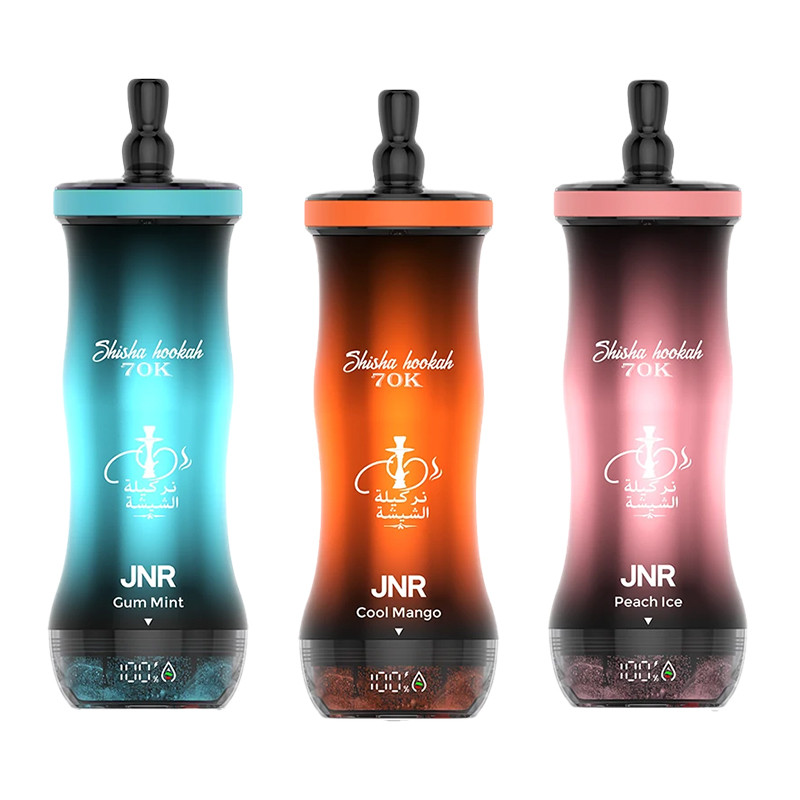
JNR has introduced the Shisha Hookah 70K, a high-capacity rechargeable disposable vape designed around a hookah-inspired experience. The device comes prefilled with 60ml of e-liquid at 6mg/ml (0.6%) nicotine strength, alongside a 1,000mAh rechargeable battery and a 0.38Ω single mesh coil. It also features adjustable airflow and battery and e-liquid level displays. JNR claims the device can deliver up to 70,000 puffs and offers more than 20 flavors. Retail listings for the product have appeared in markets including Tunisia.
Market
Aug.24 by 2Firsts Perspectives
R.J. Reynolds Vapor Company Launches Flavored Vuse Pro Pods in U.S. Without FDA Marketing Authorization
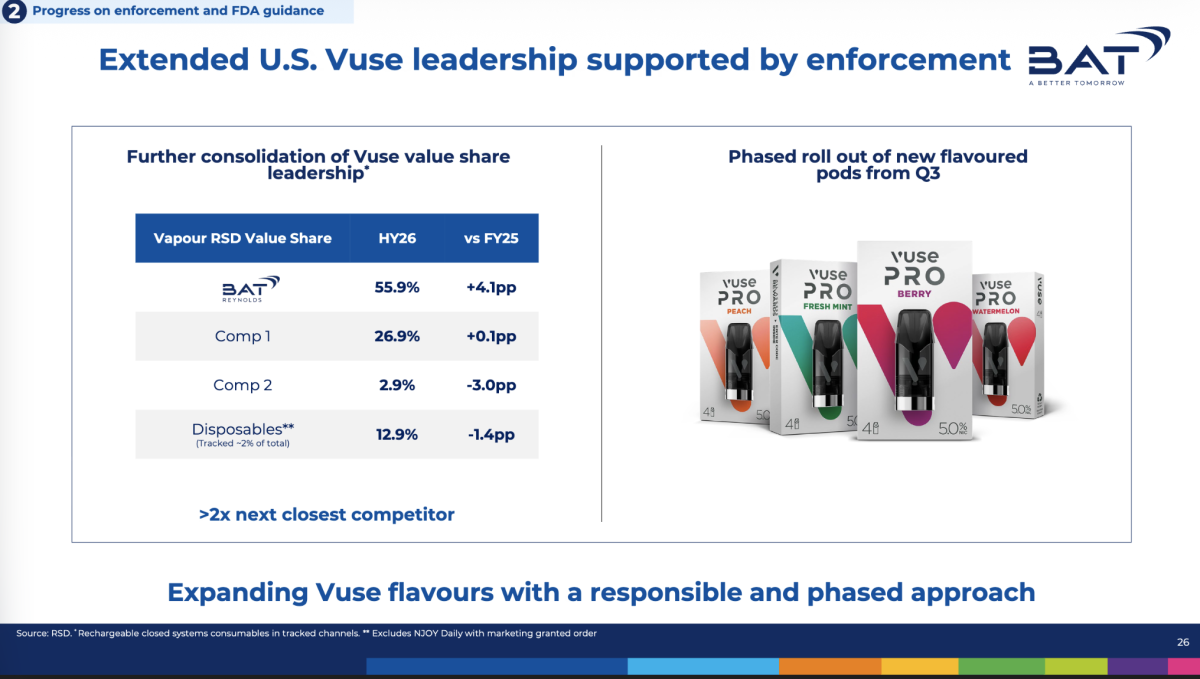
R.J. Reynolds Vapor Company has begun selling four flavored Vuse Pro pods — Peach, Berry, Watermelon and Fresh Mint — in Ohio and selected other U.S. markets. According to the Vuse U.S. FAQ, Vuse Pro contains approximately 5.0% nicotine by weight, and Vuse Pro pre-filled pods are intended for use with Vuse Alto devices. Reynolds told 2Firsts that product labeling lists an e-liquid capacity of 2.0 mL per pod. The Vuse Alto Power Unit received FDA marketing authorization in 2024, while the new Vuse Pro pods themselves have not received marketing granted orders. The rollout follows the FDA’s May 2026 revision of enforcement priorities for certain unauthorized vaping products with qualifying pending applications.
BAT
Sep.10