Pakistan expects tax hike to boost revenue

May.03.2023
Pakistan expects tax hike to boost revenue
Pakistan expects $200 million extra revenue from higher tobacco taxes despite concerns from multinational companies.

According to a report in the Pakistani Observers newspaper on May 2nd, the Pakistani government expects to generate an additional revenue of 60 billion Pakistani rupees ($200 million) after increasing the federal consumption tax on tobacco products.


A multinational tobacco company argues that raising tobacco consumption taxes would increase the illegal tobacco product market in the country.


However, the Pakistani government has stated that multinational tobacco companies have falsely claimed that illegal tobacco products make up 40% of the market in their country, and has cited independent research showing that these products actually only make up 18% of the market.


It has been reported that tobacco companies have overstated the number of illegal sales in order to pressure the government after tax increases.


Malik Imran, national head of the Smoke-Free Kids campaign, has stated that the implementation of tracking systems has helped to reduce illegal products. He commented, "For the time being, we can say that this number is now negligible.


Reference:


Pakistan anticipates an increase in tax rates to enhance revenue.


Disclaimer

This article is provided solely for professional research, industry discussion, and informational purposes. Any references to brands, companies, products, technologies, or policies are made for factual reporting and analytical purposes only, and do not constitute endorsement, recommendation, promotion, or advertising by 2Firsts.

Nicotine-containing products, including but not limited to cigarettes, e-cigarettes, heated tobacco products, and nicotine pouches, carry significant health risks. Readers are responsible for complying with all applicable laws and regulations in their respective jurisdictions, including age restrictions and access limitations.

The information contained in this article should not be regarded as investment, legal, medical, regulatory, or commercial advice. While 2Firsts strives to ensure the accuracy and reliability of its content, it does not assume liability for any direct or indirect loss arising from errors, omissions, inaccuracies, or reliance on the information contained herein.

This article is not intended for individuals below the legal age for accessing tobacco or nicotine-related information in their jurisdiction.


Copyright Notice

This article is either original content produced by 2Firsts or content reproduced, translated, summarized, or adapted from third-party sources with attribution where applicable. The intellectual property rights of the original content remain with 2Firsts or the respective original rights holders.

No individual or organization may copy, reproduce, distribute, republish, modify, translate, or otherwise use this content without prior authorization. Any unauthorized use may result in legal action.

For copyright-related inquiries, corrections, or removal requests, please contact: info@2firsts.com.


AI-Assisted Translation and Editing Notice

Portions of this article may have been translated, edited, or reviewed with the assistance of artificial intelligence tools to improve efficiency and readability. Due to the limitations of AI-assisted translation and editing, discrepancies, omissions, or inaccuracies may exist when compared with the original source.

Where applicable, readers are advised to refer to the original source for the most complete and accurate information. If you identify any errors or believe that any content infringes upon your rights, please contact us at info@2firsts.com, and we will review and address the matter promptly.

Australia’s Victoria Steps Up Illegal Tobacco Enforcement With Store Closures and Penalties of Up to A$2.5 Million
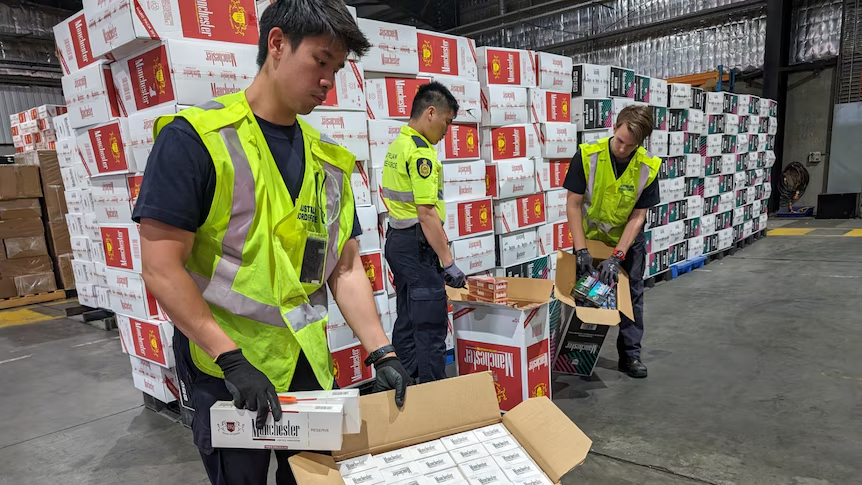
Australia’s state of Victoria has activated new powers allowing Tobacco Licensing Victoria and police to shut premises suspected of selling, supplying or possessing illicit tobacco for up to 90 days. Longer closures can be ordered by a magistrates’ court. Businesses subject to closure orders must generally cease all trading and will be placed on a public list. Breaching a closure order can carry penalties of up to A$2.5 million and 20 years in prison.
Sep.10
Switzerland Tightens Vape Checks as Only 3 of 32 Tested Products Meet New Tobacco Rules
According to Swiss media outlet Blick, local authorities are strengthening compliance checks on vape products, nicotine pouches and other tobacco-related products following the implementation of Switzerland’s revised Tobacco Products Act. A Basel laboratory tested 32 disposable vapes and e-liquids, with only three meeting regulatory requirements and 21 products banned from sale. Swiss authorities are also expanding retail inspections, laboratory testing and youth purchase checks to enforce the new tobacco and nicotine product rules.
Aug.12
Product | BAT Japan Launches virto Bright Peach Click in Japan, Expanding glo Hilo’s Capsule-Based Flavor Portfolio
British American Tobacco Japan (BAT Japan) has introduced virto Bright Peach Click, a new heated tobacco stick designed for the glo Hilo system. The product expands the existing virto consumable lineup with a combination of tobacco, menthol and ripe peach flavors, featuring a capsule mechanism that releases additional fruit flavor when activated. The product launched in Japan on July 27, 2026, through glo official online channels, convenience stores and tobacco retailers.
Aug.03
Product | JT Refreshes Ploom CUBE Design and Expands Japan Retail Distribution, Targeting Younger Men and Female Users
Japan Tobacco (JT) launched a refreshed Ploom CUBE design in Japan on September 8, 2026, with broader convenience-store and tobacco-retail distribution planned from October 13. The updated device retains the existing Rounded Cube form and heating platform while replacing four previous body colors with Pebble White and Cobalt Black. JT is also introducing new Front Panels and Fabric Back Covers, although the new accessories are not compatible with the previous Ploom CUBE design. The company says the update is intended to broaden appeal among younger male and female users.
Sep.09
Juul Sublicense Reshapes Vuse Alto Patent Bill as Court Ends R.J. Reynolds’ 5.25% Royalty Obligation to Altria
According to Law360 on August 31, 2026, a federal judge in North Carolina ruled that a patent sublicense between R.J. Reynolds Vapor Co. and Juul Labs Inc. relieves Reynolds of its obligation to continue paying royalties to Altria Client Services LLC over Vuse Alto. A jury had previously found that Vuse Alto infringed three Altria patents and awarded approximately $95.2 million in past damages, after which Reynolds was ordered to pay an ongoing royalty equal to 5.25% of positive net sales. The new ruling finds that a valid sublicense can eliminate future infringement, potentially ending what Altria described as hundreds of millions of dollars in future royalties.
Sep.01
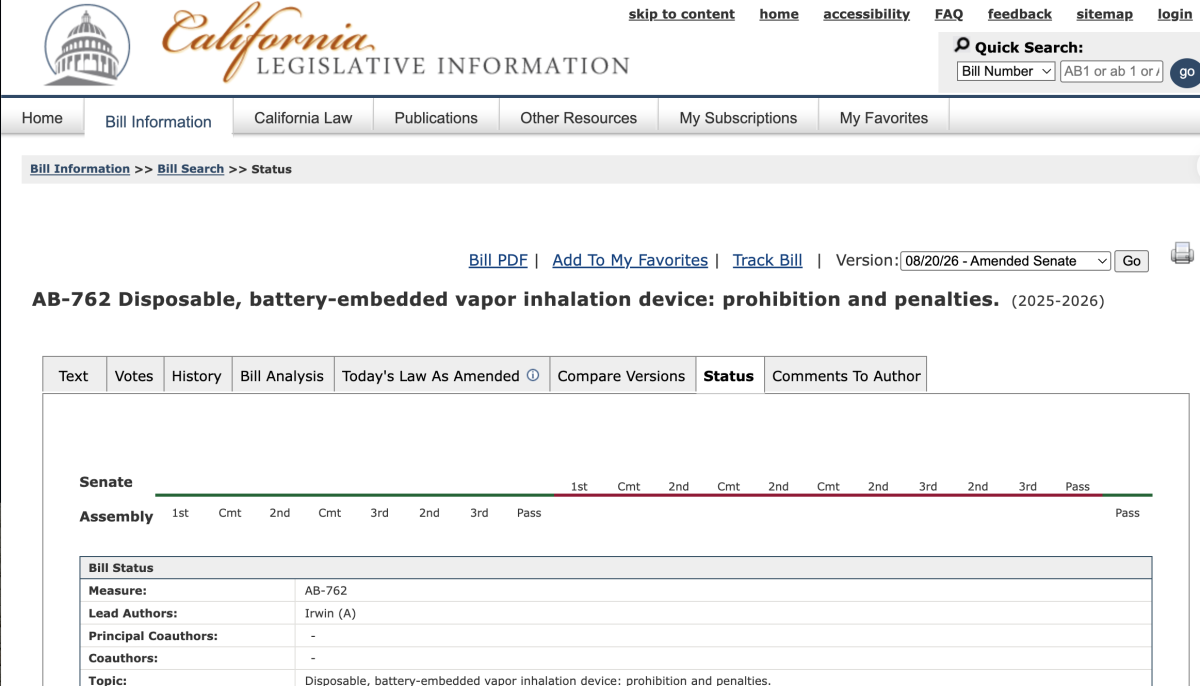
California Lawmakers Pass Disposable Nicotine Vape Ban, With Sales Prohibition Set for 2028
According to CBS Los Angeles on August 27, 2026, California lawmakers have passed Assembly Bill 762, which would phase out disposable, battery-embedded nicotine vapes in the state. If signed by Governor Gavin Newsom, manufacturing and importation of the covered products would be prohibited beginning January 1, 2027, followed by a sales ban on January 1, 2028. Driven primarily by concerns over electronic waste, lithium-battery fires and environmental pollution, the legislation would further shift California’s legal vape market toward rechargeable, refillable or replaceable-pod devices.
Aug.28