Forbes: PMI Ranked Among Top 5 “Net Zero Leaders”

Jul.29.2025
Forbes: PMI Ranked Among Top 5 “Net Zero Leaders”
PMI was ranked among the top five in Forbes’ “Net Zero Leaders,” recognized for driving a smoke-free future, committing to sustainability, and planning expansion into the wellness and healthcare sectors.

Key points:


·Philip Morris International (PMI) has been selected as one of the top five "net zero emissions leaders" by Forbes. 


·PMI is committed to promoting sustainable development through the transformation to smoke-free products and has implemented specific sustainability projects around the world. 


·PMI also has plans for long-term development in the health and wellness sector.


【2Firsts News Flash】According to Vecernji List on July 28th, Philip Morris International (PMI) has been named one of the top five American companies in Forbes' "Net Zero Leaders" list. The rankings by Forbes are based on data provided by Sustainalytics and Morningstar, analyzing these companies' progress towards achieving a net zero future including corporate governance structure, carbon reduction goal setting, and financial strength to withstand industry competition and economic uncertainty.


As a specific example of sustainable development in practice, Philip Morris International (PMI) has launched a recycling program for the disposal of non-smoking product waste in Croatia, aimed at energy recovery. This is the first and only project of its kind in the tobacco industry. To date, the project has been implemented in 21 locations across 14 cities in Croatia, collecting approximately 3.2 tons of non-smoking products.


As of December 31, 2024, Philip Morris International (PMI) has been selling its smoke-free products in 95 markets, with an estimated 38.6 million adult users. The sales revenue from smoke-free products accounted for 42% of the company's total revenue in the first quarter of 2025. Since 2008, PMI has invested over $14 billion in the research, scientific validation, and commercialization of smoke-free products, with the goal of completely ceasing the sale of traditional cigarettes.


We welcome news tips, article submissions, interview requests, or comments on this piece.

Please contact us at info@2firsts.com, or reach out to Alan Zhao, CEO of 2Firsts, on LinkedIn


Notice

1.  This article is intended solely for professional research purposes related to industry, technology, and policy. Any references to brands or products are made purely for objective description and do not constitute any form of endorsement, recommendation, or promotion by 2Firsts.

2.  The use of nicotine-containing products — including, but not limited to, cigarettes, e-cigarettes, nicotine pouchand heated tobacco products — carries significant health risks. Users are responsible for complying with all applicable laws and regulations in their respective jurisdictions.

3.  This article is not intended to serve as the basis for any investment decisions or financial advice. 2Firsts assumes no direct or indirect liability for any inaccuracies or errors in the content.

4.  Access to this article is strictly prohibited for individuals below the legal age in their jurisdiction.


Copyright


This article is either an original work created by 2Firsts or a reproduction from third-party sources with proper attribution. All copyrights and usage rights belong to 2Firsts or the original content provider. Unauthorized reproduction, distribution, or any other form of unauthorized use by any individual or organization is strictly prohibited. Violators will be held legally accountable.

For copyright-related inquiries, please contact: info@2firsts.com


AI Assistance Disclaimer


This article may have been enhanced using AI tools to improve translation and editorial efficiency. However, due to technical limitations, inaccuracies may occur. Readers are encouraged to refer to the cited sources for the most accurate information.

We welcome any corrections or feedback. Please contact us at: info@2firsts.com

Japan Survey Finds 49.5% Would Cut Tobacco Use if Prices Rise, 64.6% Show Interest in Nicotine-Free Alternatives
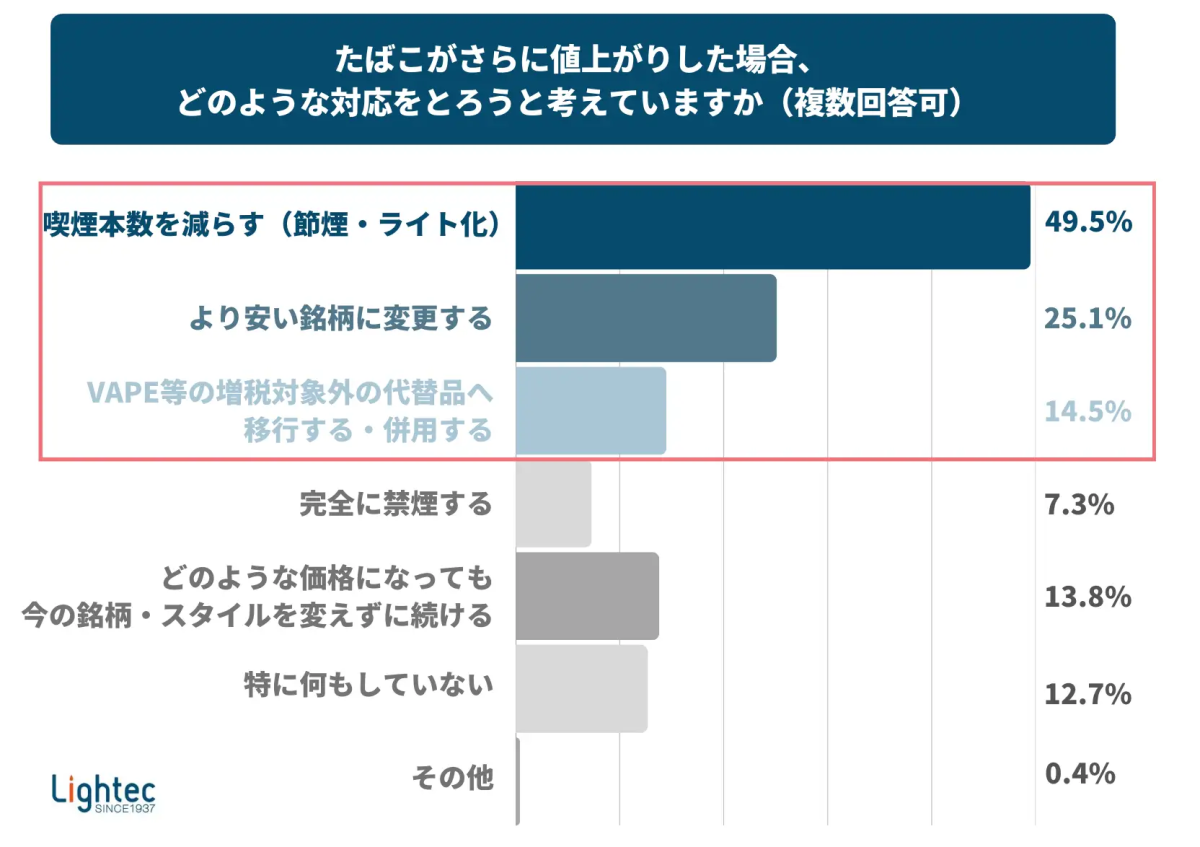
A September online survey commissioned by Japanese smoking-accessories company Lightec found that 49.5% of respondents would consider reducing tobacco use if prices rose further, while 25.1% would consider switching to cheaper brands and 14.5% would consider using or combining alternatives such as vapes and nicotine-free herbal sticks. Another 64.6% expressed some level of interest in such alternatives. The survey covered 1,088 respondents aged 20 to 70 and was conducted by a company that sells NICOLESS nicotine-free vaping and herbal-stick products, meaning its findings should not be treated as representative of Japan's smoking population.
DATA
Oct.12
Malaysia Liquid Nicotine Returns to Poisons List, Leaving Vape Retail and RM354 Million Tax Collection in Legal Uncertainty
Malaysia’s withdrawal of its appeal in a landmark liquid-nicotine case has left a High Court ruling that struck down the 2023 nicotine exemption in force, bringing liquid and gel nicotine used in vaping products back under the Poisons Act 1952. At the same time, the Control of Smoking Products for Public Health Act 2024 continues to provide a regulatory framework for vaping products, creating uncertainty over retail sales, taxation and existing inventory. MPs are calling for nicotine vape sales and excise collection to stop, including refunds of more than RM354 million collected since 2023, while industry and consumer groups are asking the government to clarify the current legal position.
Sep.04
Retail Case Study | Wisconsin Vape Market One Year After New Regulations: Johnny Vapes Reports 80% Sales Decline as Consumers Shift Online and Across State Lines
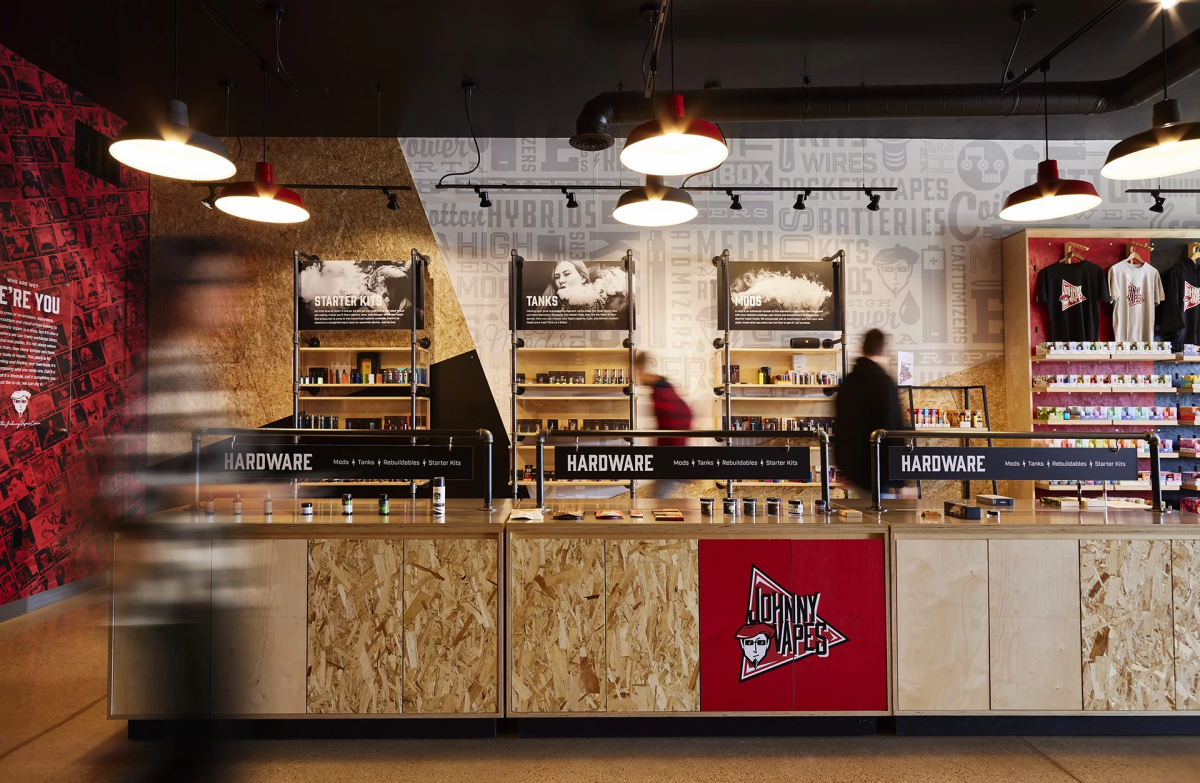
According to WNCY on August 24, 2026, some independent vape retailers in Wisconsin say they have faced significant business pressure one year after new vape regulations took effect. Johnny Vapes, a retailer operating in northeast Wisconsin, said its store count fell from seven locations to four, sales declined by about 80%, and roughly 90% of its inventory was affected. Retailers said some consumers have shifted to online purchases or traveled to neighboring Michigan to buy vape products. The case highlights how local regulations can reshape retail operations, inventory management and consumer purchasing patterns.
Aug.28
 PMI Opens Generative AI Center in Portugal to Support Global Operations
PMI Opens Generative AI Center in Portugal to Support Global Operations
According to information released by Portugal’s Trade & Investment Agency (AICEP) in July 2026, Philip Morris International (PMI) has established a global Generative Artificial Intelligence Factory (GenAI Factory) at its Portuguese subsidiary Tabaqueira. The center will support PMI’s global operations by developing and deploying AI solutions focused on industrial process optimization, data analytics, operational automation and AI application development. The initiative strengthens Portugal’s role in PMI’s global technology and innovation network.
Aug.27
Australia Brings in Deloitte to Support Illicit Tobacco and Vape Enforcement Across Data, Processes and Project Delivery
Australia’s Department of Home Affairs has hired Deloitte to provide data analytics, business-process, communications and project-delivery support to the Office of the Illicit Tobacco and E-Cigarette Commissioner. The government says Deloitte personnel do not provide policy advice to the Commissioner or the Australian government, with policy development and decision-making remaining with public officials. The arrangement has nevertheless drawn scrutiny because Deloitte has previously provided professional services to several tobacco and vaping companies.
Sep.03
From Border-Logistics Insiders to Retail Service Stations, Australia Mounts a Sweeping Crackdown on the Illicit Nicotine Trade as iGET Vapes Surface in A$80 Million Crime Networks
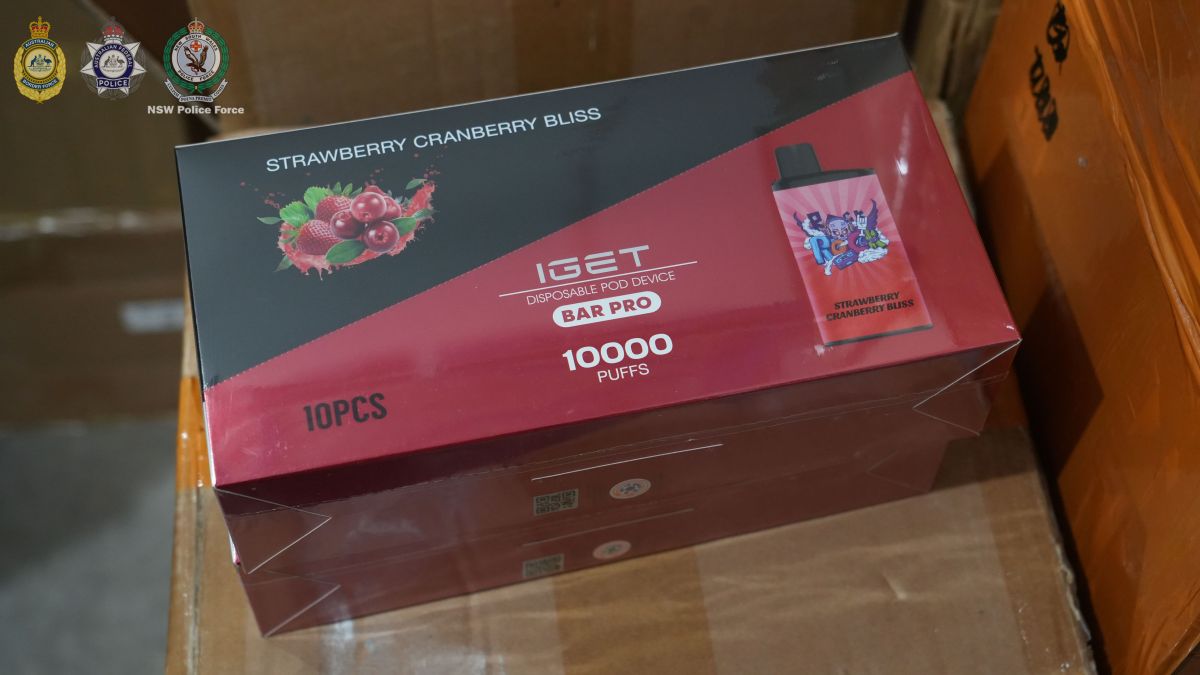
Australian authorities have disclosed two major enforcement actions that go beyond product seizures and retail closures to examine how illicit tobacco and vape networks operate. On Aug. 14, the Multi Agency Strike Team said seven people had been charged and two criminal networks were valued by authorities at a combined A$80 million, or about US$56.8 million. Investigators allege the groups used bonded warehouses, freight businesses and “trusted insiders” in legitimate industries to circumvent border controls. In a separate operation on Aug. 11, more than 100 service stations were targeted as authorities sought information on illicit tobacco importation, distribution networks and the movement of sales proceeds.
Aug.17