Philippine Government Intensifies Crackdown on Tobacco and E-cigarette Industries

Apr.11.2025
Philippine Government Intensifies Crackdown on Tobacco and E-cigarette Industries
Philippine tax authorities intensify crackdown on tax evasion and illegal trade in tobacco and e-cigarette industries.

Key Points:

The Bureau of Internal Revenue (BIR) of the Philippines is intensifying efforts to crack down on tax evasion and illegal trade activities within the tobacco and e-cigarette industries.

The Bureau of Internal Revenue (BIR) and the Bureau of Customs (BOC) led the destruction of smuggling e-cigarette products worth 3.26 billion pesos (approximately 57 million USD), demonstrating the government's determination to combat illegal trade.

The President of the Philippines, Marcos, attended an event where illegally smuggled e-cigarette products were destroyed. He emphasized the importance of continuing to investigate the criminals behind illegal trade.


According to a report by the Philippine News Agency on April 10th, the Bureau of Internal Revenue (BIR) in the Philippines is intensifying its crackdown on emerging and long-standing tax evasion activities, particularly in the e-cigarette and tobacco industries.


Director of the BIR, Romeo Lumagui Jr., stated during a press conference on Thursday (10th) that this is part of the Marcos government's comprehensive measures to address illegal trade, revenue loss, and the threat of unregulated products to public health.


He noted that the BIR continues to conduct law enforcement operations, including the destruction of counterfeit and untaxed cigarettes, and the filing of criminal charges against violators. In March 2025, the BIR in Pampanga province destroyed approximately 14.3 million packs of illegal cigarettes seized from multiple operations, estimating tax losses of around 6.3 billion pesos (110 million USD).


Recently, the Bureau of Internal Revenue (BIR) filed a lawsuit against Chinese nationals and several companies for alleged tax evasion amounting to 8.5 billion pesos (150 million dollars). This action was taken following a raid on an illegal cigarette factory and warehouse in the San Simon area of Pampanga province.


Lumaguay pointed out that the destruction operation of illegally imported e-cigarette products led by the Bureau of Internal Revenue (BIR) and the Bureau of Customs (BOC) with a value of 3.26 billion pesos (approximately 57 million US dollars) is another milestone in the Philippine government's efforts to combat illegal trade.


Philippine President Ferdinand R. Marcos Jr. attended a destruction event in the southern harbor, where he expressed appreciation for the continued enforcement efforts of the BIR. He also highlighted the tax agency's proactive operations in seizing warehouses to support the government's campaign against illicit trade.


Lumaji reiterated that the department is committed to tracking down the perpetrators behind illegal trade through enforcement and prosecution.


There are still many illegal factories and cigarette smuggling activities, so we are indeed focused on cracking down on the sale of illegal e-cigarettes and tobacco products.


We welcome news tips, article submissions, interview requests, or comments on this piece.

Please contact us at info@2firsts.com, or reach out to Alan Zhao, CEO of 2Firsts, on LinkedIn


Notice

1.  This article is intended solely for professional research purposes related to industry, technology, and policy. Any references to brands or products are made purely for objective description and do not constitute any form of endorsement, recommendation, or promotion by 2Firsts.

2.  The use of nicotine-containing products — including, but not limited to, cigarettes, e-cigarettes, nicotine pouchand heated tobacco products — carries significant health risks. Users are responsible for complying with all applicable laws and regulations in their respective jurisdictions.

3.  This article is not intended to serve as the basis for any investment decisions or financial advice. 2Firsts assumes no direct or indirect liability for any inaccuracies or errors in the content.

4.  Access to this article is strictly prohibited for individuals below the legal age in their jurisdiction.


Copyright


This article is either an original work created by 2Firsts or a reproduction from third-party sources with proper attribution. All copyrights and usage rights belong to 2Firsts or the original content provider. Unauthorized reproduction, distribution, or any other form of unauthorized use by any individual or organization is strictly prohibited. Violators will be held legally accountable.

For copyright-related inquiries, please contact: info@2firsts.com


AI Assistance Disclaimer


This article may have been enhanced using AI tools to improve translation and editorial efficiency. However, due to technical limitations, inaccuracies may occur. Readers are encouraged to refer to the cited sources for the most accurate information.

We welcome any corrections or feedback. Please contact us at: info@2firsts.com

South Korea Extends Vape Rules to Unmanned Stores After Bringing Synthetic Nicotine Under Tobacco Law
South Korea's Ministry of Gender Equality and Family said on September 14 that it plans to designate unmanned e-cigarette stores as businesses where minors are prohibited from entering or working. Operators would be required to verify customers' ages and display notices restricting access by minors. The proposal is open for public comment through October 6. The move follows an April expansion of South Korea's statutory tobacco definition that brought products made with natural or synthetic nicotine under the Tobacco Business Act. Nicotine-free liquids and products using nicotine analogues such as 6-methylnicotine, however, remain an emerging regulatory issue.
Sep.21
Russia’s Vape Device Labeling Regime Enters Force: Registration Starts in September, Mandatory Coding in December
Russia's digital labeling regime for reusable e-cigarettes and similar personal vaping devices entered its first mandatory phase in September 2026. From September 1, manufacturers, importers and other market participants must register with the national Chestny ZNAK tracking system. From December 1, newly manufactured and imported covered devices will be required to carry digital identification codes and be reported as entering circulation. Russia has also issued new operational guidance for imports, marking the transition from a voluntary pilot to phased mandatory implementation.
Sep.15
UK-Listed Consumer Goods Group Supreme Sees Vape Duty as Potential Consolidation Opportunity, Holds FY27 Outlook
UK-listed consumer goods group Supreme plc says it continues to expect FY27 trading to meet market expectations as the Vaping Products Duty takes effect on October 1, while maintaining a comparatively positive view of the new tax and compliance regime. Supreme has said the framework could increase compliance complexity for smaller operators and contribute to market consolidation, while its manufacturing, compliance and distribution scale may allow it to gain share. Its 88Vape brand will retain its value positioning.
Sep.18
Indiana Halts Sales of Elf Bar, Lost Mary, MR FOG and iJOY Vapes Under Foreign-Adversary Rules; Some Products Return After Compliance Filings
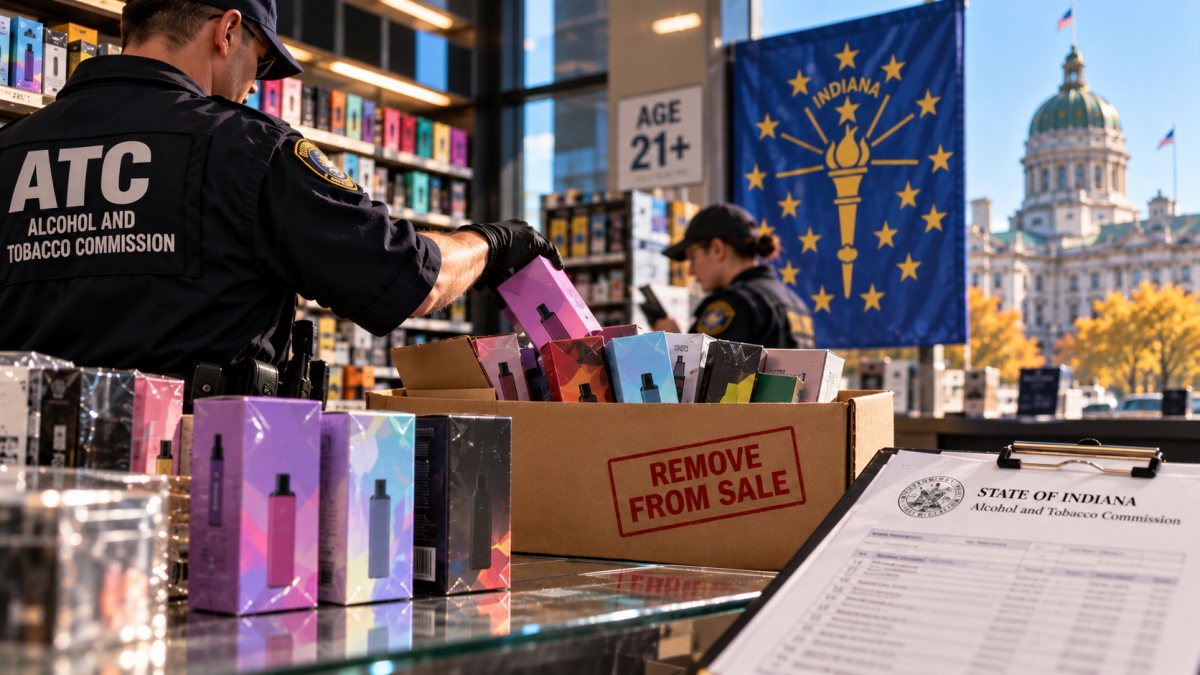
Indiana's Alcohol and Tobacco Commission (ATC) ordered tobacco certificate holders in September to remove certain vaping products marketed under Elf Bar, Lost Mary, MR FOG, iJOY and other brands from inventory under the state's foreign-adversary product law. The agency later listed 257 MR FOG products and 77 Lost Mary product entries as lawful for sale. The Lost Mary revision expressly stated that compliance evidence had been received for 20 additional products. 2Firsts compliance expert Kurt said potential filings could include e-liquid and ingredient-origin records, U.S. nicotine-analog supply-chain documentation and FDA premarket application status.
Regulations
Oct.08
Sweden Threatens EU Tobacco Tax Deal as Nicotine Pouch Duty Dispute Looms Over November 9 Meeting
Sweden is expected to oppose a European Union proposal to raise minimum tobacco excise duties, Law360 reported on October 26, 2026, citing an EU official. A provisional Council agenda dated October 23 confirms that the tobacco taxation package is scheduled for discussion at the November 9 finance ministers' meeting, where member states will seek a general approach. The proposed reforms would raise minimum taxes on conventional tobacco products and establish EU-wide excise rules for vaping liquids, heated tobacco and nicotine pouches. Sweden supports harmonising tobacco taxation rules but objects to requiring nicotine pouches to bear the same minimum tax burden as certain smoking tobacco products. As EU indirect tax legislation requires unanimous Council approval, Swedish opposition could block the proposal in its current form.
Regulations
Oct.29
Product | BAT Revises Japan's VELO Convenience Store Lineup, Adding ¥380 Mango Pouches as Selected SKUs Exit
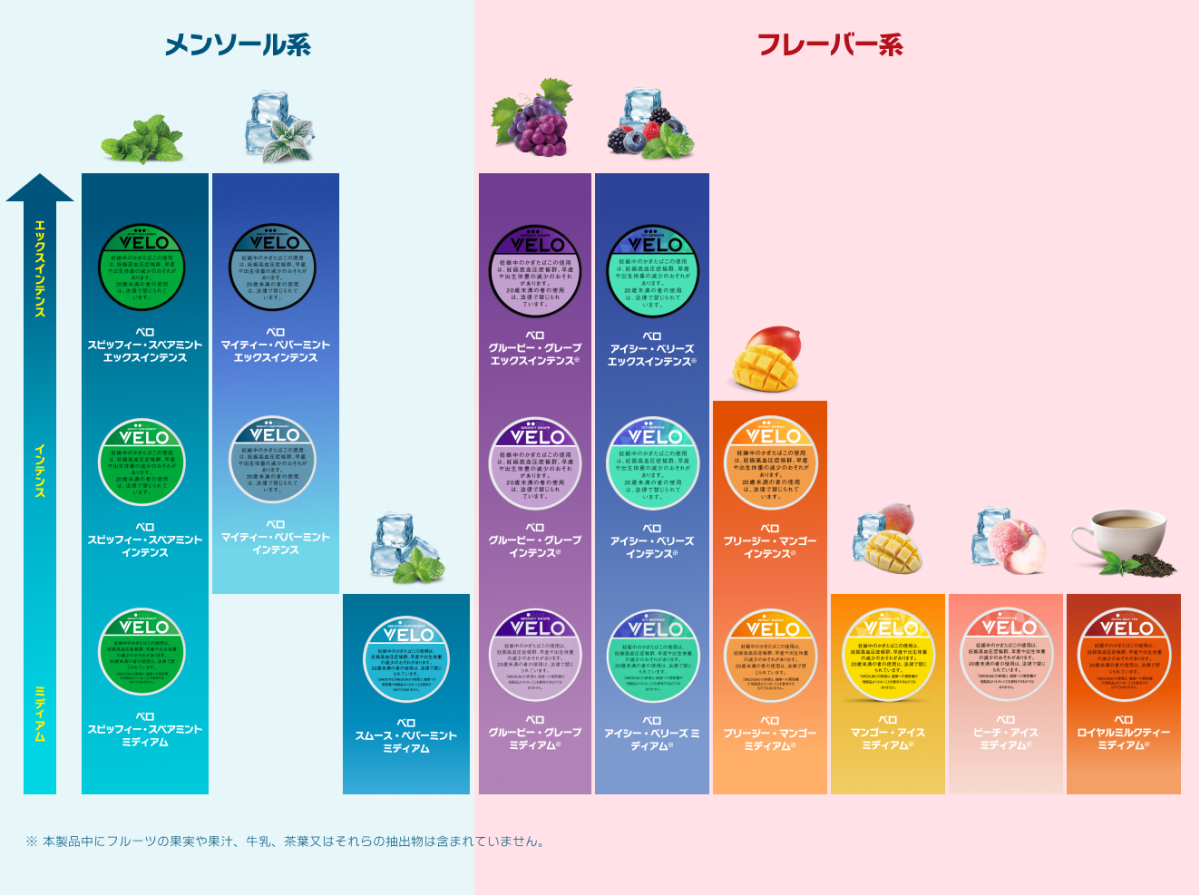
British American Tobacco's Japanese subsidiary, BAT Japan, launched VELO Mango Ice Medium on November 2, 2026, with distribution expanding to selected 7-Eleven, FamilyMart, NewDays and Seicomart stores from November 3. The new oral tobacco product contains 15 pouches per can and retails for ¥380, featuring a mango and cooling flavor profile at Medium intensity. At the same time, BAT Japan raised prices on multiple existing VELO products from ¥360 to ¥380 per can and withdrew selected SKUs from convenience store distribution without discontinuing them entirely. The changes affect product assortment, pricing and retail channel allocation.
product
Nov.04