Poland Faces High Teen E-cigarette Usage, Urgent Ban Needed

Regulations by 2FIRSTS.ai
May.21.2024
Poland Faces High Teen E-cigarette Usage, Urgent Ban Needed
Poland faces growing youth e-cigarette use, lacking regulations despite health risks. Health Ministry studies sales bans to protect public health.

According to Polish media outlet WiadomosciHandlowe, on the evening of May 20th, Poland has become the country with the highest teenage e-cigarette usage rates worldwide. However, despite the threat, there is currently no legislation in place to ban the sale of e-cigarettes domestically.


The Polish Ministry of Health is currently studying a policy to ban disposable e-cigarettes. Data shows that the youth in Poland are facing significant health risks due to the use of these products. Although the department obtained alarming data in February this year, the proposed reforms for the policy have not been completed yet, and verbal promises cannot solve the actual problems.


At least one quarter has passed, and the Health Department is still "analyzing the feasibility of implementing effective legislative solutions." According to statistics, the Health Department has been aware of this data since February 2024.


In 2022, approximately 23.4% of girls and 21.2% of boys aged 13-15 in Poland used e-cigarettes. The frequency of e-cigarette use among Polish teenagers is leading among European Union countries. The Ministry of Health acknowledges this and assures that "actions to restrict young people's access to e-cigarettes align with public health protection measures to prevent the consequences of tobacco-related diseases.


As for the sales volume of disposable e-cigarettes, a total of 19,525,600 units were sold in 2022. Additionally, the number of products reported to the chemical office reached 6,550 in 2022 and increased to 6,906 in 2023.


Another striking piece of information comes from a report by the World Health Organization on e-cigarette usage. The report, prepared for the WHO Summit, highlights Poland as the country with the highest rate of e-cigarette use among adolescents globally. The proportion of 15-19 year olds who have tried e-cigarettes has increased from 16.8% to 62.1%. The data in this report is current as of February 2024.


At the same time, the Ministry of Health successfully revised legislation to ban the sale of e-cigarette e-liquid. However, the issue of teenagers has not yet been resolved. The draft legislation has not yet been introduced, and there are only two more sessions of the House of Commons before the summer break.


It is worth mentioning that during the February winter break this year, Polish media extensively reported on a vending machine selling disposable e-cigarettes located next to a children's playground in Zakopane. Witnesses claimed that many children were purchasing e-cigarettes from the machine. At the time, the Ministry of Health strongly assured that regulations banning the sale of these products would be implemented before the summer vacation.


According to CMR statistics, Poland sold more than 100 million disposable e-cigarettes in 2023. This is a significant increase from the previous year, when sales were only 32 million.


We welcome news tips, article submissions, interview requests, or comments on this piece.

Please contact us at info@2firsts.com, or reach out to Alan Zhao, CEO of 2Firsts, on LinkedIn


Notice

1.  This article is intended solely for professional research purposes related to industry, technology, and policy. Any references to brands or products are made purely for objective description and do not constitute any form of endorsement, recommendation, or promotion by 2Firsts.

2.  The use of nicotine-containing products — including, but not limited to, cigarettes, e-cigarettes, nicotine pouchand heated tobacco products — carries significant health risks. Users are responsible for complying with all applicable laws and regulations in their respective jurisdictions.

3.  This article is not intended to serve as the basis for any investment decisions or financial advice. 2Firsts assumes no direct or indirect liability for any inaccuracies or errors in the content.

4.  Access to this article is strictly prohibited for individuals below the legal age in their jurisdiction.


Copyright


This article is either an original work created by 2Firsts or a reproduction from third-party sources with proper attribution. All copyrights and usage rights belong to 2Firsts or the original content provider. Unauthorized reproduction, distribution, or any other form of unauthorized use by any individual or organization is strictly prohibited. Violators will be held legally accountable.

For copyright-related inquiries, please contact: info@2firsts.com


AI Assistance Disclaimer


This article may have been enhanced using AI tools to improve translation and editorial efficiency. However, due to technical limitations, inaccuracies may occur. Readers are encouraged to refer to the cited sources for the most accurate information.

We welcome any corrections or feedback. Please contact us at: info@2firsts.com
Inside Nicotine-Pouch M&A Through Imperial's Yoik Deal: Latham, KPMG, PwC, Goldman Sachs and Morgan Stanley Form the Adviser Lineup
Imperial Brands' acquisition of Swedish Helwit owner Yoik Group AB has highlighted the professional-services firms supporting cross-border oral nicotine M&A. Latham & Watkins and KPMG advised Imperial, while PwC and TM & Partners advised Yoik. KPMG also appeared on Imperial's acquisition of Black Buffalo earlier in 2026, while PwC played an extensive role in KT&G's acquisition of Swedish nicotine-pouch company Another Snus Factory. Imperial's public disclosures put the global modern oral nicotine delivery market at approximately £8.8 billion in retail sales and 23.5 billion pouches in 2024
Sep.20
Russia Adds Vapes to “Strategic Goods” List, Illegal Cross-Border Trade Faces Up to Five Years in Prison
Russia will place e-cigarettes and related nicotine products under its “strategic goods” framework from August 20, 2026. According to TVP World’s report published on August 19, the newly listed items include e-cigarettes, electronic smoking devices, vape liquids and nicotine salts. Individuals who illegally move these products across Russia’s customs border or its state border with other Eurasian Economic Union (EAEU) members could face up to five years in prison if shipment values exceed 100,000 rubles (about €1,000), provided all elements of a criminal offence are established.
Aug.20
GSTHR Estimates 200 Million People Use Non-Combustible Nicotine Products as 28 Countries Show Rising Use Alongside Falling Smoking Rates
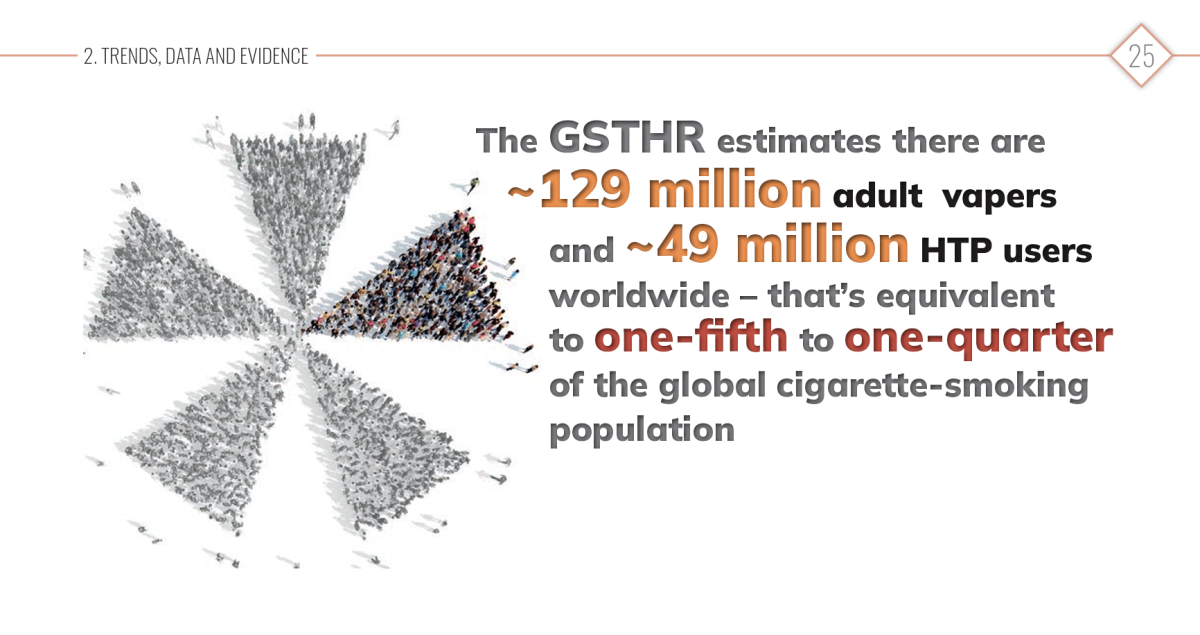
The Global State of Tobacco Harm Reduction, a project operated by Knowledge·Action·Change, estimates that about 200 million people worldwide use non-combustible nicotine products including vapes, heated tobacco, nicotine pouches and snus. Its 2026 report says use of these products rose alongside declining smoking rates in 28 countries it analyzed. The data do not establish that all 200 million users have quit smoking, nor do they prove a direct causal relationship. GSTHR also says regulatory restrictions on the products continue to expand in many markets.
Sep.10
Retail Case Study | Wisconsin Vape Market One Year After New Regulations: Johnny Vapes Reports 80% Sales Decline as Consumers Shift Online and Across State Lines
According to WNCY on August 24, 2026, some independent vape retailers in Wisconsin say they have faced significant business pressure one year after new vape regulations took effect. Johnny Vapes, a retailer operating in northeast Wisconsin, said its store count fell from seven locations to four, sales declined by about 80%, and roughly 90% of its inventory was affected. Retailers said some consumers have shifted to online purchases or traveled to neighboring Michigan to buy vape products. The case highlights how local regulations can reshape retail operations, inventory management and consumer purchasing patterns.
Aug.28
HG Innovation, linked to IMiracle and ELFBAR, wins China patent for 6-methylnicotine salts covering vaping and oral products
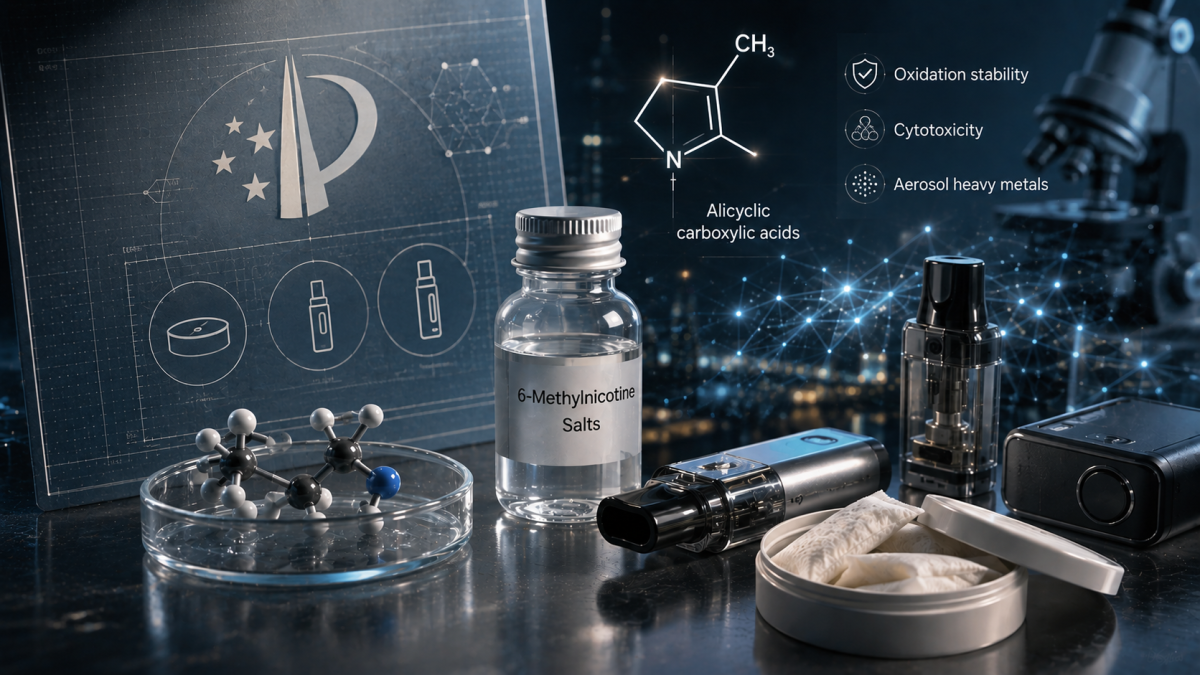
HG Innovation Limited has been granted a Chinese invention patent covering 6-methylnicotine salt formulations and their use in oral and vaping products. The technology forms salts between 6-methylnicotine and alicyclic carboxylic acids, with granted claims extending to oral products, atomization substrates and electronic atomization devices. Applicant-generated tests reported differences in oxidation stability, in-vitro cytotoxicity and aerosol heavy-metal performance compared with selected benzoate or lactate controls. HG Innovation is directly linked to the broader IMiracle and ELFBAR business network.
Sep.04
Special Report | How Capital Is Reassessing the Global Tobacco and Modern Nicotine Industry: Lessons from a New York Forum
Capital is reassessing the global tobacco and modern nicotine industry as heated tobacco, vaping and nicotine pouches reshape demand, profitability and regulation. At the 2026 New Approaches Summit in New York, investors and analysts examined whether smoke-free growth can sustain earnings, how regulation shapes startup value, and whether shareholder engagement can be more effective than divestment. The debate points to a broader shift: tobacco transition is increasingly becoming a capital-allocation, governance and valuation question.
Capital Markets
Oct.05