Police Seize £17,500 Worth of Illegal Vape Pens

May.18.2023
Police Seize £17,500 Worth of Illegal Vape Pens
Police seize 2,500 illegal vape pens worth £17,500 in Luton, UK. Products are often sold to children.

On May 18th, BBC reported that the Luton police in the UK seized about 2,500 illegal disposable e-cigarette products on May 9th, with an estimated value of £17,500.


The operation was a joint raid conducted by the Luton Borough Council Trade Standards Committee and the Bedfordshire County Police. The search took place at a location in Bury Park, Luton, and investigators also discovered the sale of shisha tobacco being poured into unlabeled plastic containers.


So far, the Luton police have seized 11,000 illegal e-cigarette items.


Hazel Simmons, the leader of the Luton City Council, stated that illegal electronic cigarettes and other items are often associated with wider organized crime activities.


According to the committee's disclosure, illegal e-cigarette products are more dangerous than regulated e-cigarette devices and tobacco. Authorities report that these items are often sold to schoolchildren and minors under the age of 18.


Ms. Simmons added, "Selling illegal e-cigarettes and evading tobacco taxes is unfair to compliant businesses.


References:


Police seize 2,500 unauthorized vape pens worth £17,500.


Disclaimer

This article is provided solely for professional research, industry discussion, and informational purposes. Any references to brands, companies, products, technologies, or policies are made for factual reporting and analytical purposes only, and do not constitute endorsement, recommendation, promotion, or advertising by 2Firsts.

Nicotine-containing products, including but not limited to cigarettes, e-cigarettes, heated tobacco products, and nicotine pouches, carry significant health risks. Readers are responsible for complying with all applicable laws and regulations in their respective jurisdictions, including age restrictions and access limitations.

The information contained in this article should not be regarded as investment, legal, medical, regulatory, or commercial advice. While 2Firsts strives to ensure the accuracy and reliability of its content, it does not assume liability for any direct or indirect loss arising from errors, omissions, inaccuracies, or reliance on the information contained herein.

This article is not intended for individuals below the legal age for accessing tobacco or nicotine-related information in their jurisdiction.


Copyright Notice

This article is either original content produced by 2Firsts or content reproduced, translated, summarized, or adapted from third-party sources with attribution where applicable. The intellectual property rights of the original content remain with 2Firsts or the respective original rights holders.

No individual or organization may copy, reproduce, distribute, republish, modify, translate, or otherwise use this content without prior authorization. Any unauthorized use may result in legal action.

For copyright-related inquiries, corrections, or removal requests, please contact: info@2firsts.com.


AI-Assisted Translation and Editing Notice

Portions of this article may have been translated, edited, or reviewed with the assistance of artificial intelligence tools to improve efficiency and readability. Due to the limitations of AI-assisted translation and editing, discrepancies, omissions, or inaccuracies may exist when compared with the original source.

Where applicable, readers are advised to refer to the original source for the most complete and accurate information. If you identify any errors or believe that any content infringes upon your rights, please contact us at info@2firsts.com, and we will review and address the matter promptly.

Special report|Indonesia's Vape Industry Has 200 Manufacturers and $1.7 Billion in Investment. Could a Regulatory Divide Derail Its Rise as the World's No. 2 Manufacturing Hub After Shenzhen?
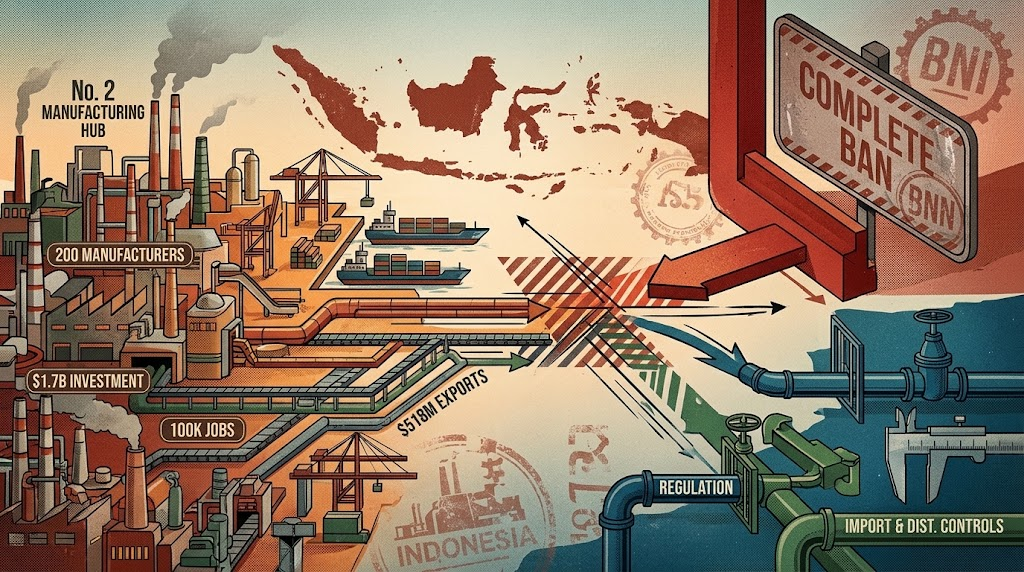
Indonesia's Ministry of Industry said at a November 3, 2026, policy forum that the country has about 200 electronic cigarette companies, Rp31 trillion (approximately $1.71 billion) in cumulative industry investment and around 100,000 jobs across the supply chain. The National Narcotics Agency is seeking a comprehensive ban on vape use and circulation, while the industry ministry favors tighter import, product-standard and distribution controls. Indonesia exported approximately $518 million in vaping products in 2025, and Chinese manufacturers including Smoore, GEEKVAPE and Jinjia Group have established local operations. An international logistics specialist interviewed by 2Firsts said more Chinese vape companies began production in Indonesia from the second half of 2025, accompanied by increased shipments of manufacturing equipment and investment in logistics facilities. The regulatory debate comes as Indonesia expands its role in international vaping manufacturing.
Special Report
Nov.05
Wisconsin Vape Directory One Year On: Retailer Reports Four Store Closures and 70% Staff Cuts
Wisconsin's electronic vaping device directory has been fully enforced for more than a year, and local vape retailers say the reduced range of eligible products has contributed to declining sales, store closures and layoffs. Johnny Vapes owner Ben Hall said he has closed four of seven locations and cut about 70% of his staff. State law bars the sale of vaping devices not listed on the Wisconsin Department of Revenue directory and allows penalties of $1,000 per day for each unlisted device sold or offered for sale. In April 2026, the U.S. Court of Appeals for the Seventh Circuit allowed enforcement of the law to continue.
Regulations
Oct.10
Russia's Vape Ban Decisions Reach 17 Regions With 39 More Considering Laws, Putting Over 3,000 St. Petersburg Retail Outlets in Focus
Russia's regional vape retail restrictions are expanding. State Duma Speaker Vyacheslav Volodin said on November 7 that 17 regions had adopted decisions to ban vape sales, while another 39 were preparing or considering similar legislation. On November 12, lawmakers in Leningrad Oblast and the Republic of Karelia adopted bans scheduled to begin on March 1, 2027. A day earlier, St. Petersburg unanimously approved a five-year ban proposal in its first reading. The city has 615 specialist vape shops and more than 2,400 other retail outlets selling vaping products alongside other goods. Under Federal Law No. 186-FZ, enacted in June 2026, Russian regions may prohibit retail sales of electronic nicotine delivery systems and related liquids between March 2027 and March 2032. The legislation also restricts licensed suppliers from delivering covered products to retail premises in regions where bans apply.
Regulations
Nov.13
New Zealand's Largest Vape Retailer Shosha Faces Advertising Probe Over Offshore Website and Local Fulfilment
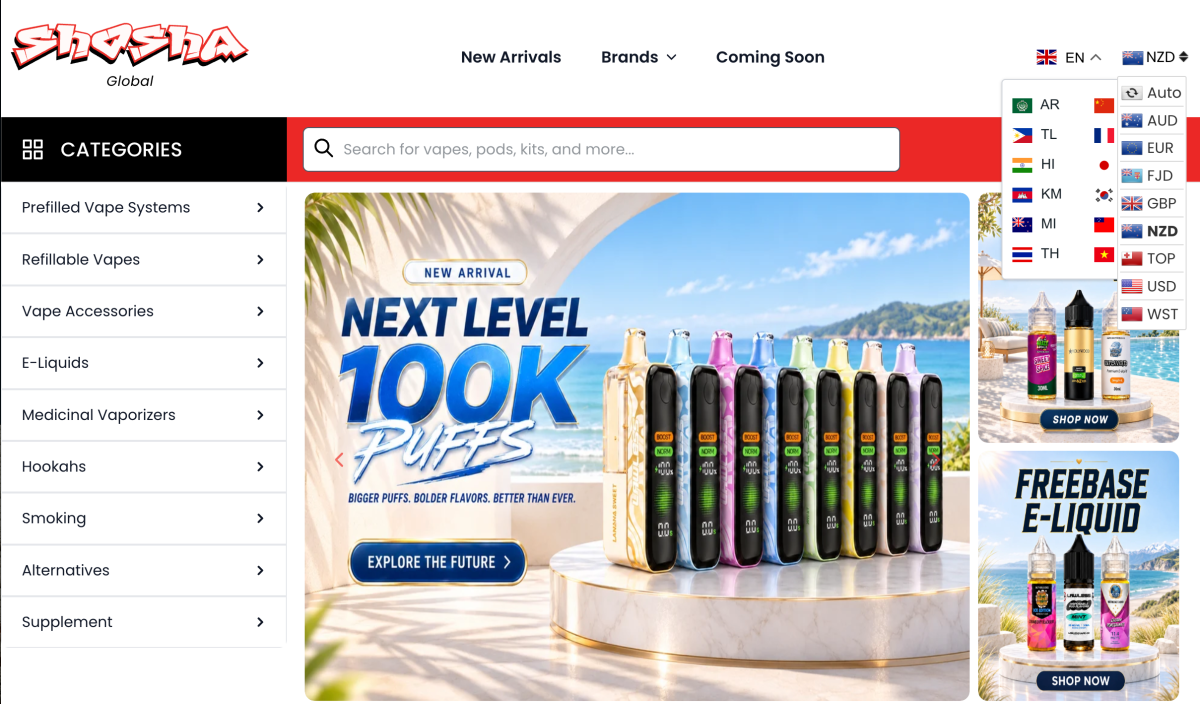
New Zealand's Ministry of Health is reviewing its previous assessment of Shosha Global, an international website associated with vape retailer Shosha, after researchers found that the site displayed vaping products while fulfilling orders to New Zealand addresses. Radio New Zealand reported on November 13 that test purchases arrived within three days and shipping documents showed dispatch from Auckland. The researchers also found a store-stock tool listing only New Zealand locations and social media posts carrying local warning labels and cultural references. Shosha, which operates more than 125 stores in New Zealand, says Shosha Global serves overseas customers through an international partnership established in July 2025. No final regulatory finding against the website has been announced.
Regulations
Nov.17
Sweden Finds ZYN Ingredient Labels Noncompliant Over Generic Flavoring Disclosure, Swedish Match Faces SEK 2 Million Monthly Penalty
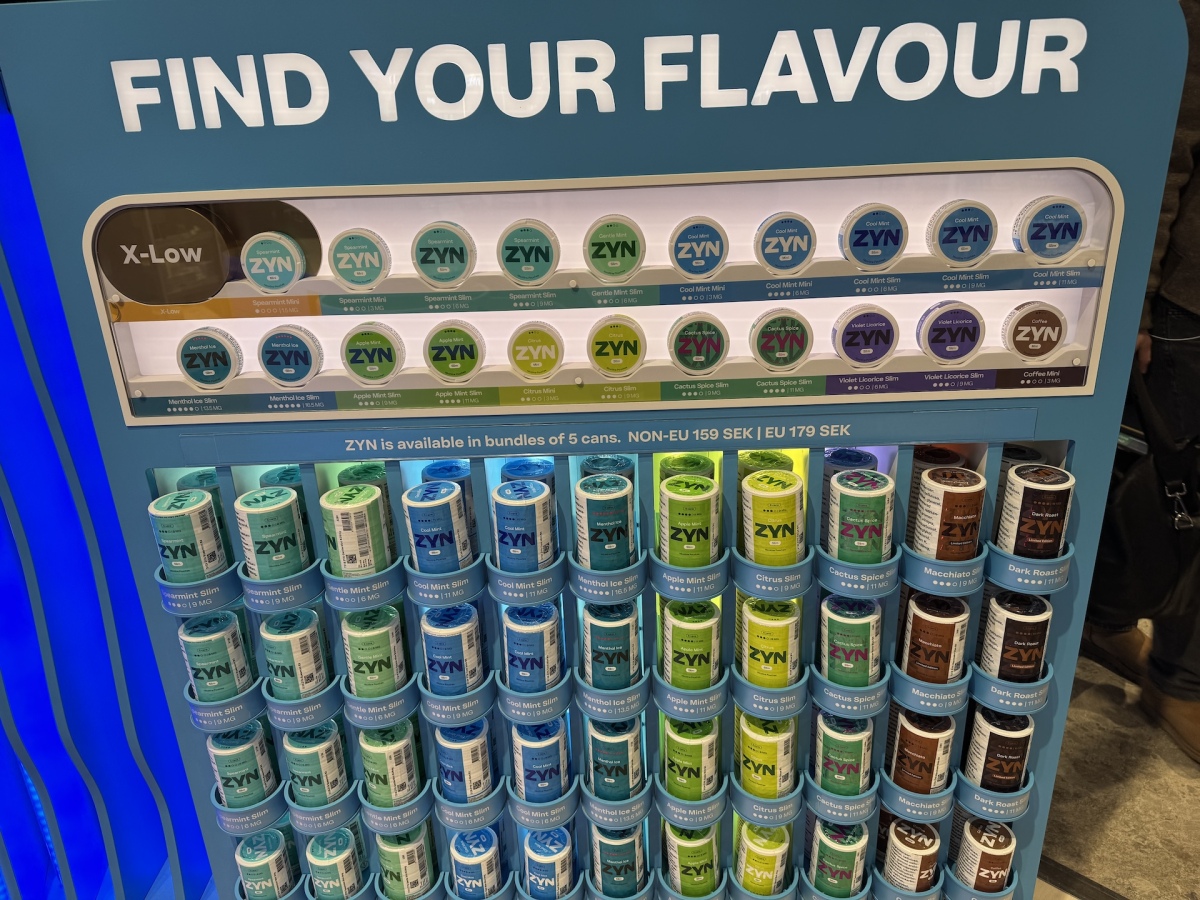
Sweden's Public Health Agency has found ingredient labels on ZYN nicotine pouches sold by Philip Morris International subsidiary Swedish Match to be noncompliant, according to Dagens industri. The products' packaging listed 10 to 13 ingredients, compared with 11 to 42 in regulatory submissions, with multiple flavoring ingredients grouped under the generic term "aromer." The agency ordered corrective action, warning of a conditional penalty of SEK 2 million per month for noncompliance. The order applies only to products manufactured after the decision becomes legally effective and does not require recalls. Swedish Match disputes the agency's interpretation and plans to appeal.
PMI
Oct.22
Product | DOJO Launches 0+6ml BLAST7K Fresh in UK in September, Retaining 2+8ml Pod Compatibility Ahead of October Per-Milliliter Vaping Duty
DOJO officially launched the BLAST7K Fresh on September 17, 2026, introducing a UK-market prefilled pod product with 6ml of e-liquid and a manufacturer-rated capacity of up to 7,000 puffs. The device features a 1000mAh rechargeable battery, the INSTA-JUICED structure and COREX BLAST dual-mesh technology, while retaining compatibility with existing BLAST pods. The launch comes less than two weeks before the UK's Vaping Products Duty takes effect on October 1. At the new duty rate, 6ml of vaping liquid would correspond to £1.32 in VPD. DOJO has not stated that the product's 6ml format was designed in response to the new duty.
Sep.20