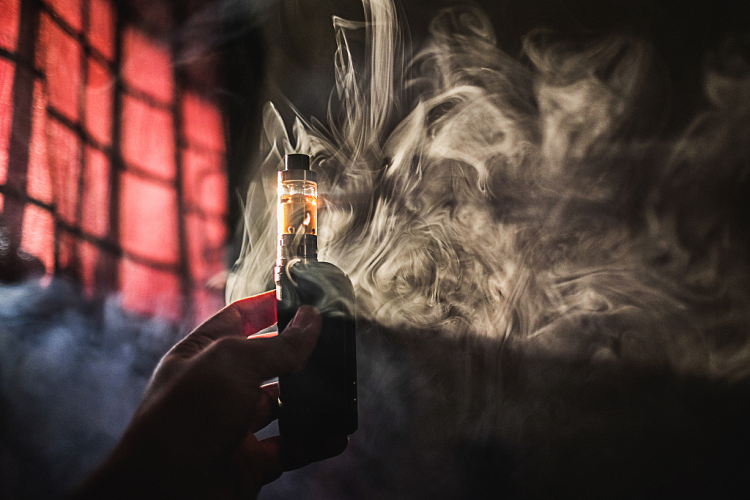
On March 28th, multiple Malaysian media outlets reported that the Poisons Board of Malaysia would hold a meeting to discuss removing nicotine from the Poisons Act. If this amendment were to pass, it would allow for the legal sale of electronic cigarettes to anyone in Malaysia.
Lift Restrictions on Nicotine
According to Malaysia's Poison Act of 1952, nicotine is classified as a Group C poison, which means that the substance can only be dispensed by a doctor or pharmacist.
According to the Medication Services website of the Ministry of Health in Malaysia, the Poisonous Substances Committee, responsible for the "List of Poisons", will provide professional advice to the Minister of Health on the issue of removing "nicotine".
Dr. Muruga Raj Rajathurai| Source: The Straits Times
This news immediately caught the attention of the medical community. Dr. Muruga Raj Rajathurai of the Malaysian Medical Association (MMA) noted that the association was aware of the removal of nicotine from the controlled substance list under the Poison Act.
They claim that the government's modification of the "poison list" is to enable them to levy taxes on electronic cigarette products containing said substance.
Dr. Muruga continues to state that if this were done before the passage of the Tobacco Control Bill, it would lead to a lack of control over the sales of electronic cigarettes.
He stated that "we are concerned that this move will lead to a significant increase in the sale of electronic cigarettes containing nicotine in public places, with no restrictions on minors.
There are signs of lifting restrictions.
Malaysian Prime Minister Anwar Ibrahim | Source: New Straits Times
Malaysian Prime Minister Anwar Ibrahim announced during his budget speech in February 2023 that the government plans to impose a consumption tax on electronic cigarettes or e-liquids containing nicotine, according to previous reports by 2FIRSTS.
The government had previously estimated the local e-cigarette industry to be worth over RM2 billion (approximately RMB3.13 billion) and planned to allocate half of the tax revenue to the Ministry of Health.
Dr. Muruga states that "according to the 2023 budget proposal, electronic cigarettes containing nicotine will be taxed, but this move appears to be a legalization of their sale in the public domain.
He added that in order to allow the sale of electronic cigarettes containing nicotine, the government must remove nicotine from the controlled substance list of the "Poison Act". Dr. Murugabo explained that so far, there are no appropriate regulations for the use of electronic cigarettes.
In fact, the highly anticipated Malaysian "2022 Tobacco Control and Smoking Bill" was not included in the parliamentary proceedings for the day.
The proposed legislation aims to ban the use of tobacco and electronic cigarette products by anyone born in 2007, known as the "Ultimate Generation Plan" (GEG).
The use of underage individuals has become a focal point.
It is worth noting that currently in Malaysia, the Control of Tobacco Product Regulations (CTPR) only applies to the sale of cigarettes, which mandates that the minimum age to purchase is 18 years old.
Dr. Muruga, stated that removing nicotine from the list would allow both nicotine and non-nicotine electronic cigarettes to be sold openly and legally to anyone, including children.
He said, "Nicotine is addictive, which is why we only allow people over the age of 18 to purchase cigarettes.
Dr. Muruga believes that this latest development indicates that the government is more concerned about potential tax revenue and has almost no consideration for the health impact on Malaysians.
Meanwhile, the Malaysian Pharmaceutical Society (MPS) has strongly opposed the removal of liquid or gel nicotine from the controlled substances list, according to a statement.
Professor Amrahi Buang | Source: BERNAMA
Professor Amrahi Buang, the president of MPS, has expressed concerns that this move could compromise the health and safety of Malaysians.
Amrashi calls on the government to refuse to remove nicotine from the "Poison Law" and to protect public health and safety.
He said: "We urge the government to strengthen regulation around e-cigarettes, including restrictions on marketing and advertising, and to enhance public education on the risks before considering the proposal.
If the amendment to the Poison Control Law is passed, it is expected that the law will be implemented as early as the first week of April.
Related report:
The Malaysian Quit Smoking Society has urged for the establishment of an independent committee to reassess the potential of electronic cigarettes in reducing smoking rates.
Malaysia's E-cigarette Retail Association is urging the government to set a reasonable tax rate as it plans to levy a tax of MYR 1.56 billion on e-cigarettes.
References:
Medical associations are voicing their opposition to a proposal that suggests removing nicotine from the list of poisons. The idea has created controversy and concern amongst healthcare professionals.
Health professionals, including doctors and pharmacists, have criticized the proposed deregulation of nicotine without implementing proper control over vaping products.
Disclaimer
This article is provided solely for professional research, industry discussion, and informational purposes. Any references to brands, companies, products, technologies, or policies are made for factual reporting and analytical purposes only, and do not constitute endorsement, recommendation, promotion, or advertising by 2Firsts.
Nicotine-containing products, including but not limited to cigarettes, e-cigarettes, heated tobacco products, and nicotine pouches, carry significant health risks. Readers are responsible for complying with all applicable laws and regulations in their respective jurisdictions, including age restrictions and access limitations.
The information contained in this article should not be regarded as investment, legal, medical, regulatory, or commercial advice. While 2Firsts strives to ensure the accuracy and reliability of its content, it does not assume liability for any direct or indirect loss arising from errors, omissions, inaccuracies, or reliance on the information contained herein.
This article is not intended for individuals below the legal age for accessing tobacco or nicotine-related information in their jurisdiction.
Copyright Notice
This article is either original content produced by 2Firsts or content reproduced, translated, summarized, or adapted from third-party sources with attribution where applicable. The intellectual property rights of the original content remain with 2Firsts or the respective original rights holders.
No individual or organization may copy, reproduce, distribute, republish, modify, translate, or otherwise use this content without prior authorization. Any unauthorized use may result in legal action.
For copyright-related inquiries, corrections, or removal requests, please contact: info@2firsts.com.
AI-Assisted Translation and Editing Notice
Portions of this article may have been translated, edited, or reviewed with the assistance of artificial intelligence tools to improve efficiency and readability. Due to the limitations of AI-assisted translation and editing, discrepancies, omissions, or inaccuracies may exist when compared with the original source.
Where applicable, readers are advised to refer to the original source for the most complete and accurate information. If you identify any errors or believe that any content infringes upon your rights, please contact us at info@2firsts.com, and we will review and address the matter promptly.