RegWatch Episode Reiterates: Flavour Bans Push Vapes into Black Market

Market by Vaping Post
Jul.20.2022
Data from across the globe has consistently indicated that bans on popular products only pushes them to the black market. On an episode of RegWatch, Daniel David, president of the Vaping Industry Trade Association of Canada (VITA) discussed this in detail in the context of the proposed national flavour ban.

Thanks to an increase in vaping, between 2019 and 2020 in Canada there was a 40% drop in smoking rates
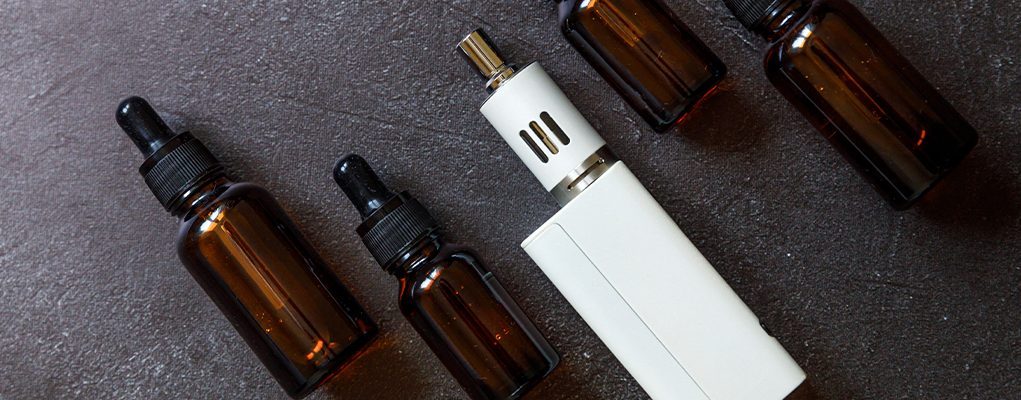
RegWatch Episode Reiterates: Flavour Bans Push Vapes into Black Market


The Canadian Tobacco and Nicotine Survey has recently revealed that thanks to an increase in vaping, between 2019 and 2020 there was a 40% drop in smoking rates among young adults, from 13.3% to 8%. This figure is encouraging for Health Canada’s smoking prevalence target of 5% for 2035. Moreover the target has already been achieved among those aged 15-19, as the smoking rate is currently no more than 5%.


Despite this, a recent press release by the Canadian Vaping Association (CVA) revealed that the Canadian Government has proposed a ban on vape flavours with the exception of tobacco, mint, and menthol.


Discussing the recently implemented flavour ban in the province of New Brunswick, the Canadian Vaping Association (CVA) said the measure had been “rushed,” and highlighted there is “little evidence” that flavour bans actually reduce youth consumption. Additionally said the group, the enactment of such bans in other regions has had dire outcomes. “The result of the ban will be a flood of black-market products, an increase in cigarette sales and smoking-related deaths. These consequences must be acknowledged.”


With regards to the ban proposed on a national level, Health Canada itself has admitted that an expanding black market may be a possible and likely consequence. Moreover, explains the episode on RegWatch, when policymakers implement restrictions to reduce the access of nicotine vaping products to youth, inevitably, these interventions have an equivalent impact on adult consumers.


San Francisco’s vape flavour bans has just led to increased smoking rates


Substantiating these arguments, data from San Francisco, the first US city to ban vape flavours has in line with expert predictions indicated that the measure has just led to teens reverting from vaping to smoking.


Besides facing significant opposition from the tobacco industry and retailers leading up to the final days of the 2019-20 Legislative Session, SF’s flavour ban had also been met with concern by public health experts who predicted that it would drive teens back to smoking regular cigarettes.


Similarly, the city’s chief economist, Ted Egan, whose office is charged with analyzing the economic impact of legislations in San Francisco, had confirmed that the ban would only lead to increased smoking rates. And sadly, data keep confirming this.


A recent study published in JAMA Pediatrics, found that following San Francisco’s flavour ban, teenagers in the city’s high schools were more likely to take up smoking than teenagers in US school districts where no flavour bans were imposed. While prior to the ban, smoking rates in San Francisco were similar to that of many cities across the country.


The content excerpted or reproduced in this article comes from a third-party, and the copyright belongs to the original media and author. If any infringement is found, please contact us to delete it. Any entity or individual wishing to forward the information, please contact the author and refrain from forwarding directly from here.

South Australia Issues Closure Orders to 100 Stores over Illicit Tobacco and Vapes
South Australia has imposed 28-day closure orders on 100 stores caught selling illicit tobacco and vapes since new ministerial powers took effect on 5 June. The State Government has seized about $50 million worth of illegal products, including over 41 million cigarettes, 140,000 vapes and 13,585 kilograms of loose tobacco. Two long-term closure orders have been issued and five more are before the Magistrates Court, supported by a $16 million illicit tobacco taskforce and tough new penalties.
Nov.14 by 2FIRSTS.ai
Mexican Senate Approves Nationwide Ban on E-Cigarettes and Vapes
Mexico’s Senate passed a reform to the General Health Law banning the production, importation, sale, and advertising of e-cigarettes and vape products nationwide. The bill passed with 76 votes in favor, 37 against, and one abstention.
Dec.12 by 2FIRSTS.ai
Luxembourg Passes Bill 8333: Heated Tobacco and Nicotine Pouches Regulated
Luxembourg’s Chamber of Deputies adopted Bill No. 8333, transposing EU Directive 2022/2100 and extending tobacco controls to heated tobacco, e-cigarettes and nicotine pouches. The law bans flavourings, restricts sales to minors, and caps nicotine content at 0.048 mg per pouch. CBD and caffeine additives are prohibited.
Nov.03 by 2FIRSTS.ai
Australia forms National Disruption Group to combat illicit tobacco and converging crime threats
Australia establishes new national task force to combat illegal tobacco market, led by Interior Minister Tony Burke.
Oct.20 by 2FIRSTS.ai
Russian State Duma Committee supports bill for tobacco and nicotine products market legalization
A bill endorsing a licensing system for tobacco and nicotine products has been recommended in Russia's State Duma.
Nov.14 by 2FIRSTS.ai
Singapore Schools Enhance Anti-E-cigarette Education with Scenario Discussions and Scientific Evidence
Singapore schools are ramping up anti-vaping education through Character and Citizenship Education (CCE) and science lessons. Classes now use scenario-based discussions—for example, a friend asking you to hide their vape during a random bag check—to help students practise refusal, empathy and seeking help safely.
Oct.22 by 2FIRSTS.ai