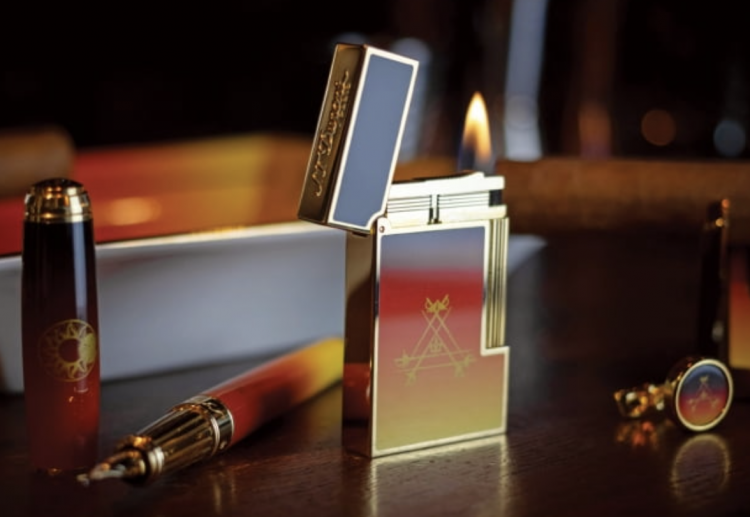
In the cigarette and lighter industry, 2014-2015 was known as the "year of the electronic cigarette" due to the rapid growth of the electronic cigarette market. During this time, there were concerns that the sales of gas lighters would plummet. However, luxury brand S.T. Dupont saw a steady increase in their domestic lighter sales. After the outbreak of the COVID-19 pandemic, sales have continued to grow by 50% for three consecutive years.
DuPont has learned how to keep up with changes in the tobacco market over the past decade. They have established a luxury image by introducing a lighter that sells for a top price of 100 million Korean won, and diversified their sales portfolio with a range of leather products such as men's wallets, belts, and briefcases. As new consumers continue to enter the market, the proportion of those in their twenties has reached around 60%.
During an interview with Korean Economic Daily at the Grand Hyatt Hotel in Hannam-dong, Seoul on the 15th, CEO of DuPont, Creve, stated that upon arriving in Korea, he first visited department stores and the Cheongdam-dong area. "I was surprised to see how vibrant and innovative it is every time," he said with a smile. This visit marks Creve's first trip to Korea in three years due to the spread of COVID-19.
Dupont has a history dating back over 150 years. The company was founded by Simon Tissot Dupont in 1872, initially producing trunks and leather goods. In 1941, it invented the first petrol lighter with the characteristic "ping" sound, thereby entering the world of luxury brands.
After 2014, DuPont experienced some challenges. As smoking rates declined worldwide, lighter sales also decreased. Tobacco companies such as Philip Morris (IQOS) and KT&G (Lil) have also been developing the electronic cigarette market.
However, CEO Creve boldly stepped forward and said, "Taking a head-on approach to respond to market changes is a foolish choice.
Fortunately, the number of male smokers has decreased, but sales have not easily declined. This is because the cigar market is growing rapidly, instead of the general cigarette market shrinking. Cigars are a high-end hobby market, with the price of each cigar ranging from 60,000 to 70,000 Korean won (approximately RMB 324 to 378). DuPont has responded to the shrinking general lighter market by creating high-end cigar lighters.
The product line includes leather goods such as men's belts and briefcases, resulting in a diverse range of offerings. CEO Creve explains, "Like luxury brands Louis Vuitton and Montblanc, we have increased sales of leather products." While Dupont is primarily known for their lighters, they are also seeking to establish themselves as a luxury accessory brand selling expensive writing instruments and leather goods.
Last year, Dupont saw hope in the Korean market. Despite the stereotype that Dupont lighters are only used by men in their 40s and 50s, analysis of domestic sales found that 60% of Dupont lighters were favored by young people in their 20s. CEO Creve stated that people in their 20s and 30s have a tendency to value storytelling in their consumption habits, and are therefore likely interested in Dupont's rich history.
The percentage of women purchasing lighters has also increased. CEO Creve stated, "Recently, there has been an expansion in the market for burning scented candles at home, and consumers are using expensive lighters such as Dupont when lighting scented candles." Several years ago, Dupont even released an ultra-thin lighter measuring 7mm, designed for women to use.
Dupont plans to strengthen its leather goods department, including its stable leadership in the high-end lighter business. "Dupont sells about 50,000 lighters annually," CEO Creve said, adding, "We will focus on creating high-value luxury products, rather than chasing volume.
Disclaimer
This article is provided solely for professional research, industry discussion, and informational purposes. Any references to brands, companies, products, technologies, or policies are made for factual reporting and analytical purposes only, and do not constitute endorsement, recommendation, promotion, or advertising by 2Firsts.
Nicotine-containing products, including but not limited to cigarettes, e-cigarettes, heated tobacco products, and nicotine pouches, carry significant health risks. Readers are responsible for complying with all applicable laws and regulations in their respective jurisdictions, including age restrictions and access limitations.
The information contained in this article should not be regarded as investment, legal, medical, regulatory, or commercial advice. While 2Firsts strives to ensure the accuracy and reliability of its content, it does not assume liability for any direct or indirect loss arising from errors, omissions, inaccuracies, or reliance on the information contained herein.
This article is not intended for individuals below the legal age for accessing tobacco or nicotine-related information in their jurisdiction.
Copyright Notice
This article is either original content produced by 2Firsts or content reproduced, translated, summarized, or adapted from third-party sources with attribution where applicable. The intellectual property rights of the original content remain with 2Firsts or the respective original rights holders.
No individual or organization may copy, reproduce, distribute, republish, modify, translate, or otherwise use this content without prior authorization. Any unauthorized use may result in legal action.
For copyright-related inquiries, corrections, or removal requests, please contact: info@2firsts.com.
AI-Assisted Translation and Editing Notice
Portions of this article may have been translated, edited, or reviewed with the assistance of artificial intelligence tools to improve efficiency and readability. Due to the limitations of AI-assisted translation and editing, discrepancies, omissions, or inaccuracies may exist when compared with the original source.
Where applicable, readers are advised to refer to the original source for the most complete and accurate information. If you identify any errors or believe that any content infringes upon your rights, please contact us at info@2firsts.com, and we will review and address the matter promptly.