Key points:
·Increase in fires: In June 2025, the UK waste management company Biffa recorded 60 fires related to batteries and electronic devices, a 70% increase compared to the same period in 2024.
·Limited impact of e-cigarette ban: Despite the disposable e-cigarette ban coming into effect on June 1, improper disposal of e-cigarettes increased by 7% in June and July.
·Fire risk: Lithium-ion batteries are the main cause of waste fires, accounting for nearly half of all waste fires in the UK.
·Economic losses: Battery-related fires cost the UK waste industry £1 billion (approximately $1.25 billion) annually.
·Expert calls: Biffa's Chief Operations Officer Maxine Mayhew urges the UK government to provide curbside recycling services to reduce fire risks.
Lack of regulation: Over 90% of e-cigarette manufacturers and retailers fail to fulfill their legal obligation to provide and pay for recycling services.
According to a report by resource.co on August 20, UK waste management company Biffa is calling on the UK government to provide roadside collection services for disposable e-cigarettes. The report also states that fires related to batteries and electronic devices have increased by 70% in the past year.
In June, Biffa reported 60 battery-related fires at its recycling facilities in the UK, with an average of 4-5 fires occurring daily in waste collection vehicles nationwide.
Research has shown that lithium-ion batteries are responsible for nearly half of all garbage fires in the UK each year. A report from the National Fire Chiefs Council revealed that in 2024, there were over 1200 fires in garbage trucks and landfills, a 71% increase from the 700 incidents recorded in 2022.
The UK is facing an increasingly serious epidemic of battery-related fires, which not only threaten lives, communities, critical infrastructure, and the environment in refuse trucks and waste management facilities, but also result in annual losses of £1 billion (approximately $1.25 billion), said Maxine Mayhew, Chief Operating Officer of Biffa.
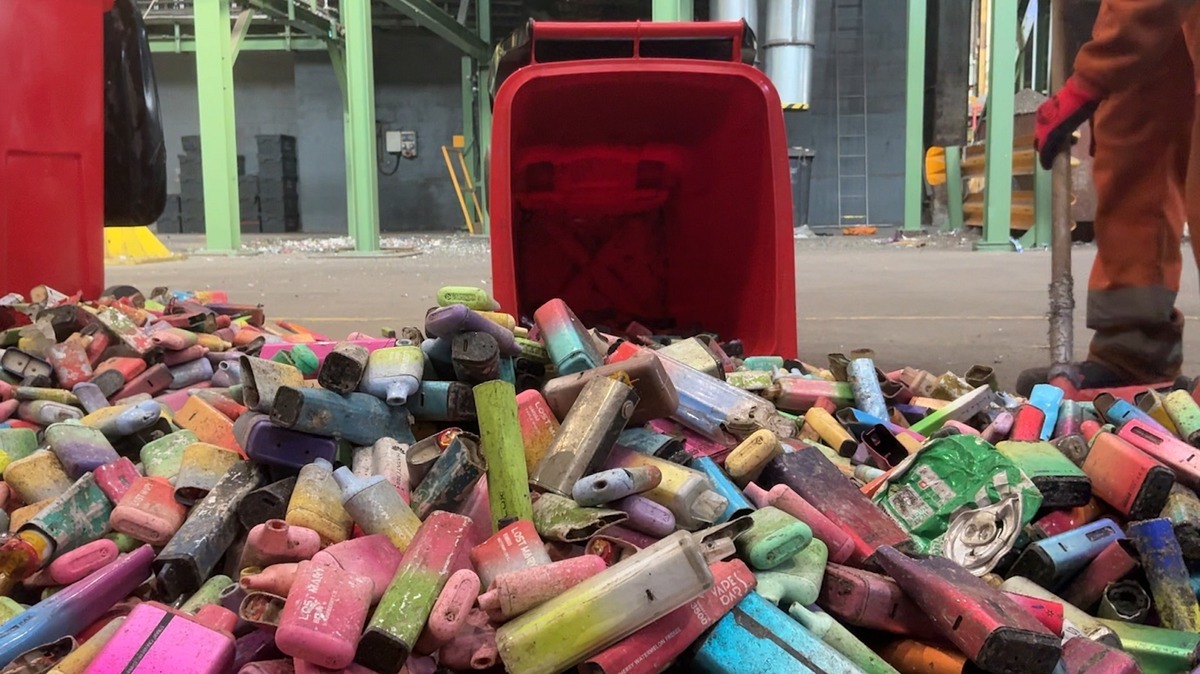
Despite the disposable e-cigarette ban taking effect on June 1, 2025, a report by Biffa has shown a 7% increase in improper e-cigarette disposal at its facilities in the UK during the months of June and July. At its MRF plant in Tishead, improper disposal increased by 24%, with 232,500 recently banned devices being placed in recycling bins instead of designated disposal points.
During the years 2024-2025, nearly 85 tons of batteries and electronics were improperly disposed of at a factory in Wakefield, causing 46 fires at the Cobb Recycling Facility and 5 garbage truck fires.
Mayhew added: "The UK is facing an increasingly serious issue of battery-related fires, which not only threaten lives, communities, essential infrastructure, and the environment in refuse trucks and waste management facilities, but also result in £1 billion in losses each year.
The fire risk of lithium-ion batteries.
According to data from Material Focus, approximately 5 million disposable e-cigarettes are being discarded in the UK every week, a significant increase from the 1.3 million the previous year. Out of the 13.5 million e-cigarettes purchased weekly in 2024, 8.2 million are being disposed of improperly or not recycled at all. The annual cost of collecting and recycling discarded e-cigarettes is estimated at £200 million (approximately $300 million), with Material Focus claiming that this cost is not adequately covered by manufacturers and retailers.
During the process of garbage collection and disposal, lithium-ion batteries found in e-cigarettes and other items may overheat and catch fire when exposed to heat, damage, or compression.
Mayhew emphasized the ongoing issue, stating: "Whether disposed in recycling bins, black garbage bags at home, or outside trash cans – whether separately discarded or hidden inside electronic devices – when batteries are not disposed of at designated recycling points, supermarkets, or any other specified locations, they can cause serious harm.
The Environmental Services Association had previously warned that a garbage fire could burn for several days or even weeks, causing extensive damage to the environment through harmful greenhouse gas emissions, pollution from firefighting water, and disruption of transportation routes.
Despite changes in regulations, the issue of e-cigarette disposal still exists.
According to Biffa's data, disposal behavior has not changed since the ban took effect in June, with the improper disposal of e-cigarettes still on the rise.
Mayhew added, "In recent years, the popularity of e-cigarettes has been on the rise, but the disposal behavior has not kept up with this trend. Many e-cigarettes are casually thrown away in nearby trash cans or even tossed on the ground. This is often because people lack understanding of the dangers posed by the lithium-ion batteries hidden in these items, which can still cause fires even when they appear to have run out of power.
A warning has been issued that manufacturers are developing new "large-caliber" e-cigarette alternatives. A charitable organization report states that currently there are 3 million "large-caliber" e-cigarettes being purchased weekly, with some devices being used up to 6000 times, as opposed to traditional disposable models which are only used 600 times. These devices account for 63% of all e-cigarette usage, and are most popular among the 16-24 age group, with almost half of individuals in this age range using them.
Recently, updates to the WEEE regulations have changed the classification of e-cigarettes from "toys" to their own specific category. E-cigarette sellers are now required to operate in-store recycling programs. Research by Material Focus shows that over 90% of e-cigarette manufacturers and retailers are not fulfilling their legal obligations to provide and pay for recycling services.
In a survey of 764 retailers in 13 UK cities, only 86 stores provided recycling facilities.
Mayhew explained, "E-cigarettes and lithium-ion batteries should be disposed of at home waste recycling centers, or in e-cigarette recycling bins commonly found at local supermarkets, or returned to the purchasing store for disposal. In some areas, local authorities also provide battery recycling services, but this is not available nationwide.
We welcome news tips, article submissions, interview requests, or comments on this piece.
Please contact us at info@2firsts.com, or reach out to Alan Zhao, CEO of 2Firsts, on LinkedIn
Notice
1. This article is intended solely for professional research purposes related to industry, technology, and policy. Any references to brands or products are made purely for objective description and do not constitute any form of endorsement, recommendation, or promotion by 2Firsts.
2. The use of nicotine-containing products — including, but not limited to, cigarettes, e-cigarettes, nicotine pouchand heated tobacco products — carries significant health risks. Users are responsible for complying with all applicable laws and regulations in their respective jurisdictions.
3. This article is not intended to serve as the basis for any investment decisions or financial advice. 2Firsts assumes no direct or indirect liability for any inaccuracies or errors in the content.
4. Access to this article is strictly prohibited for individuals below the legal age in their jurisdiction.
Copyright
This article is either an original work created by 2Firsts or a reproduction from third-party sources with proper attribution. All copyrights and usage rights belong to 2Firsts or the original content provider. Unauthorized reproduction, distribution, or any other form of unauthorized use by any individual or organization is strictly prohibited. Violators will be held legally accountable.
For copyright-related inquiries, please contact: info@2firsts.com
AI Assistance Disclaimer
This article may have been enhanced using AI tools to improve translation and editorial efficiency. However, due to technical limitations, inaccuracies may occur. Readers are encouraged to refer to the cited sources for the most accurate information.
We welcome any corrections or feedback. Please contact us at: info@2firsts.com