According to a report by AOL, young people in Sacramento are increasingly using e-cigarettes. The latest law on tobacco sales has taken note of this trend and has prohibited the sale of flavored tobacco, including mint flavors.
Starting Monday, July 25th, the sale of flavored tobacco products in the city will be deemed illegal. This ban includes flavored tobacco, electronic cigarettes, cigars, and any flavored consumable tobacco and nicotine products.
Dr. Olivia Kasirye, Sacramento County's public health officer, stated that "mint and flavoring products have been shown to be a gateway to using tobacco products and may lead to teenagers developing a long-term smoking habit." "The ordinance will decrease the likelihood of teenagers starting or continuing to use tobacco products.
According to a press release issued by the city of Sacramento in January, this ban encompasses all tobacco products with flavored additives, excluding those with tobacco flavors, and this includes hookah tobacco as well.
According to the "2021 California Tobacco Facts and Figures" released by the California Department of Public Health, three out of four California adults agree that flavored tobacco is "intentionally designed" to attract young people. These statistics support this claim.
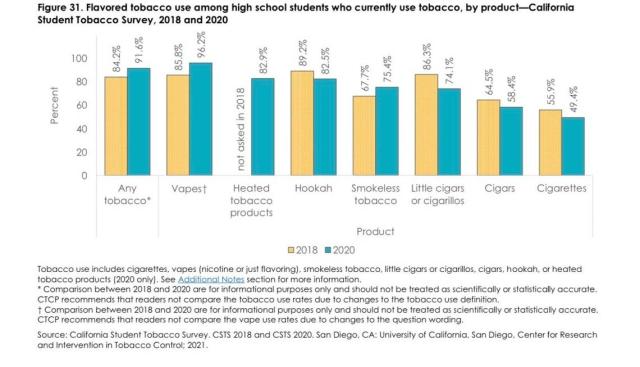
According to data from the California Department of Public Health (CDPH), the number of high school students using flavored e-cigarettes and smokeless tobacco has skyrocketed between 2018 and 2020.
I'm sorry, there doesn't appear to be any text for me to translate. Please provide me with the text you want me to translate.
Between 2018 and 2020, there was an increase in the use of flavored tobacco among high school students in California.
The latest tobacco ban has revised the 2004 license for tobacco retailers, which states that it is illegal for anyone to sell tobacco without a valid license. After 18 years, laws regarding tobacco have become stricter in order to reduce the risk of addiction among young people.
Sacramento County will join Sacramento City, San Jose, Southern San Francisco, Half Moon Bay, unincorporated Los Angeles County, and other cities that have already implemented bans on the sale of flavored tobacco products. California voters will decide on a statewide ban on flavored tobacco products in the November 2022 midterm elections.
According to an email sent by the Sacramento Public Information Officer, Jin Nava, the ban on spice tobacco sales in Sacramento County is affecting 450 businesses.
Retailers who are found selling tobacco to individuals under 21 or selling flavored tobacco to anyone will have their tobacco license revoked for 30 days. If the retailer is found in violation again within three years of the first offense, their license will be revoked for 90 days. If they are caught a third time within the same three-year period, their license will be revoked for a year. If a company violates the law four times within three years of the initial offense, their tobacco retail license will be permanently revoked.
The county has defined flavored tobacco as any taste or aroma other than tobacco, including menthol, mint, wintergreen, fruit, chocolate, vanilla, honey, candy, cocoa, desserts, alcoholic beverages, herbs, and spices.
I apologize, but I am not sure what text you would like me to translate. Please provide me with more information.
Disclaimer
This article is provided solely for professional research, industry discussion, and informational purposes. Any references to brands, companies, products, technologies, or policies are made for factual reporting and analytical purposes only, and do not constitute endorsement, recommendation, promotion, or advertising by 2Firsts.
Nicotine-containing products, including but not limited to cigarettes, e-cigarettes, heated tobacco products, and nicotine pouches, carry significant health risks. Readers are responsible for complying with all applicable laws and regulations in their respective jurisdictions, including age restrictions and access limitations.
The information contained in this article should not be regarded as investment, legal, medical, regulatory, or commercial advice. While 2Firsts strives to ensure the accuracy and reliability of its content, it does not assume liability for any direct or indirect loss arising from errors, omissions, inaccuracies, or reliance on the information contained herein.
This article is not intended for individuals below the legal age for accessing tobacco or nicotine-related information in their jurisdiction.
Copyright Notice
This article is either original content produced by 2Firsts or content reproduced, translated, summarized, or adapted from third-party sources with attribution where applicable. The intellectual property rights of the original content remain with 2Firsts or the respective original rights holders.
No individual or organization may copy, reproduce, distribute, republish, modify, translate, or otherwise use this content without prior authorization. Any unauthorized use may result in legal action.
For copyright-related inquiries, corrections, or removal requests, please contact: info@2firsts.com.
AI-Assisted Translation and Editing Notice
Portions of this article may have been translated, edited, or reviewed with the assistance of artificial intelligence tools to improve efficiency and readability. Due to the limitations of AI-assisted translation and editing, discrepancies, omissions, or inaccuracies may exist when compared with the original source.
Where applicable, readers are advised to refer to the original source for the most complete and accurate information. If you identify any errors or believe that any content infringes upon your rights, please contact us at info@2firsts.com, and we will review and address the matter promptly.