South Korean Court Strikes Down Health Levy on Vape Nicotine Liquids, Citing Disproportionate Penalties

Jan.26
South Korean Court Strikes Down Health Levy on Vape Nicotine Liquids, Citing Disproportionate Penalties
A Seoul court has annulled South Korea’s health-levy assessments imposed on multiple importers of nicotine liquids used for vaping. While the court agreed the nicotine could be treated as “tobacco” because it was found to be leaf-derived, it ruled the levy—stacked with other taxes and calculated on a blunt, volume-only basis—was so severe it effectively deprived businesses of the ability to operate, breaching constitutional proportionality and equality standards.

Key points


  • The Seoul Administrative Court has overturned penalties imposed by the Ministry of Health and Welfare on six e-cigarette liquid importers. 
  • The court ruled that the nicotine in question comes from tobacco "leaves," making it legally classified as "tobacco." 
  • The plaintiffs were ordered to pay a fine ranging from approximately 2.786 billion to 10.371 billion South Korean won (around $19,000 to $71,000). 
  • The court also noted that the current method of pricing based on "volume" rather than "nicotine concentration" has led to a discrepancy in costs between high and low concentration products, resulting in an unreasonable outcome.


2Firsts, January 26, 2026


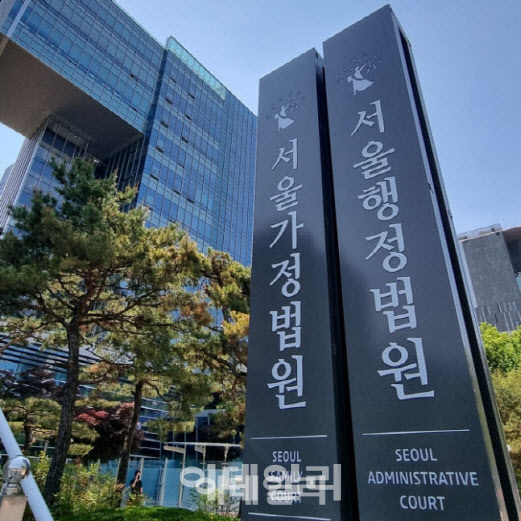
According to South Korean outlet Edaily, the Seoul Administrative Court has overturned the Ministry of Health and Welfare’s health promotion levy decisions imposed on six e-cigarette importers and operators. While the court accepted that the nicotine e-liquid at issue was treated as “tobacco” for the purposes of this case, it found the levy—considering its scale, how it was imposed, and the calculation method—was disproportionate and inconsistent with constitutional principles of proportionality and equality.


The case concerns nicotine e-liquids imported between 2018 and 2020. The ministry concluded the nicotine was derived from tobacco leaves and therefore fell under the tobacco category, and imposed levies ranging from KRW 278.6 million to KRW 1.0371 billion(approximately USD 192,234 to USD 715,599)


The court indicated that even if the importers failed to properly assess the product’s regulatory status during importation, the levies reached a confiscatory level in some instances—potentially making continued business operations unrealistic—and could amount to a substantial restriction on freedom of occupation and property rights. The ruling also questioned whether such punitive amounts meaningfully advance the levy’s policy objectives.


In addition, the court criticized a calculation structure that applies a uniform levy per milliliter regardless of nicotine concentration, potentially producing distortive outcomes—lower relative burdens for higher-concentration products and higher relative burdens for lower-concentration products. The decision also highlighted the need for greater regulatory consistency given prior administrative interpretations and customs practices.


Image source: Edaily.


We welcome news tips, article submissions, interview requests, or comments on this piece.

Please contact us at info@2firsts.com, or reach out to Alan Zhao, CEO of 2Firsts, on LinkedIn


Notice

1.  This article is intended solely for professional research purposes related to industry, technology, and policy. Any references to brands or products are made purely for objective description and do not constitute any form of endorsement, recommendation, or promotion by 2Firsts.

2.  The use of nicotine-containing products — including, but not limited to, cigarettes, e-cigarettes, nicotine pouchand heated tobacco products — carries significant health risks. Users are responsible for complying with all applicable laws and regulations in their respective jurisdictions.

3.  This article is not intended to serve as the basis for any investment decisions or financial advice. 2Firsts assumes no direct or indirect liability for any inaccuracies or errors in the content.

4.  Access to this article is strictly prohibited for individuals below the legal age in their jurisdiction.


Copyright


This article is either an original work created by 2Firsts or a reproduction from third-party sources with proper attribution. All copyrights and usage rights belong to 2Firsts or the original content provider. Unauthorized reproduction, distribution, or any other form of unauthorized use by any individual or organization is strictly prohibited. Violators will be held legally accountable.

For copyright-related inquiries, please contact: info@2firsts.com


AI Assistance Disclaimer


This article may have been enhanced using AI tools to improve translation and editorial efficiency. However, due to technical limitations, inaccuracies may occur. Readers are encouraged to refer to the cited sources for the most accurate information.

We welcome any corrections or feedback. Please contact us at: info@2firsts.com

Lawmakers Push to Include E-Cigarettes in Vietnam’s Revised Investment Law Ban
Vietnam’s National Assembly has debated amendments to the Investment Law that would include e-cigarettes, heated tobacco, and nitrous oxide (N₂O) in the list of prohibited business activities. Lawmakers supported a total ban consistent with WHO recommendations and previous National Assembly resolutions, citing rising youth addiction rates. Finance Minister Nguyễn Văn Thắng confirmed that the ban would apply comprehensively, with a short transition period for foreign factories.
Nov.27 by 2FIRSTS.ai
Russia's Perm Legislators Approve Full Ban on Vape Products in Regional Retail Market
2Firsts, November 28, 2025 — The Legislative Assembly of Perm Krai has passed a law banning the retail sale of vape products and other nicotine-aerosol devices, effective March 1, 2026. Individuals found selling such items will face fines between ₽15,000–₽20,000 (about US $180–240), while companies face ₽50,000–₽100,000 (about US $600–1,200). The ban covers all electronic nicotine delivery systems (ENDS), heated-tobacco devices, and their components, regardless of nicotine content.
Nov.28 by 2FIRSTS.ai
Breaking News | China Deploys Full-Chain Crackdown on Illicit Tobacco, Enforcement Storm Looms for Illegal Tobacco and E-Cigarettes
China has issued a high-level directive to crack down on illicit tobacco activities, bringing e-cigarettes and nicotine pouches under tighter enforcement. The move follows a Premier-led meeting and underscores stepped-up oversight across the tobacco supply chain, amid the sector’s continued fiscal importance.
Dec.18
Buenos Aires Province issues health alert over growing use and promotion of nicotine pouches
The Ministry of Health of the Province of Buenos Aires issued a health alert to the public and health teams over increased circulation, promotion and consumption of nicotine pouches. It said the disposable oral products dissolve in the mouth without combustion or vapor and are marketed as tobacco-free, but contain nicotine and have a high addictive potential.
Jan.13 by 2FIRSTS.ai
Vietnam Decree 371: vaping and heated tobacco use fined up to $190
Vietnam’s Government Decree 371, effective December 31, 2025, stipulates that users of e-cigarettes and heated tobacco products will be fined VND 3–5 million (about $114–$190) and required to destroy the products. The decree also provides that individuals who allow use at premises they own or manage will be fined VND 5–10 million (about $190–$380), with fines doubled for organizations.
Jan.04 by 2FIRSTS.ai
PMI’s Smoke-Free Playbook: What Jacek Olczak Really Told Wall Street
At the Morgan Stanley Global Consumer & Retail Conference on December 2, 2025, PMI CEO Jacek Olczak delivered a clear message: the company’s smoke-free shift is now its central strategy. From ZYN’s surge in the U.S. to IQOS’s global momentum and a changing regulatory tone, his remarks sounded less like an earnings update and more like a declaration of PMI’s smoke-free future.
PMI
Dec.03