Key Points
- South Korea’s National Assembly has passed a package of 79 bills, including new regulatory classifications for products such as liquid vapes.
- Liquid vapes will now be treated as tobacco products, subject to the same laws and regulations that apply to traditional cigarettes.
- Once reclassified, e-cigarettes may face tobacco taxes, sales restrictions, advertising bans and limits on use in public places — a regulatory intensity comparable to that applied to combustible tobacco.
- The decision reflects growing concern among the government and lawmakers over the potential health risks of e-cigarettes, as well as a broader tightening of public-health policy.
- For e-cigarette and smoke-free product companies, the move is expected to reshape market positioning, compliance costs and commercial strategies in South Korea.
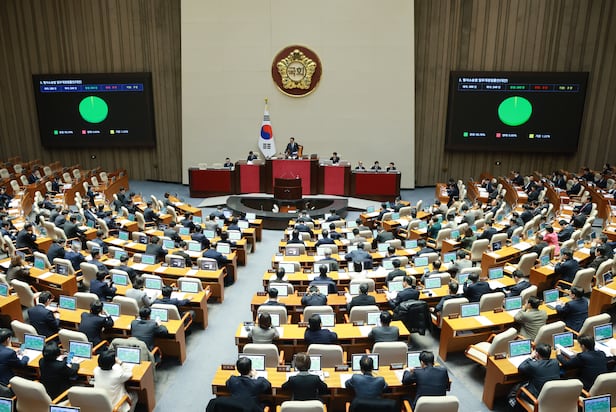
2Firsts, December 3, 2025 — According to ChosunBiz, South Korea’s National Assembly has recently passed a legislative package containing 79 bills, one of which classifies liquid vapes — a term commonly used in South Korea to refer to e-cigarettes that utilize nicotine-containing e-liquids — as tobacco products.
Under the new legislative package, liquid vapes are formally incorporated into the tobacco product category, bringing them under a regulatory regime equivalent to that governing traditional tobacco. Previously, e-cigarettes in South Korea, as in many markets worldwide, existed in a regulatory grey area, with unclear legal definitions and inconsistent taxation. The new classification closes this gap and subjects liquid vapes to a wide range of controls, including sales licensing, taxation, advertising and promotional restrictions, mandatory warning labels and potential bans on use in public places.
Lawmakers said the measure is intended to prevent youth access to e-cigarettes, curb misuse and address the health risks associated with emerging tobacco and nicotine products.
According to the report, the change means companies supplying e-cigarettes and related products in South Korea will need to reassess their compliance practices, pricing strategies, marketing approaches and distribution models. Operating costs, tax burdens and market-entry requirements are all expected to rise significantly.
For the public-health system, the reclassification is seen as an important step toward strengthening oversight of novel nicotine products and improving the consistency of tobacco regulation, reducing loopholes and opportunities for regulatory evasion.
Given South Korea’s current regulatory trajectory, more detailed rules — including packaging standards, nicotine concentration limits and distribution controls — are likely to follow.
According to earlier reporting by 2Firsts, the National Assembly’s Legislation and Judiciary Committee approved an amendment to the Tobacco Business Act on November 26, 2025, which adds synthetic-nicotine e-cigarettes to the legal definition of “tobacco” to close existing regulatory gaps. (Read more)
Cover image: ChosunBiz