Key Points
- Patent filings show China Tobacco Hubei Industrial testing gas-releasing nicotine pouch technologies.
- One design uses CO₂ microcapsules that release gas when the pouch is used.
- Another relies on acid–carbonate reactions to generate gas in the oral cavity.
- The innovations point to possible sensory engineering in modern oral nicotine products.
2Firsts Mar 04, 2026, Shenzhen
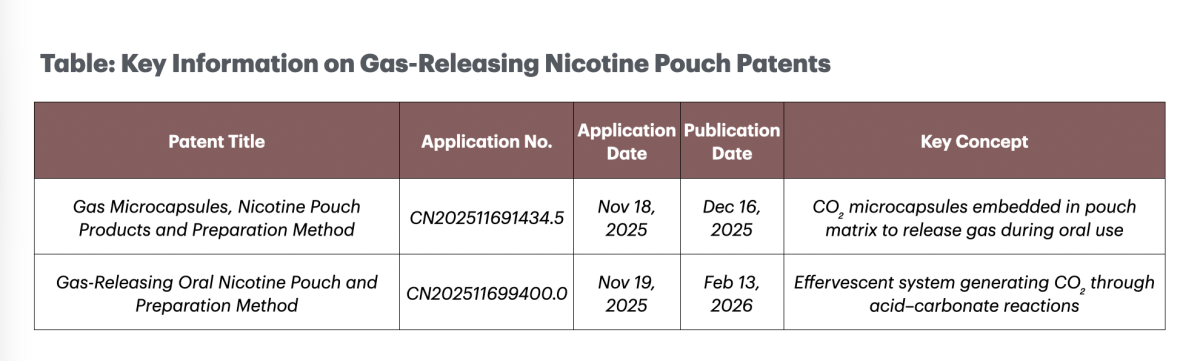
According to publicly available information on the patent database of China’s National Intellectual Property Administration (CNIPA), China Tobacco Hubei Industrial Co., Ltd. has filed patent applications describing nicotine pouch designs capable of releasing gas during use.
Patent Filings Reveal Gas-Releasing Nicotine Pouch Concepts
China Tobacco Hubei Industrial is a provincial industrial subsidiary of China National Tobacco Corporation (CNTC), responsible for cigarette manufacturing and tobacco product development in Hubei Province.
Nicotine pouches — smoke-free oral nicotine products placed between the gum and lip — have experienced rapid growth in global markets in recent years. Product differentiation in the segment has largely focused on flavors, nicotine strengths and cooling agents such as menthol
The newly disclosed patent filings suggest researchers are exploring additional sensory mechanisms that could introduce dynamic physical sensations during product use.
CO₂ Microcapsules Designed to Create Popping Sensation
One patent describes embedding microcapsules containing carbon dioxide within the nicotine pouch material. The capsules are formed through alginate-based gel structures capable of encapsulating gas during production.
When exposed to saliva during use, the microcapsules may rupture and release carbon dioxide bubbles inside the oral cavity, creating a mild popping or fizzing sensation.
According to the patent description, such gas-release effects could enhance oral sensory stimulation and potentially influence nicotine release dynamics.
Effervescent Chemical Reaction Generates Gas
A second patent proposes generating gas directly inside the pouch through chemical reactions.
The design combines acidic compounds with carbonate ingredients that react when the pouch becomes wet with saliva. The acid–carbonate reaction produces carbon dioxide gas, creating a mild effervescent sensation.
Similar effervescent technologies are widely used in pharmaceutical tablets and beverage products.
Sensory Innovation Emerging in Modern Oral Products
Taken together, the two patent filings indicate ongoing experimentation with sensory design in nicotine pouch products.
While most modern oral nicotine products rely primarily on flavor and cooling effects to shape user experience, gas-release mechanisms could introduce new dynamic sensations such as bubbling or popping during use.
Industry observers note that innovations in sensory design may become an additional frontier of competition as the global modern oral nicotine market continues to expand.
Regulatory Context in China
China’s regulatory environment for nicotine pouches and other smoke-free tobacco products has also been evolving.
In January 2026, China’s State Tobacco Monopoly Administration (STMA) issued Announcement No.1 of 2026 to further strengthen the regulation of smoke-free tobacco products. The policy clarifies that products containing nicotine but used without combustion — including nicotine pouches and other oral tobacco products — fall under the regulatory scope of tobacco products.

According to the policy explanation, production or sales of such products without official authorization are prohibited in China.
The policy reflects increasing regulatory attention to emerging oral nicotine products as similar products begin appearing in the domestic market.
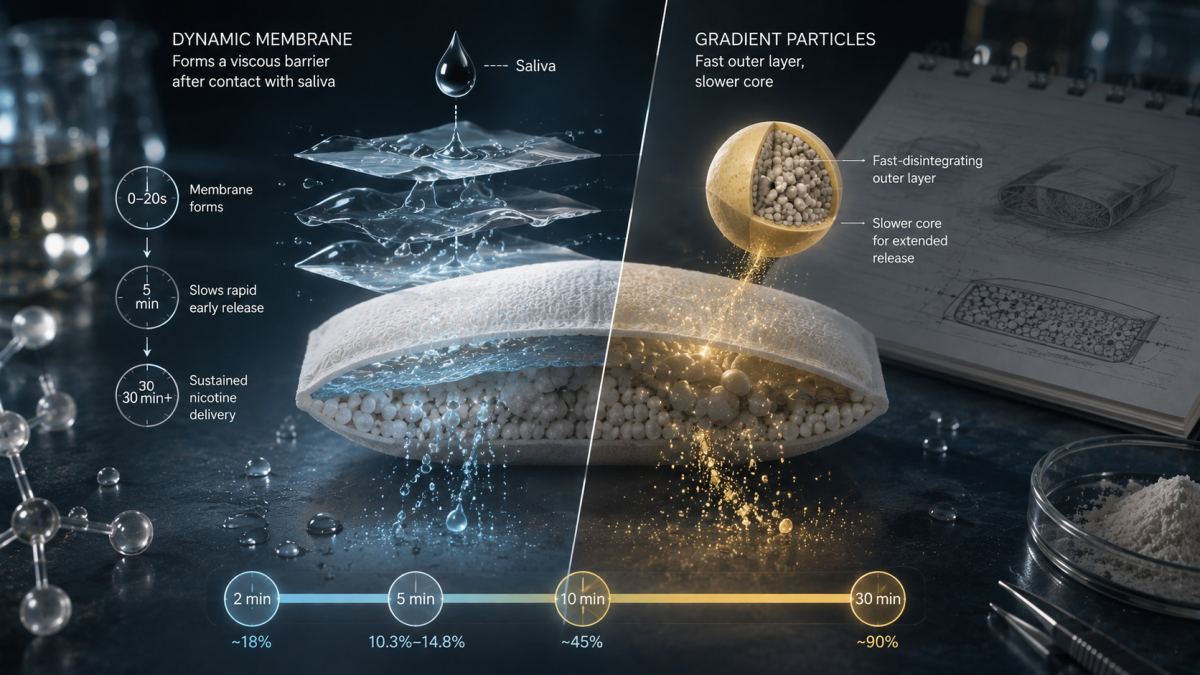
(Cover image generated by AI)
For the latest developments in the global next-generation nicotine industry, follow 2Firsts.
Disclaimer
This article is provided solely for professional research, industry discussion, and informational purposes. Any references to brands, companies, products, technologies, or policies are made for factual reporting and analytical purposes only, and do not constitute endorsement, recommendation, promotion, or advertising by 2Firsts.
Nicotine-containing products, including but not limited to cigarettes, e-cigarettes, heated tobacco products, and nicotine pouches, carry significant health risks. Readers are responsible for complying with all applicable laws and regulations in their respective jurisdictions, including age restrictions and access limitations.
The information contained in this article should not be regarded as investment, legal, medical, regulatory, or commercial advice. While 2Firsts strives to ensure the accuracy and reliability of its content, it does not assume liability for any direct or indirect loss arising from errors, omissions, inaccuracies, or reliance on the information contained herein.
This article is not intended for individuals below the legal age for accessing tobacco or nicotine-related information in their jurisdiction.
Copyright Notice
This article is either original content produced by 2Firsts or content reproduced, translated, summarized, or adapted from third-party sources with attribution where applicable. The intellectual property rights of the original content remain with 2Firsts or the respective original rights holders.
No individual or organization may copy, reproduce, distribute, republish, modify, translate, or otherwise use this content without prior authorization. Any unauthorized use may result in legal action.
For copyright-related inquiries, corrections, or removal requests, please contact: info@2firsts.com.
AI-Assisted Translation and Editing Notice
Portions of this article may have been translated, edited, or reviewed with the assistance of artificial intelligence tools to improve efficiency and readability. Due to the limitations of AI-assisted translation and editing, discrepancies, omissions, or inaccuracies may exist when compared with the original source.
Where applicable, readers are advised to refer to the original source for the most complete and accurate information. If you identify any errors or believe that any content infringes upon your rights, please contact us at info@2firsts.com, and we will review and address the matter promptly.